Philadelphia’s Blue-Collar Municipal Workforce Is on Strike
AFSCME District Council 33 represents the blue-collar city workers who make Philadelphia run. After sacrificing through the pandemic and years of bruising inflation, they say they’re on strike so they can afford to live in the city they serve.
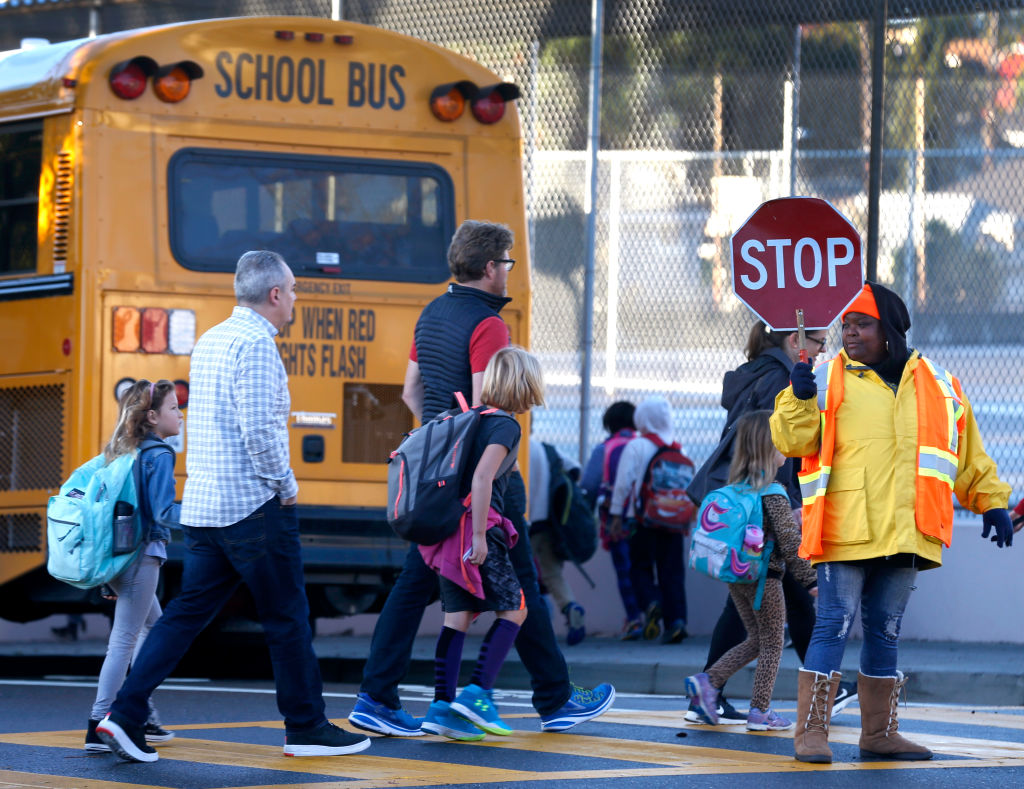
Blue-collar workers in Philadelphia, including school crossing guards, are going on strike for better pay. (Paul Chinn / the San Francisco Chronicle via Getty Images)
The COVID-19 pandemic brought the term “essential worker” into widespread use, highlighting the work and workers necessary to keep society functioning. But many workers experienced a gap between how they were talked about and how they were treated. They were called essential, but regarded as disposable.
In June 2020, at the height of the pandemic, hundreds of Philadelphia sanitation workers and American Federation of State, County and Municipal Employees (AFSCME) District Council 33 members rallied to demand hazard pay and personal protective equipment. It was a sign that these workers from one of Philadelphia’s largest unions, who are underpaid and do exceptionally dangerous work, understood their real worth to society.
Five years later, AFSCME DC33 is on strike for a contract that reflects the sacrifices they’ve made for the public. The strike could cause a major disruption to the city’s Fourth of July festivities planned for this weekend.