An Ode to Sanitation Workers
Without them, the factories would stop, the cities would empty, and civilization itself would collapse. An appreciation of sanitation workers — our whole lives depend on them.
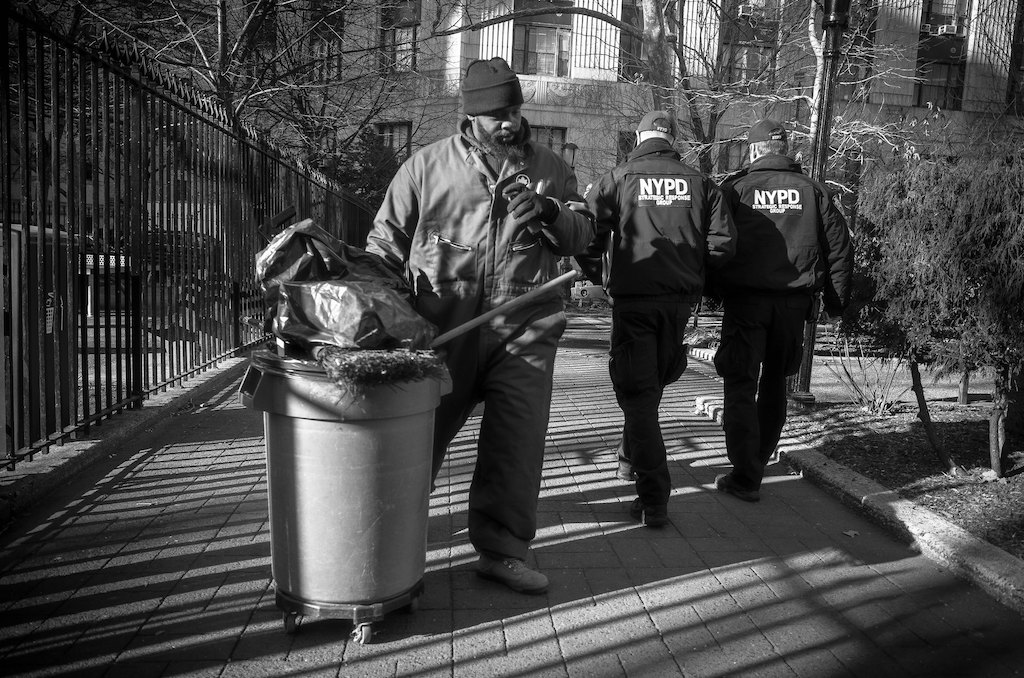
A sanitation worker flanked by police in Chinatown, New York City. Marcela / Flickr.
Last August, sanitation workers in Atlanta went on a one-day strike for a fair contract with their employer, the multibillion-dollar Republic Services corporation. The Atlanta Journal-Constitution gave the workers an opportunity to lay out their demands — adequate health benefits, annual raises, an end to non-union subcontracting — but the paper also chose a telling headline: “Sanitation workers striking for bargaining rights could affect Atlanta businesses.”
This is true on the face of it. Indeed, “affecting business” is the lever that striking workers pull to force concessions from their employers. But in the bigger picture, a headline focusing on the strike’s interruption of business as usual — standard fare in mainstream strike coverage — gets the emphasis all wrong.
Strikes only affect normal operations insofar as the labor being withheld is integral to those operations. The real story isn’t the adverse impact of labor’s temporary absence, but the fact that its continual presence is so badly needed. The question that strikes raise is how important workers’ contributions are to society, and what quality of life they deserve in return.