How Canada Learned to Stop Worrying and Love the Dysfunction
Canada's democracy is in crisis but Canadians don't seem to care. What looks like complacency, however, may actually be the result of decades of institutional drift and managed inertia.
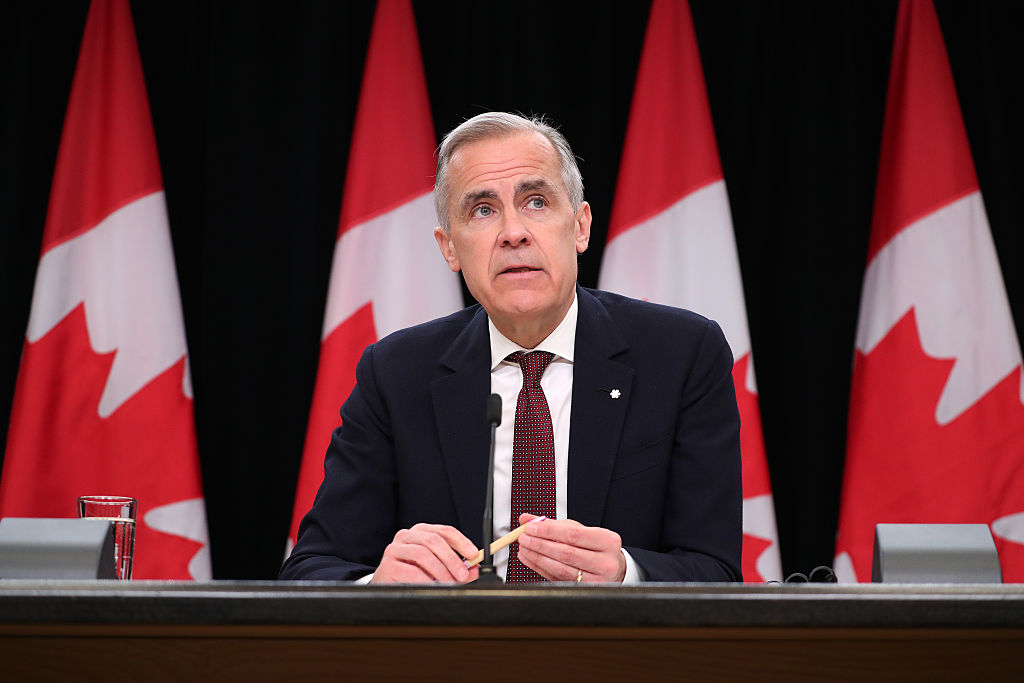
Prime Minister Mark Carney during a news conference in Ottawa, Ontario, Canada, on May 2, 2025. (David Kawai / Bloomberg via Getty Images)
The internet philosophers who like to say that “nothing ever happens” would find plenty of support from recent Canadian politics. This spring’s federal election was supposed to be the most consequential since 1988, or even 1911, because, like those earlier contests, it was meant to settle the existential question of the country’s relationship with the United States.
Prime minister Mark Carney went to the polls crying “Elbows Up,” promising firmer resistance to Donald Trump’s threats of annexation than his diminished predecessor Justin Trudeau or his Trump-like Conservative challenger Pierre Poilievre. The Liberal minority government returned to office and the sneery Poilievre lost his seat, yet the election already looks like a turning point that wasn’t.
Some Canadians are keeping their elbows up by swapping Peruvian for Californian lemons or canceling trips to Palm Springs, but the government is quietly giving up on defiant talk of resetting its economic relationship with the United States. Most recently, it canceled its digital services tax on American firms, apparently at Trump’s dictation. Although the Conservatives called him Marx Carney, the prime minister is advancing a polite version of their policies: more money for the military, more powers to police the border and build fossil fuel infrastructure, and hesitant acquiescence to Israel’s wars and America’s bombing of Iran.