For the Rulers of India and Pakistan, War Fever Is a Boon
The governments of India and Pakistan pulled back from the brink over Kashmir because neither can afford a full-scale war. Bellicose rhetoric and a climate of strident nationalism have helped both governments as they face problems on the domestic front.
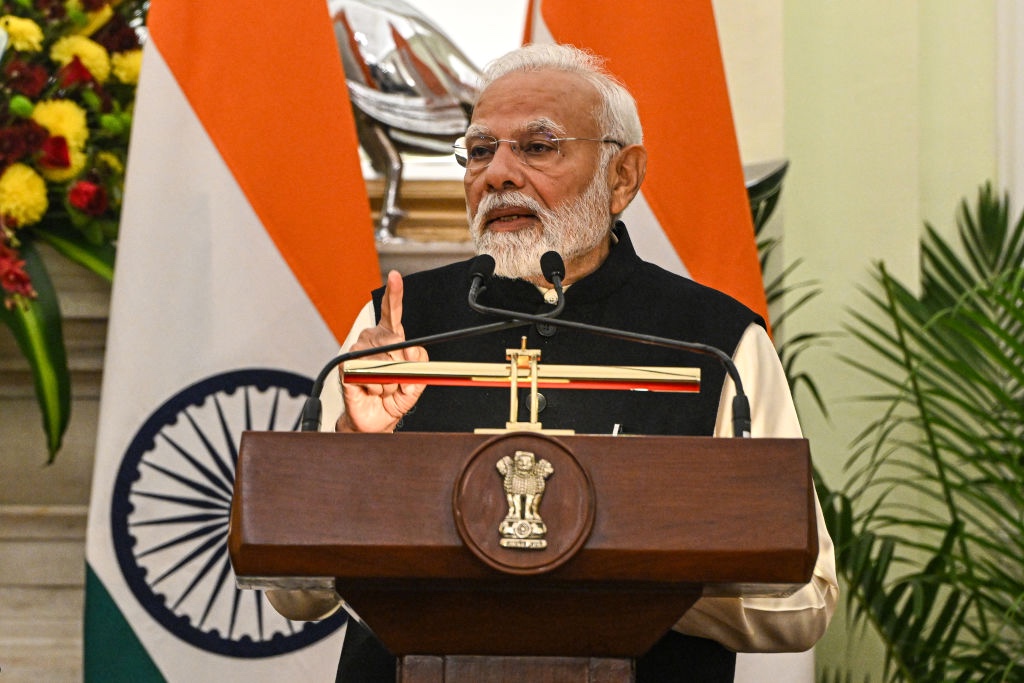
Narendra Modi speaking during a news conference at Hyderabad House in New Delhi, India, on December 16, 2024. (Prakash Singh / Bloomberg via Getty Images)
The armed conflict between India and Pakistan posed a significant threat to the subcontinent. This would have been a war that no country can afford. On May 10, US president Donald Trump reportedly brokered an initial cease-fire between both sides.
This announcement was followed by a meeting of the directors general of military operations (DGMOs) on May 12, during which both sides agreed to uphold their commitment not to engage in any aggressive or hostile actions. Furthermore, India and Pakistan would “consider immediate measures to ensure troop reduction.”
The current peace deal may appear fragile, especially with a new round of posturing from Indian prime minister Narendra Modi and his Pakistani counterpart, Shehbaz Sharif. Nevertheless, any de-escalation of tensions is clearly to be welcomed for the sake of regional stability and peace. It seems improbable that either side could achieve a decisive victory, which would likely drag the region into a period of extended crisis and uncertainty.