Trump’s Trade War Is a Political Dilemma for Democrats
Donald Trump is hoping his tariffs will goad his liberal opponents into touting free trade and scoffing at the working class. Democrats don’t have to take the bait.
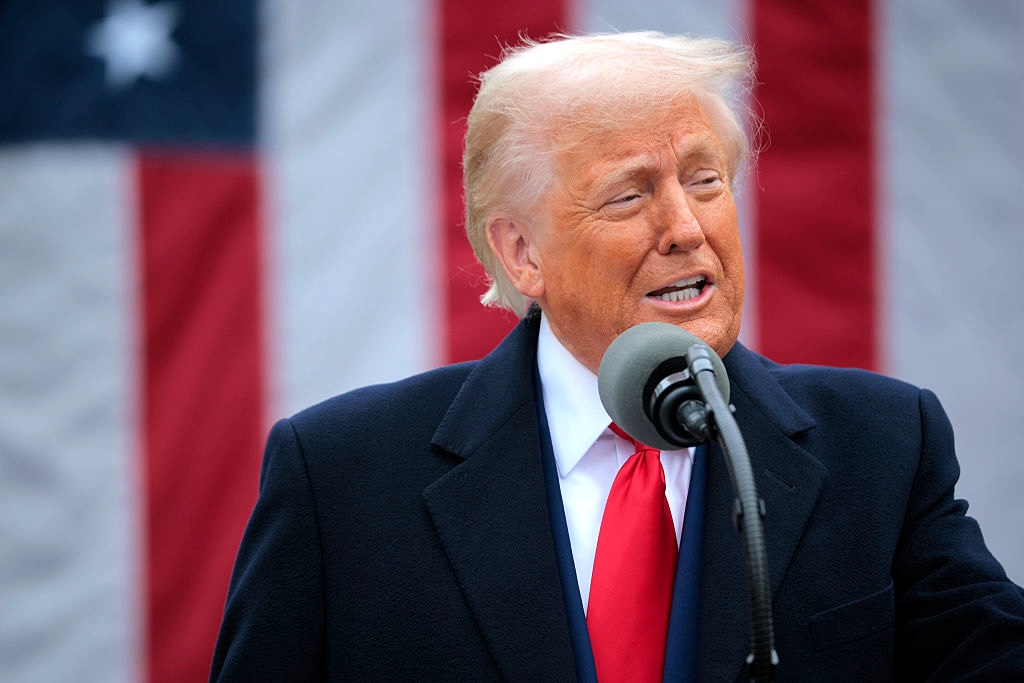
President Donald Trump speaking in the Rose Garden at the White House on April 2, 2025, in Washington, DC. (Chip Somodevilla / Getty Images)
To tariff or not to tariff? Today’s tweet-length political discourse pretends this is a binary choice. President Donald Trump has pitched across-the-board import levies as a panacea to rebuild American manufacturing, while Democrats insist that Trump’s proposals are an attempt to crash the economy, and that their party should tout their opposition to all tariffs.
But neither the policy nor politics of this moment are that neat and simple. While too few or too many tariffs can destroy economies, there is a Goldilocks zone that’s just right. It’s just being omitted from the conversation.
Policy-wise, Trump’s tariff-all-imports initiative lands on the “too many” side, ignoring some basic economic realities. In offering almost no implementation period, it provides industry no grace period to actually reshore factories and other capital-intensive operations to produce goods in the United States. In applying tariffs across the board rather than in a targeted fashion, Trump’s proposal makes few accommodations for commodities from coffee and vanilla to various rare earth minerals that America cannot produce at scale within its own borders.