Oligarchy, Empire, and Revolution in Central America
There is a direct line in Central America stretching back more than a century from US-backed military intervention, to support of reactionary oligarchies, to devastating neoliberal restructuring, to the migration crisis now exploited in US politics.
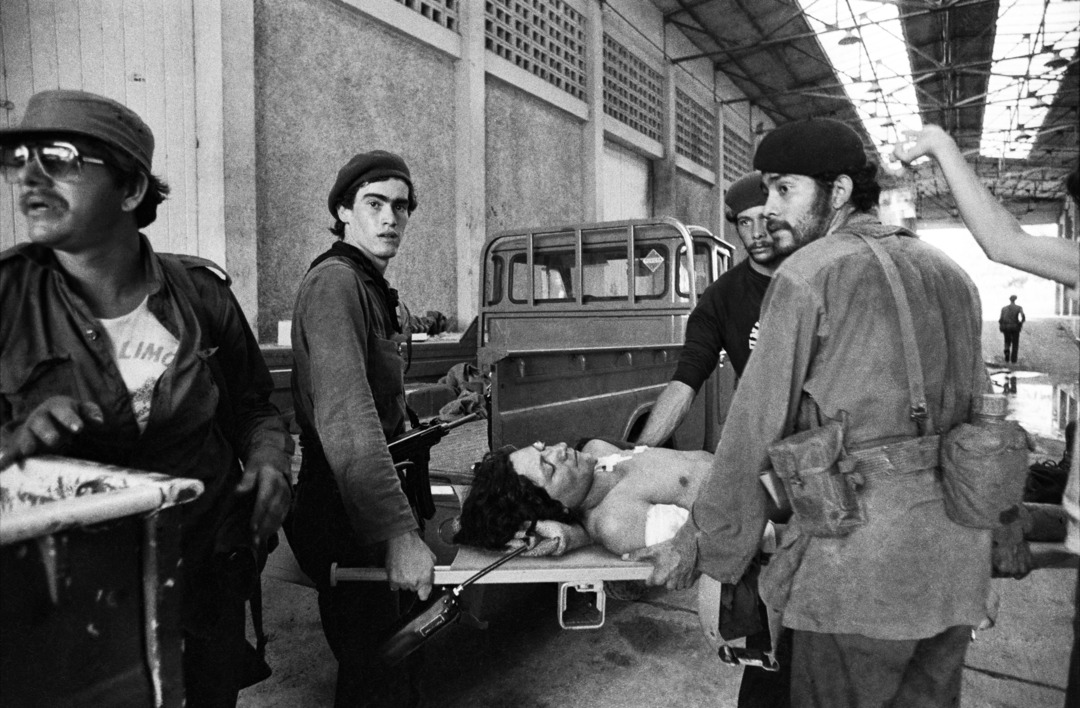
An injured guerrilla fighter from the Sandinista National Liberation Front (FSLN) is carried by comrades to a Red Cross aid station near the border between Costa Rica and Nicaragua, Peñas Blancas, July 9, 1979. (Alex Bowie / Getty Images)
This is the first in a two-part series on Central America’s history and present, featuring scholars Hilary Goodfriend and Jorge Cuéllar in conversation with Daniel Denvir on The Dig, a Jacobin Radio podcast. It is also a history of American near-empire, tracing its impact from the mid-nineteenth century onward.
Central America won independence from the Spanish Empire in 1821, spent two years as part of the Mexican Empire, and then nearly two decades as a fragmented federal republic. Its colonial economy was peripheral, based on self-subsistence and a small export trade in goods like indigo and cochineal. Independence brought political turmoil, with liberal and conservative elites warring while maintaining indigenous campesinos’ oppression.
By the mid-nineteenth century, US capital and military power reshaped the region. In the early 1850s, Nicaragua became an important transit point for Americans heading west to Gold Rush California. In 1855, a new railway built by American capitalists connected Panama’s Atlantic and Pacific coasts. That same year, American mercenary William Walker, invited by Nicaraguan liberals, seized power and legalized slavery. His rule ended when Central American armies forced him out, but his tenure demonstrated how Anglo-American ambitions treated local elites as expendable allies.