What the Sandinistas Won in Nicaragua
Forty-two years ago today, Sandinista National Liberation Front forces captured Managua and put an end to the Somoza dictatorship. It was a triumph that changed the course of Latin American history.
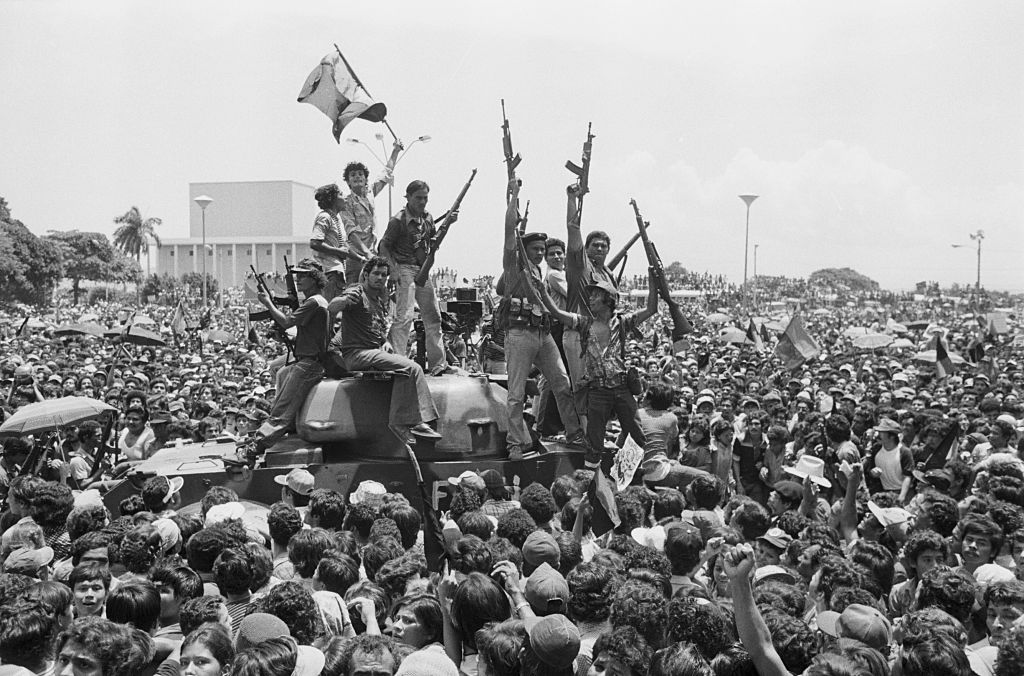
Jubilant Sandinista rebels ride a small tank in the main square of Managua in the summer of 1979. (Getty Images)
Forty-two years ago today, the capital of Nicaragua, Managua, was liberated by Sandinista National Liberation Front (FSLN) forces. It was a landmark event in the history of Latin America and a major victory for socialist and progressive forces. The Nicaraguan Revolution ousted the government of hated dictator Tachito Somoza and fought on a program of democracy, anti-imperialism, and economic development.
To mark the July 19, 1979 anniversary, Jacobin contributing editor Nicolas Allen spoke with historian Jeffrey L. Gould to discuss the Sandinista Revolution and to try to understand all its complexities, triumphs, shortcomings, and the lessons that can be learned from one of the “last social revolution of the twentieth century.”
Nicolas Allen
Can you say a few words about the Somoza government that the Sandinistas overthrew in 1979? In some ways it was unique among the Latin American dictatorships of the 1970s: a dynastic regime that held political and economic power in Nicaragua for nearly half a century; at the same time, historically speaking, it also enjoyed some degree of popular support in its earlier years.
Jeffrey L. Gould