Bernie Moreno Threatens the US-Colombia Relationship

Republican Senator Bernie Moreno, a scion of Colombia’s right-wing political and business elite, is stoking a dangerous conflict between Donald Trump and Colombia’s government. His motivations derive from both veiled familial interests and broad class ones.
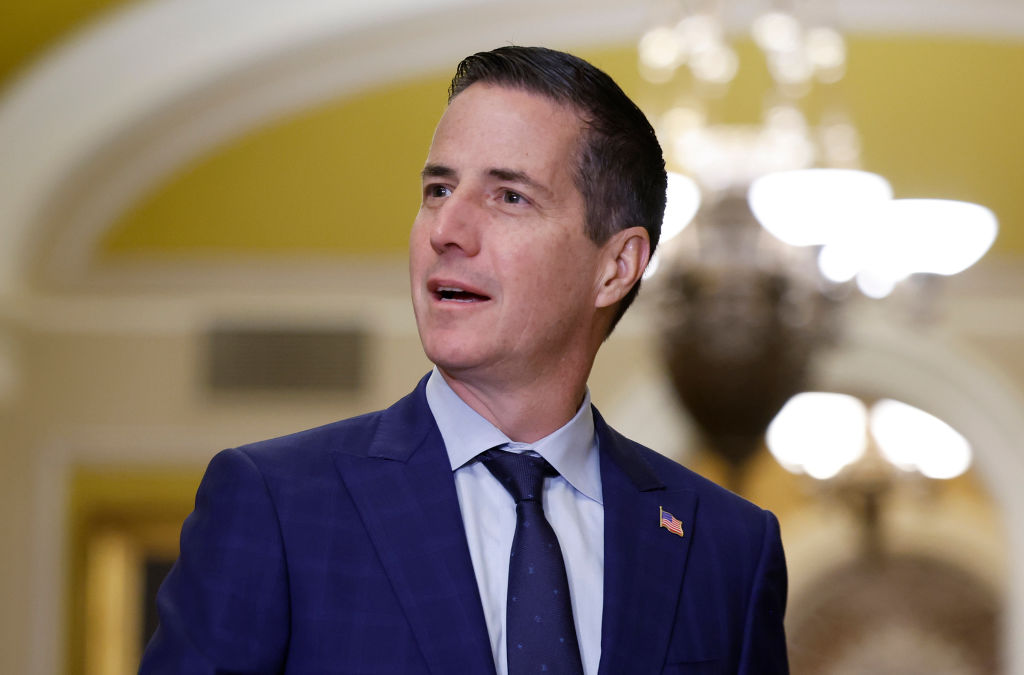
Bernie Moreno’s meteoric rise into Donald Trump’s orbit demonstrates how extraordinary wealth and elite social background buy access to power in the Republican Party, elevating the most repugnant actors into the halls of government. (Kevin Dietsch / Getty Images)

Senator Bernie Moreno, one of the wealthiest members of Congress, has risen to become an influential figure in Donald Trump’s political orbit in just his first year in office. Notwithstanding his own background — born in Colombia, a country now under direct threat from Trump’s Republican Party — Moreno has used his influence to successfully push for the US military escalation in the hemisphere. Not bad for a Greater Cleveland car salesman.

As a senator for Ohio, his influence on US foreign policy has played a strong role in the rapid deterioration of relations between the United States and its neighbors to the south, particularly Colombia’s progressive government. Moreover, much like the Trump administration’s militarist foreign policy — which (very thinly) cloaks its ulterior motives behind the rhetoric of combating drug trafficking — Moreno’s hawkish push for an aggressive posture toward Colombia and Venezuela exposes both veiled personalist interests and broad class ones.

Moreno, despite his foreign birth, is hardly an outsider to Washington. A more accurate version of his life story — in contrast to the immigrant tale featured in his colossally expensive campaign — offers a revealing glimpse into how elite networks across the Americas intertwine to thwart efforts near and far to implement majority rule.

It is a reminder that the ruling classes on either side of the US border tend to have far more in common with each other than with the ordinary working people they claim to represent.

Moreno’s Rapid Rise to Power

Moreno only entered electoral politics in earnest in 2024, following an aborted first attempt in 2021. During his later — and ultimately successful — campaign for the US Senate, Moreno’s team promoted him as an outsider, positioning him as distinct from Washington’s entrenched elite. He was presented as a first-generation immigrant and self-made entrepreneur, someone ostensibly shaped by a different life experience and therefore prepared to fight on behalf of ordinary working people against what his campaign portrayed as a corrupt political establishment.

Moreno’s rapid ascent to the upper ranks of the Republican Party would be impressive, were his rags-to-riches story true.

Moreno unseated Ohio Democratic Senator Sherrod Brown, whose economic populist policies kept him in office for almost twenty years, only after unprecedented quantities of outside spending were poured into his campaign — a record-breaking war chest that undermines his outsider narrative. Spending $51 million more than Brown on ads alone, his candidacy relied heavily on mischaracterizations and easily disproven falsehoods about his life.

Whether it was his family’s migration history, his educational qualifications, the origins of his personal fortune, or even his own name (born Bernardo), Moreno’s political career has been fueled as much by distortion as by the funneling of obscene sums money — he raised $40 million in the final weeks of his race from the crypto industry alone.

Moreno did not always hold the far-right views associated with the Trumpian movement that now forms his political base. His shift toward extreme conservatism began in 2021, during his initial campaign for the Senate. Since becoming a senator last year, his policy positions — particularly on migration, LGBTQ rights, and reproductive rights — have hardened.

Prior to entering formal politics, Moreno had expressed far more moderate and at times openly liberal social views. His businesses sponsored the Gay Games in 2014, and he publicly stated that “a successful Gay Games would go a long way toward boosting our images as cities that welcome all.” Additionally, his companies appeared on a list of firms that formally committed to championing LGBTQ rights.

His extremist stance on immigration, including spearheading the effort to end dual citizenship, stands in stark contrast to his position on the matter before becoming senator. In the years prior to his candidacy, Moreno expressed the need to reform migration policies to support the legalization of undocumented people. In fact, Moreno had been a vocal critic of Trump from within the Republican movement, stating, in a now deleted tweet, “I will support individual candidates, but can’t support a party led by that maniac . . . [Trump] is a lunatic invading the party.”

On the issue of abortion, he soft-pedaled his extreme stance on reproductive rights, worried it could lose him votes in Ohio. Having previously stated that he was “absolutely pro-life, no exceptions” — Moreno toned the sentiment down and began giving much more careful answers on abortion to the media. Yet in his first year in office, he has unsurprisingly backed draconian Republican bills on abortion, even as he has mostly refrained from issuing statements on the subject.

Selling Aspiration From a Golden Throne

With the Democrats historically enjoying a larger percentage of the Latino vote, Republicans have gone to work in recent years to narrow that gap. Figures like Moreno have become central to the effort. The Republican senator greatly exaggerated his personal migration story to appeal to the 36.2 million Americans who make up the increasingly coveted Latino vote. But Moreno’s arrival to the United States shares few of the difficulties that tend to characterize immigrant stories.

Moreno claimed that his family faced all manner of hardships on arrival to Florida in the early 1970s, including all seven of them having to squeeze into a two-bedroom apartment. However, a New York Times investigation found not only that they never lived in a two-bedroom apartment, but soon after their arrival they settled into a large four-bedroom house with a pool and direct access to a beach. This was perhaps somewhat of a downgrade from the family’s several homes in Bogotá, one of which is today Germany’s embassy.

Another claim that Moreno made during his campaign was that his family was forced to flee Colombia because of socialism. “[I] moved to this country a long time ago to escape what happens in most South American countries, which is socialism and the absolute prison of those ideas,” he told an interviewer. But, as is common knowledge, Colombia had never had a left-wing leader — let alone a socialist government — until Gustavo Petro assumed office in 2022. Rather, Colombia has probably been the most stable bastion of right-wing, US-aligned governments in Latin America.

Not content living a comfortable life as part of Bogotá’s elite, Moreno’s parents moved their family to the United States — not as migrants looking to overcome economic hardship or as victims of political persecution, as Moreno indicated to an interviewer, but spurred on by bourgeois ambition. Moreno’s father, also Bernardo, had served as Colombia’s health minister, but, seeking even greener pastures, he set his eyes on Florida, where he could use his privileged background to quickly climb the ranks as a surgeon.

Piggybacking off his family’s vast wealth and connections, Moreno secured millions in finance to open his first Mercedes-Benz dealership in Ohio in 2005. By 2011, Moreno was able to expand his business to well-to-do Coral Gables, Miami. Once more, thanks to his family’s connections and backing, the senator secured the lease of a site for his dealership in the old Bacardi Building at a discounted price and with heavy investment from his extended family. Moreno’s dealerships were reputed to be propped up by financing from investors and manufacturers, rather than through organic business revenue, apparently gaining him a reputation in the industry. His competitor dealers once complained in court, “Your honor, they keep giving this guy money. . . . They aren’t giving anyone else money.”

Moreno has also engaged in more overtly nefarious means of securing profits, most notably by withholding overtime pay from his employees. After admitting to destroying evidence that documented this wage theft and being ordered by a jury to pay over $400,000 to two former employees, Moreno settled over a dozen wage theft lawsuits out of court in the months prior to launching his Senate candidacy.

As his campaign sold unattainable dreams of upward mobility to voters, Moreno did, in some sense, support others’ aspirations — if by that we mean helping to fund his already wealthy friends with millions more to pursue their own political ambitions.

Among those that Moreno has endorsed and fundraised for is multimillionaire and anti-immigration hardliner Nate Morris, the MAGA senatorial candidate for Kentucky. Morris, who Moreno claims is another “outsider” like him, was also recently backed by his other businessman friend, Elon Musk, who donated a further $10 million to his campaign.

When Moreno initially made a bid for senator, he was already a profligate donor to the Republican Party, and during the 2024 elections, he still managed to loan $4.2 million to his own campaign. Moreover, in his freshman year as senator, Moreno has been one the Republican Party’s most “prolific” fundraisers, donating the maximum allowed for the campaigns of Republican senators up for reelection and for others running for the first time.

In November 2023, having already announced his interest in the candidacy for Ohio senator, Moreno publicly claimed to have sold all his businesses. He said he “wanted to go to Washington, D.C., free of any conflicts of interest. No individual stocks, no individual bonds, no corporate holdings. I’ve made that sacrifice to run for the U.S. Senate.” However, by September 2024, just before his election, an investigation showed that he had applied for and would receive $40 million in financing from Mercedes-Benz to open another of his many dealerships. His competitors, it seems, were right: they just keep giving this guy money!

Although Moreno’s personal wealth is difficult to calculate precisely — owing to the legal loopholes and financial mechanisms commonly used by the ultrarich to obscure assets — estimates place his net worth as high as $172 million. This would rank him among the five wealthiest US senators and within the top fifteen richest members of Congress overall — someone with everything to lose from any meaningful redistribution of society’s wealth.

The Newest War Hawk in Town

Moreno has emerged as one of the most vociferous backers of military campaigns against Latin American governments attempting — even in modest ways — to break from the yoke of US imperialism. As US airstrikes on small Caribbean boats and the killing of their passengers came under mounting scrutiny and criticism in December, including from within the Republican Party itself, Moreno rushed to their defense. “This is wartime!” he declared, despite the absence of any formal or official declaration of war.

Months earlier, targeting his native Colombia and neighboring Venezuela, Moreno’s memo to Trump, titled “The Trump Doctrine for Colombia and the Western Hemisphere,” was leaked from the Oval Office. In the file the Ohio senator called for hawkish intervention in the two South American countries.

Specifically, it laid out a five-point strategy that included urging Trump to go after their presidents for alleged links to terrorism and narcotrafficking, claims accompanied by AI-generated images of both Nicolás Maduro and Petro dressed in orange prison jumpsuits. The Trump administration has since kidnapped Maduro, and a recently revealed Justice Department investigation into Petro suggests a real possibility of US intervention as Colombia’s next presidential election nears.

On October 24, 2025, just two days after Moreno met with Trump to hand over the memo, the US Treasury Department effectively placed President Petro, members of his family, and Colombia’s interior minister, Armando Benedetti, on the Office of Foreign Assets Control (OFAC) list — a designation typically reserved for figures deemed terrorists or major drug traffickers by the US government. Like in Maduro’s case, there is no credible evidence that Petro or those close to him are involved in any of the drug-smuggling activity alleged by Moreno and the US government.

Moreno has played a central role in directing this strategy to intimidate and destabilize governments the Trump administration disfavors in the region, including Colombia’s progressive government. The result has been the deepening of an already widening diplomatic rift, placing decades of close bilateral relations — relations that have historically served US interests — at risk. In effect, US foreign policy toward Colombia seems now shaped less by strategic or national interests than by the narrow ideological interests and, as we’ll get to, even the familial interests of a single political actor.

In a statement after the bombing of Caracas and Maduro’s abduction, the Ohio senator celebrated the operation and threatened that Colombia’s “narco-terrorists” should be “on notice that they are next.”

Speaking to the press on Air Force One days later, Trump echoed Moreno’s position, stating that Colombia’s president was “a sick man who likes making cocaine and selling it to the United States . . . and he’s not going to be doing it very long.” After a reporter asked if this meant a possible military operation in Colombia, President Trump answered, “Sounds good to me.”

It is plausible, as President Petro has suggested, that these threats, instigated by Moreno, are motivated by a personal vendetta: retaliation for past investigations in Colombia that linked Moreno’s powerful family to corruption scandals.

The Moreno Family and Bogotá’s Elite

In the decades preceding Moreno’s rise in the auto dealership business, his family moved up the ranks in the Colombian elite from a moderately wealthy family to one of extraordinary wealth and influence. Deeply embedded in Colombia’s political and economic networks, Moreno’s father and brothers were already major power brokers in their country of origin decades before his own success in the United States.

Moreno’s cousin, Lina Moreno, is the wife of the far-right former president Álvaro Uribe — who was recently found guilty of witness tampering and is implicated in several pending legal cases that link him to the country’s right-wing death squads and, awkwardly for the Ohio senator, to the Medellín Cartel.

Notably, his elder brother Luis Alberto Moreno has held several major positions in the Colombian government since the early 1990s, including as the Colombian ambassador to the United States from 1998 to 2005, before serving as president of the Inter-American Development Bank. Luis Alberto was appointed ambassador by President Andrés Pastrana, who has recently been exposed for his ties to Jeffrey Epstein and Ghislaine Maxwell, including appearing in Epstein’s flight logs. Pastrana is known to maintain a close personal friendship with the Moreno family more generally.

Luis Alberto, moreover, was Colombia’s lead negotiator in the now infamous Free Trade Agreement with the United States signed in 2006 — today widely criticized for having caused untold material suffering to millions of ordinary Colombians.

Luis Alberto was also accused of looting the Ecuadorean-based Bank of the Pacific, documented in 1999 by the current president, Petro, in his book The Case of the Bank of the Pacific. Petro’s and other investigations hold that, together with two of his associates (Luis Fernando Ramírez and Jacky Bibliowicz), Bernie’s brother was involved in wiring approximately $35 million of reserves into several offshore accounts when the bank’s collapse, in 1999, led to many Colombian and Ecuadorean customers losing their savings.

He has also faced a corruption scandal in a land-grabbing case in Colombia’s Chambacú territory, a land historically inhabited by impoverished black communities. In 1993, serving as Colombia’s development minister, Luis Alberto is said to have helped to facilitate the transfer of said land from its protected status to open it to urban development — and was later found to have been a shareholder in the company that would buy the land and displace its historical inhabitants.

Bernie’s other elder brother, Roberto, CEO of Amarilo, one Colombia’s biggest construction companies, is implicated alongside Luis Alberto in a similar case, this time in a nature reserve near Bogotá known as the San Simón estate. Those with vested interests within Pastrana’s government have been accused of unlawfully changing its protected status to sell and urbanize it. Indeed, Amarilo bought and developed the piece of land that is today a middle-class urban development complex known as Lagos de Torca.

Petro recently recommended opening an investigation into the case, not only because of the land-grab scandal but also because the president suggests that right-wing paramilitary groups used the San Simón land grab to launder money. Although a court in Bogotá recently ruled in favor of the Moreno brothers — Luis Alberto and Roberto — in a libel case against Petro for the claims against them, with the judge asking the president to apologize and retract his statements, Colombia’s president has refused, arguing that his own published book, parliamentary debates, and other public investigations by notable news outlets are enough to demonstrate legitimate grounds for the comments.

Delving more deeply into Senator Moreno’s life story, one finds that he is far from the self-made man that his multimillion-dollar campaign made him out to be. To the contrary, he is only the latest member of his family to assume a position of power and influence.

Why This Moment Produces Figures Like Moreno

Moreno’s growing influence within the Republican Party is part and parcel of the broader process that has given rise to Trumpian politics: the political disorganization of business elites described by Paul Heideman. This disorganization, according to Heideman, resulted from Ronald Reagan’s victory, which diminished the need for sustained coordination among the capitalist class. With the state itself already advancing capitalist (and imperialist) interests, there was little incentive for elites to maintain a disciplined, unified political project.

This disorganization has since given rise to distinct political currents within the American right. While they remain committed to defending the same underlying interests, they differ in strategy and temperament. Over time, a more confrontational and authoritarian current, broadly represented by Trumpism, has emerged as the dominant force.

The breakdown of a coherent ruling bloc — one capable of effectively disciplining its political representatives — has also produced institutional dynamics that expose mainstream parties more transparently as vehicles for capitalist rule. One key consequence has been the growing centrality of fundraising to party leadership, especially within the Republican Party over the past three decades. A congressmember’s influence is now closely tied to their ability to raise money, resulting in a system of governance that is far more responsive to powerful donors than to ordinary people.

This system facilitates the rise of figures like Moreno, who, through extraordinary wealth and elite social backgrounds, can effectively buy access to the highest levels of political power and directly shape state policy — including advocating for interventions that label left-wing presidents as criminal kingpins and drug dealers. Fundraising capacity thus becomes both a source of authority and a mechanism of party discipline. In his first year in office alone, the Ohio senator has become one of the party’s top fundraisers in government and the leading donor among freshman senators.

It is no coincidence that this more overtly confrontational faction of the capitalist class has come to dominate at a moment of profound crisis for the neoliberal order. As even the wealthiest nations suffer from long-term wage stagnation, the precaritization of work, and a hollowing out of the welfare state, governments increasingly rely on coercion and force to defend elite interests.

The rise of the extreme right in the United States should therefore not be treated as an anomaly or the product of individual pathologies. The fact that Trump-like figures and their sycophants — Moreno being but one of the latest — continue to emerge signals a deeper crisis of capitalist rule itself. Left unresolved, it will continue to deepen, generating ever more violent political and social outcomes and elevating the most repugnant actors into the halls of political power.

In this respect, the people of the United States would do well to look south to left-wing governments in places like Mexico, Brazil, and, yes, Colombia, where figures like the Moreno brothers no longer enjoy free rein.