Inside Die Linke’s Resurgence
After years of decline and internal strife, Germany’s left-wing party is finding new life. Grace Blakeley talks to the organizers behind Die Linke’s surprising growth.
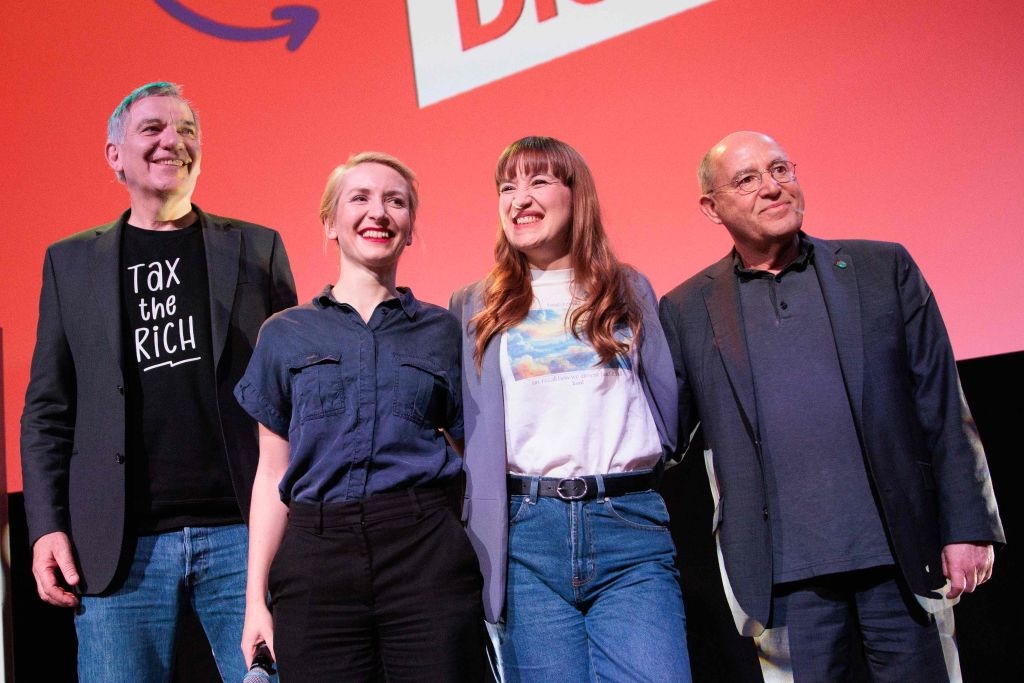
Jan van Aken, Die Linke party leader; Ines Schwerdtner; Heidi Reichinnek; and Gregor Gysi, direct candidate in Berlin, stand under the motto “Everyone wants to govern, we want to change” in Berlin on February 21, 2025. (Carsten Koall / dpa / picture alliance via Getty Images)
“I feel like one of the reasons far-right narratives are so successful is that we’re lacking community, especially in big cities like Berlin,” says Anne, who became a member of Die Linke, Germany’s left-wing party, four weeks ago. “I think if we want to keep this whole thing going, we need to be more involved in our communities. And I really want to participate and keep this change going.”
Anne sums up a strategic shift that is taking place across the European left. Left parties across the continent — from the Belgian Workers’ Party (PTB) to the Austrian Communist Party — have realized that they can only survive if they become a part of the communities they’re trying to represent.
Far-right parties have had astonishing success in embedding themselves in working-class communities across Europe. In doing so, they have displaced the left parties that have traditionally dominated these areas — particularly in the big cities.