How Neoliberalism Embraced Human Rights
The intellectual godfathers of neoliberalism knew they needed to attach a philosophy of high-minded ideals to the vicious free-market system they wanted to spread around the globe. They found such a philosophy by perverting the idea of human rights.
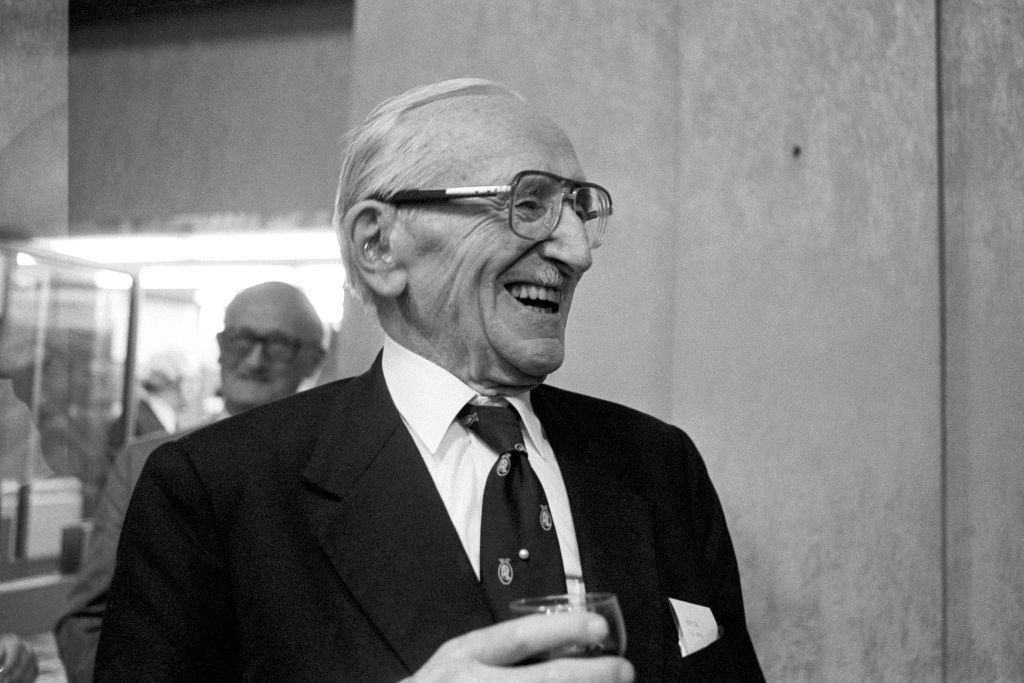
Economist Friedrich Hayek sought to revive international liberalism to counter the rise of socialism and other collectivist currents. (PA Images via Getty Images)
Two seemingly unrelated events took place in 1947. It was the year the Universal Declaration of Human Rights was drafted. It was also the year in which the Mont Pelerin Society, a grouping whose founding members included pioneering theorists of neoliberalism Friedrich Hayek and Milton Friedman, was founded.
In The Morals of the Market: Human Rights and the Rise of Neoliberalism, political philosopher Jessica Whyte investigates the historical and conceptual relationship between human rights and neoliberalism. In response to the horrors of the World War II, delegates to the United Nations came together to formulate a list of universal rights. Concurrently, an effort spearheaded by Friedrich Hayek was underway to revive international liberalism, purportedly motivated by similar concerns for the imperiled state of human dignity and liberty.
The UN human rights delegates and the early neoliberals disagreed about the correct solution to the social crises created by the war. The former adopted an extensive list of social and economic rights as the foundation for a postwar order. The latter, by contrast, depicted state welfare and planning as totalitarian threats to “Western civilization.”