Let’s Be Sober About the Limits of Bidenomics
Many on the Left have hailed Joe Biden's economic policy as historically progressive. But overall, Bidenomics has meant lavishing subsidies on favored sectors of business while failing to really move the needle in the interests of working people.
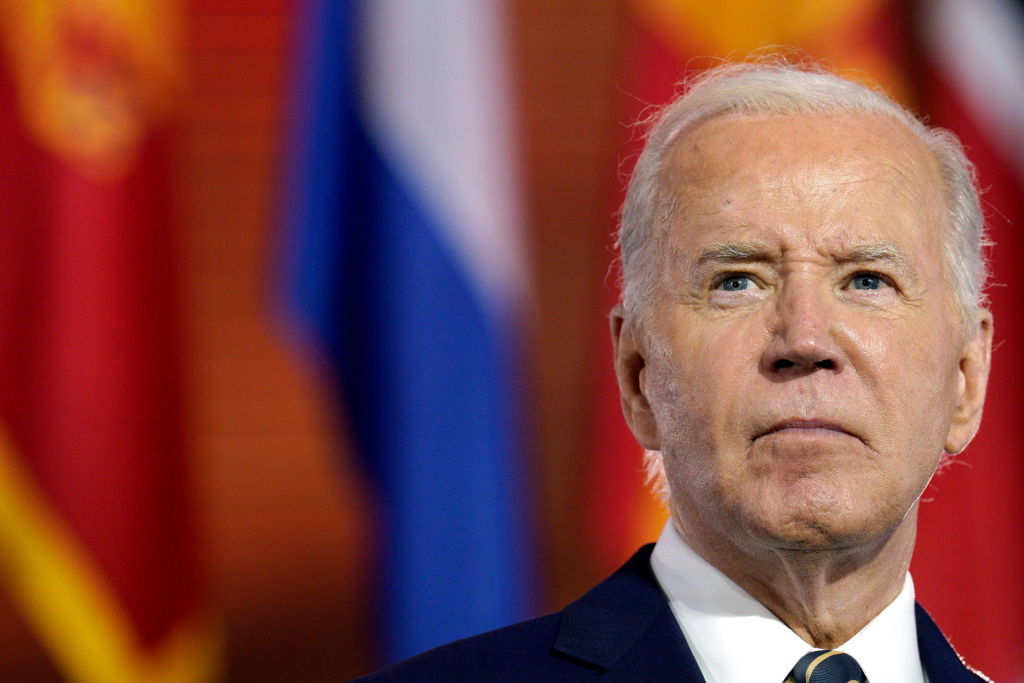
US president Joe Biden at the NATO summit in Washington, DC, on Tuesday, July 9, 2024. (Yuri Gripas / Abaca / Bloomberg via Getty Images)
Since the earliest days of Joe Biden’s presidency, there’s been no shortage of ink spilled analyzing the administration’s economic policy. Commentators have been preoccupied, in particular, with the ways “Bidenomics” may or may not mark a break with the economic policy orthodoxy of the past few decades.
The Biden administration’s approach has been marked by relatively generous social welfare initiatives (only some of which have passed), large federal investments in infrastructure and manufacturing, and executive appointees that have been more willing to take sides against big corporations when it comes to labor and antitrust laws. Taken together, these elements show a White House that is willing to propose a larger role for the state in terms of setting investment priorities and that is at least somewhat less deferential to corporate power in some domains.
In these respects, Bidenomics indeed seems to be something novel in comparison with the policies of President Barack Obama or President Bill Clinton. The real questions concern the significance of these differences in terms of solving major challenges: climate change, gaping economic inequality, and worsening disaffection with our political institutions. With the 2024 presidential election fast approaching, and voters continuing to give the president low marks on the economy, it is worth reflecting again on what Bidenomics has and has not accomplished.