Climate Apartheid
When the wealthy are able to insulate themselves from the worst effects of climate breakdown, the poor are forced to bear the costs of a crisis they did not cause.
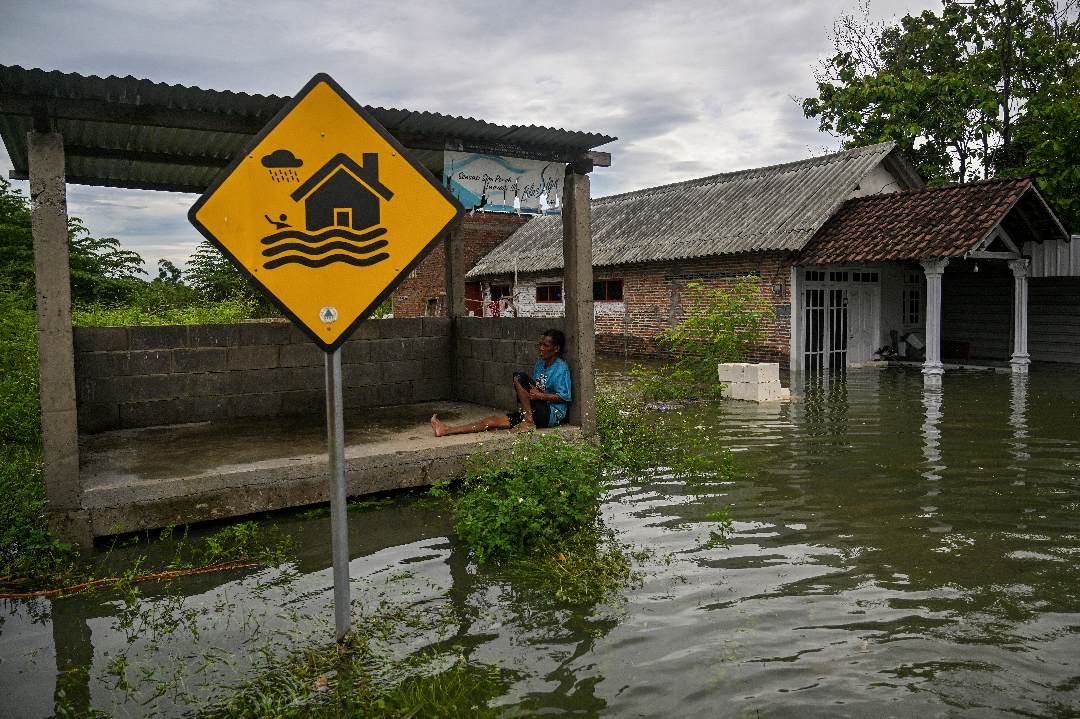
A man rests in a hut surrounded by floodwaters behind a flood warning sign, following torrential rain in Tempuran village in Mojokerto, East Java, Indonesia, on December 9, 2024. (Juni Kriswanto / AFP via Getty Images)
In December 2023, Ndileka Mandela, the granddaughter of Nelson Mandela, condemned the rich world for supporting a global system of “climate apartheid.” Speaking at the COP28 summit in the United Arab Emirates, Mandela stated that the term “apartheid” was appropriate to describe the impact of climate breakdown because “the Global North a using their economic and legal power to subjugate poor nations.”
Several years earlier, the United Nations special rapporteur on extreme poverty, Philip Alston, had also referred to the dangers of “climate apartheid” in a report on climate change and poverty. Alston warned, “Climate change threatens to undo the last 50 years of progress in development, global health, and poverty reduction.”
With every year that passes without coordinated action, the scale of the climate crisis deepens. Around 80 percent of the world’s top climate scientists now expect global temperatures to reach 2.5 degrees above pre-industrial levels — far above the 1.5-degree target agreed to in Paris in 2015. Such levels of climate breakdown would bring about a “semi-dystopian” world of extreme weather events, crop failure, geopolitical conflict, and mass migration.