How Progressive Civil Society Became Professional NGO Culture
The disintegration of working-class institutions and the rise of professionalized advocacy have severed the connections between progressive civil society and working-class communities.
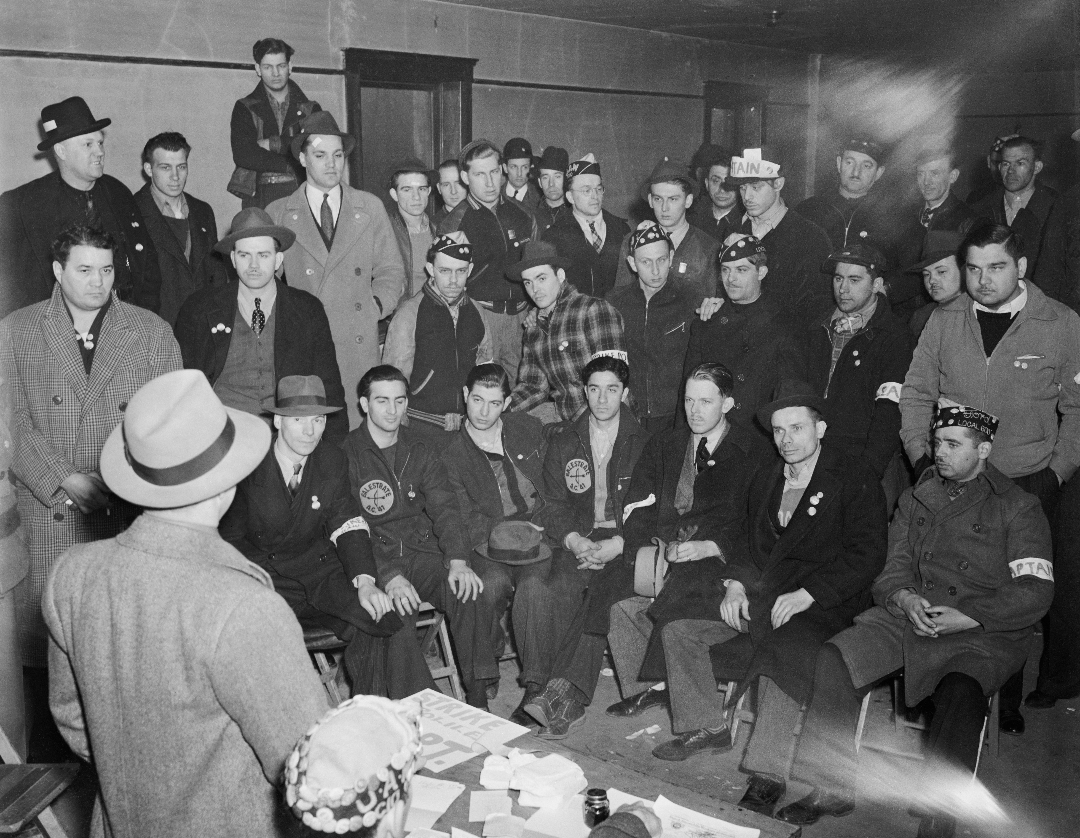
A meeting of Local 600 of the United Auto Workers, on strike at the River Rouge Ford plant, April 4, 1941. (Bettmann / Getty Images)
The Democratic Party has failed to earn the support of what was once its working-class base.
This ought to be a moment of reckoning for the party. The anger it faces is justified and necessary to intensify pressure to abandon its tepid political strategies and overreliance on big donors who oppose large-scale redistribution and pro-worker policies. But while the party deserves a lot of blame, understanding the depth of the crisis on the Left requires a much broader analysis than finger-pointing at Democratic campaign officials and strategists allows.
The problem is the Left’s lack of civil society institutions. Achieving a turn back to the working class and rejecting neoliberalism — with its marketization of social life and hollowing out of government — requires more than finding the right program and messaging. It demands a tremendous democratic will anchored in strong, lasting relationships and institutional ties within working-class communities. Only through such connections can we build a popular coalition that is capable of driving transformational change.