Local Organizing Can Slow the GOP’s Rural Takeover

The Rural Urban Bridge Initiative’s flagship program shows how local organizing can reduce partisan polarization and slow the GOP’s inroads among rural voters — a clue for what it might take for the Left to win in red areas of the country.
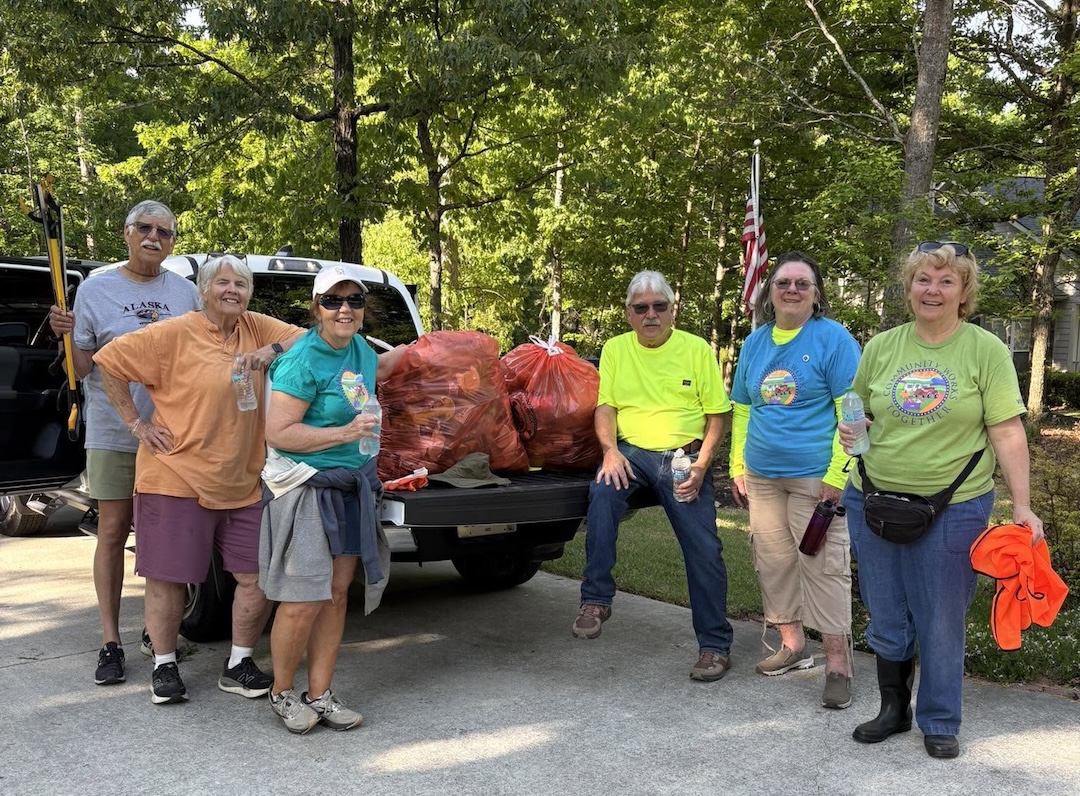
Community Works volunteers in Hart County, Georgia.

Community Works volunteers in Hart County, Georgia. (Community Works 4Hart / Facebook)


As Democrats struggle to rebuild their brand with working-class and rural voters, new evidence points to a surprisingly effective way to increase trust and connection: rebuilding the nonpartisan community organizations that were once crucial for providing the party a solid anchor in rural and small-town America. Building on this work, and scaling it up dramatically, may make all the difference for the party’s prospects in red America.

Over the past two years, the Rural Urban Bridge Initiative (RUBI), a group working to bridge America’s rural-urban divide, has used its Community Works program to unite working-class Americans to address what it describes as a “trust crisis” in the country. The program targets deep mistrust of liberals, Democrats, the “experts” of the managerial class, and government itself — and works to change the messaging that reaches these communities.

Community Works acts as a kind of invisible hand in local collaborations on everything from road and river cleanups to “home repair, food distribution, diaper drives, kids’ crafts activities, hurricane relief, smoke alarm installations, IT, tax prep assistance, an Easter egg hunt, and a STEM summer camp.”

The program has led to a paradigm shift in rural communities, as evidenced by Heather Vaughn, of Appalachian Tennessee, who says of Community Works:

The community service aspect is what drew me in. I was definitely not open to any sort of political talk or connection. If not for Community Works, I would still be inside my self-imposed walls. Community Works gave me the confidence to talk respectfully and honestly with people I might not agree with, because now I had a community to fall back on, a soft place to land.

On the Democratic side, Skip Halpern, chair of the Page County (Virginia) Democrats, says of RUBI’s training:

The great value and many strengths of the RUBI training rest on two pillars. First is a clear-eyed self-appraisal — constructive criticism — of shortcomings in how Democrats think about and communicate with rural voters. And second is a series of concrete, actionable steps for rural Dems to up their game.

What the Data Shows

Now a new report on Community Works, based on research by Nicholas Jacobs and B. Kal Munis, evaluates the early effects of the initiative and details how counties with a Community Works presence stand out from the rest.

The main takeaway: Community Works reduces the intensity of partisan polarization. While the study period (2023–25) saw a shift toward the Republican Party in many rural communities, particularly in the rural Georgia counties surveyed, areas where Community Works operated changed their attitudes much more gradually, bucking the trend of hyperpolarization that makes it so hard for progressive voices to break through in rural America. Why? Community Works acted as a moderating force between everyday people and partisan narratives at the national level.

In particular, in Community Works counties, feelings toward the parties hardened less, with warmth swings toward the Republican Party running roughly 8 to 11 points smaller than in comparison counties. Likewise, judgments about which party to trust, which one understands people like them, and which one cares about their community drifted toward Republicans less sharply than in other places. In short, while Community Works did not change which party people support, it did slow the rate at which national partisan narratives reshaped how residents interpret political life close to home.

Interestingly, these results have nothing to do with whether or not respondents had participated in or even heard of the Community Works program. So the effects of projects spearheaded by Community Works may reach far beyond those who directly participate in them — through to their friends, family, and connections who are more than a few degrees of separation from the program itself.

Trust, Understanding, and Care

RUBI asked community members a series of questions about their feelings toward the Democratic and Republican parties, including which party respondents trust more, which they think understands people like them, and which they think cares more about their community. All counties surveyed — located in rural Virginia and Georgia — generally grew in trust toward the Republican Party, but those with a Community Works presence grew in that trust more slowly than those without.

Likewise, when asked whether Republicans or Democrats better understand people like them, all counties indicated that Republicans generally understood them, but individuals in Community Works counties were less likely to say so over time. That said, there wasn’t an increase in support for Democrats; rather, those counties grew in their resistance to the narrative that one party was more understanding than the other. This could imply that disillusioned voters are moving more and more toward independent candidates, who, as the Center for Working-Class Politics’ Rust Belt survey found, have outperformed their major-party counterparts in purple Rust Belt states — even when running on an identical economic populist platform. It’s not that voters distrust what Democrats are promising; it’s that they don’t believe the Democratic Party is willing to deliver or capable of delivering on those promises.

The same pattern occurred when counties were surveyed about which party cares more about their community. Again, they were less likely to subscribe to the idea that Republicans care more about their community, which is notable since Community Works is explicitly a community organization that stresses problem-solving over partisan rhetoric.

RUBI also surveyed which party respondents believed had a better reputation — defined by competence, responsiveness, and leadership within the community. Across counties, respondents increasingly associated such attributes with the Republican Party. But in Community Works counties, respondents were much more likely to associate such attributes with the Democratic Party — both relative to comparison counties and their own earlier baselines. So while pro-Republican drift was happening in nearby counties, Community Works counties displayed a resistance to such drift.

Community Works counties were also less likely to place local Democrats to the ideological left of the national party. Respondents were less likely to view local Democratic organizations as stand-ins for stereotypes about the national party. Community members thus didn’t see local Democrats as representing a brand but instead as responding to local conditions.

A Model for Democrats

With Community Works in place, then, community members become less Republican, less Democratic, and more concerned with the tangibles in their communities, which eventually leads them to the natural conclusion that Republicans aren’t showing up in meaningful ways (and Democrats aren’t so different). But if left populists can seize this opportunity, start local, and solve problems in visible, tangible ways — like Zohran Mamdani in New York — they can win back the working class that’s been abandoning Donald Trump.