Die Linke Can’t Just Rely on Middle-Class Progressives
A new study explains an uncomfortable truth for Germany’s Die Linke: the left-wing party’s base is today highly educated and middle-income. While the party’s new leadership promises to rebuild working-class roots, it won’t be easy.
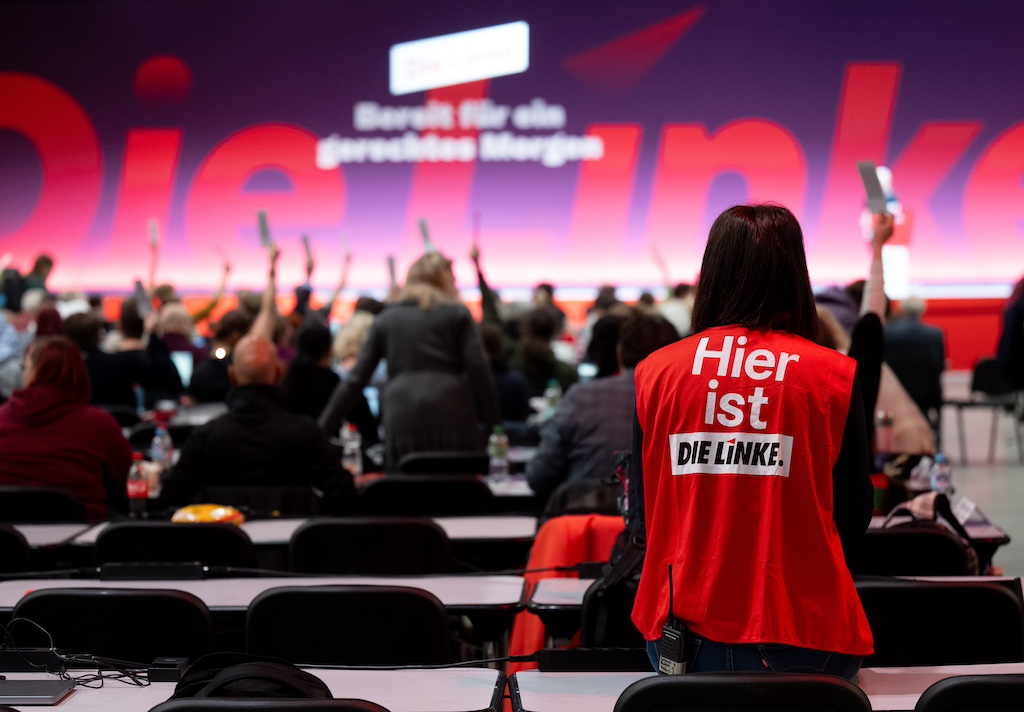
A participant at Die Linke’s federal party conference in Halle, Germany, on October 20, 2024. (Hendrik Schmidt / picture alliance via Getty Images)
Germany’s left-wing party Die Linke is in decline, and many members understand that fundamental change is needed if it is even going to survive. Its weakness was brought into sharp relief during the 2021 elections, when it suffered a catastrophic defeat, falling under 5 percent support. If it weren’t for a few victories in local contests, Die Linke would have fallen out of the federal parliament, the Bundestag.
Since then, a number of analyses have been published by exponents of Die Linke’s various currents. In his contribution to this debate for the Rosa Luxemburg Foundation — Die Linke’s think tank — Carsten Braband shows that the Left’s electorate hasn’t just shrunk, but has also moved decidedly into the middle class.
Die Linke’s defeats aren’t just due to unfavorable circumstances, but also the result of its own strategic orientation. By pointing out these facts, Braband is busting two of the myths that hinder efforts to rebuild the party.