Sahra Wagenknecht’s Party Is Mainly a Threat to the Right
- Julia Damphouse
Germany’s former Die Linke parliamentary leader Sahra Wagenknecht has founded a new party. She claims it’s a voice for the ignored middle and working classes — but the party is mainly focused on winning over Germans who’ve turned to the far right.
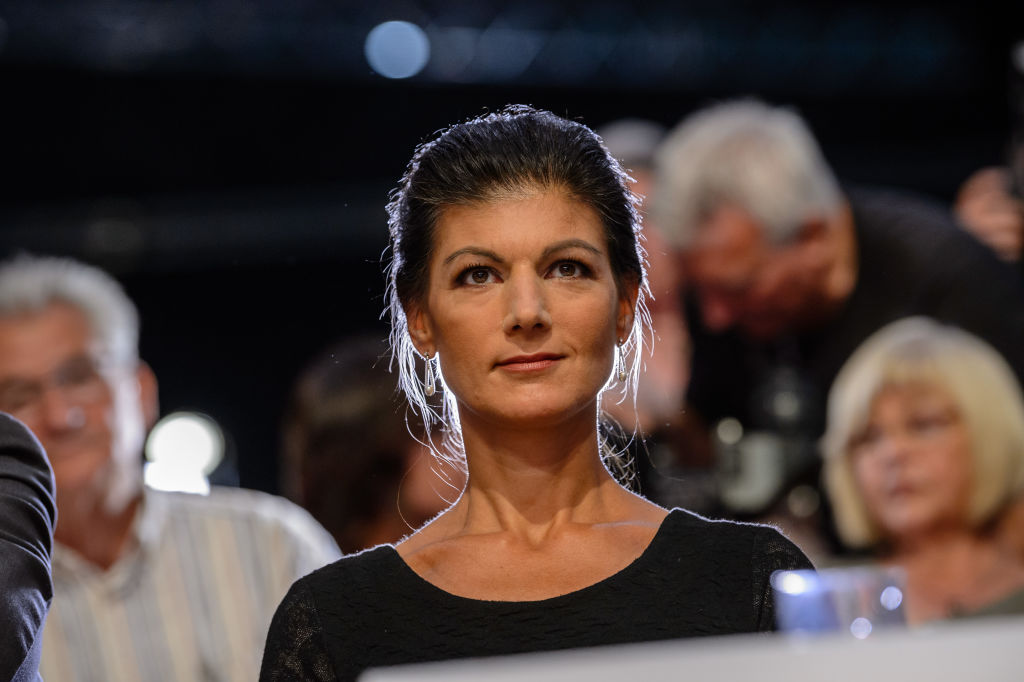
Sahra Wagenknecht at the Die Linke federal party congress on June 9, 2018, in Leipzig, Germany. (Jens Schlueter / Getty Images)
As we enter the new year, it is nearly impossible to predict how Germany’s political landscape will look in twelve months’ time. 2024 will not only see June’s European elections, but also decisive contests this fall in the Eastern states of Thuringia, Saxony, and Brandenburg. Much of the uncertainty owes to former Die Linke (The Left) politician Sahra Wagenknecht — and her attempt to build a new party, which aims to enter all four races.
According to polls, her self-titled Sahra Wagenknecht Alliance (BSW) could receive more than 10 percent of the vote, and even over 20 percent in the former East. Research suggests that she appeals to voters of all parties and could probably also mobilize current nonvoters. But above all, she appeals to those who recently opted for the Alternative für Deutschland (AfD), an anti-immigration party of the far right.
Of course, polls are no substitute for real election results, and polling numbers are not explanations in themselves. To understand why Wagenknecht’s new party could harm the Right in particular, a deeper analysis of the political situation is required. The current so-called populist moment in Germany, coming later than some other European countries, is characterized by the overlap of three main developments: an economic crisis, a political crisis, and a growing distrust of the established parties across significant sections of the population. Fifteen years ago, for example, there was precisely this kind of political turbulence in some Southern European countries in the wake of the Eurozone crisis.