Conversations With Frenemies
Compact’s Sohrab Ahmari is among a group of populists who see a home in a changing Republican Party. We asked him for his perspective on the November election and what comes next.
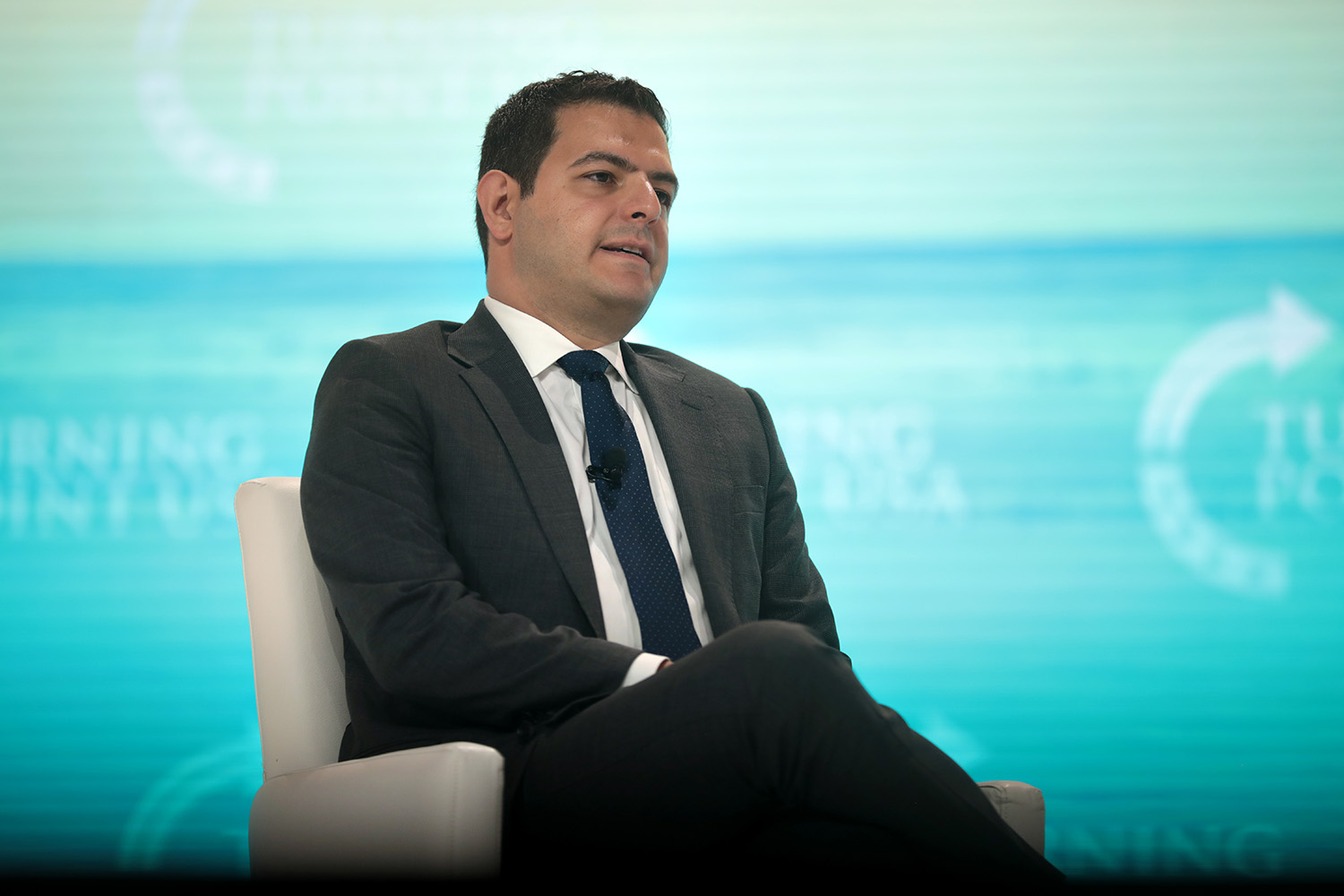
(Gage Skidmore / Wikimedia Commons)
Editors
In a nutshell, what’s your view of the Democratic Party? How would you describe its social base, the role of unions within it, and its program?
Sohrab Ahmari
Both of America’s major parties were born in the nineteenth century as large coalitions of class-based, sectional, and ideological interests, and so they remain. Today’s Democratic Party has largely shed its Jacksonian origins to represent a diverse cross section of high capital (tech, finance, entertainment, and, especially, the green industry); most of the professional classes; and a resilient legacy core of the labor and civil rights movements.
The mainstream labor movement is an important component of that leg of the triple stool. It continues to underwrite Democratic campaigns and turn out the vote for elected Democrats. But its historic weakness — with private sector union density intractably stuck at 6 percent and the continued hostility of conventional Republicans and Clintonian and neoliberal New Democrats — means that organized labor isn’t in the driver’s seat of the Democratic Party in the way it once was, even after an unquestionably pro-union Joe Biden administration, which nevertheless didn’t insist on conditioning industrial-policy investments on red states ditching anti-union laws.