US Labor Unions Still Need to Get Serious About Organizing
With union popularity at historic highs and organized labor’s war chests overflowing, now is the time to spend big on strikes and new organizing. So far, unions mostly aren’t doing that.
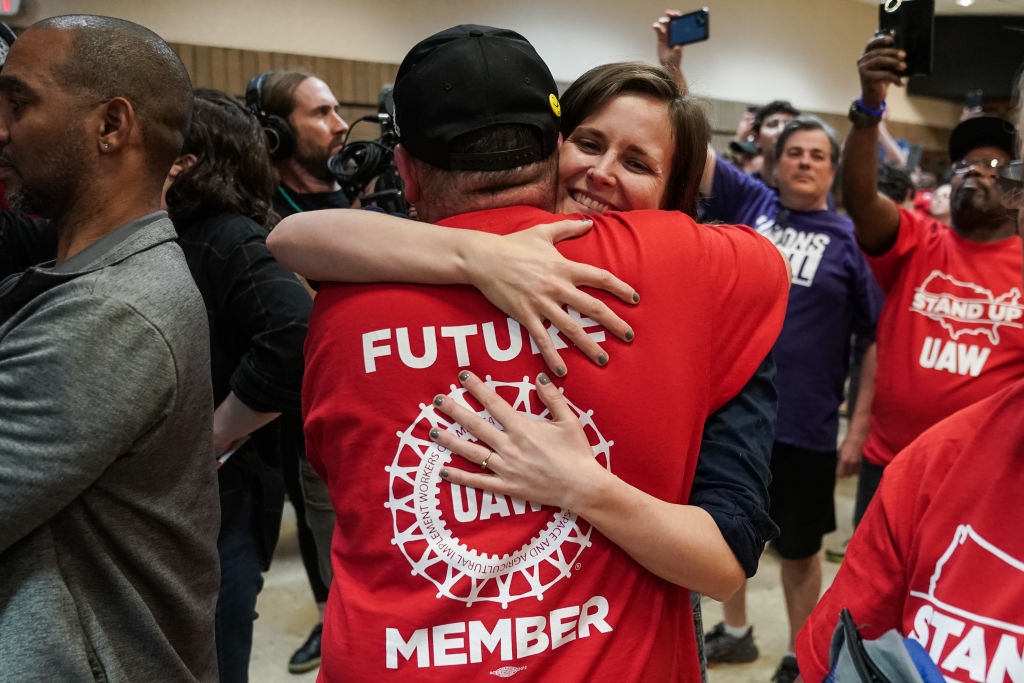
Workers celebrate after the United Auto Workers won a union election at a Volkswagen plant on April 19, 2024, in Chattanooga, Tennessee. (Elijah Nouvelage / Getty Images)
On Tuesday, the AFL-CIO hosted its second annual “State of the Unions” Labor Day event. According to AFL-CIO president Liz Shuler, unions are “on the rise,” “battle-tested,” and “building organizing capacity” like never before.
What does the data really say about the health and vibrancy of organized labor in 2024 and its nascent efforts to reverse forty years of decline? We can look at four key metrics: organizing new workers, collective bargaining and strikes, union finances, and labor democracy and governance. This data tells a more complicated story — while US unions are showing encouraging signs of life, the trends also reflect daunting challenges.
New Organizing
The AFL-CIO says that labor is “organizing like never before.” Is that accurate? While data is not readily available for public sector workers, the National Labor Relations Board (NLRB) tracks the number of workers involved in union elections in the private sector. In 2023, approximately 93,000 workers participated in an election for union representation, up from 63,000 in 2022. And 2024 is on pace for approximately 107,000 workers voting on union representation.