Unions Need to Lose More If They Want to Win More
The UAW’s defeat at a Mercedes plant in Alabama was crushing. It’s also the cost of waging risky, potentially transformative fights. If labor wants to win big, it can’t be afraid to lose big.
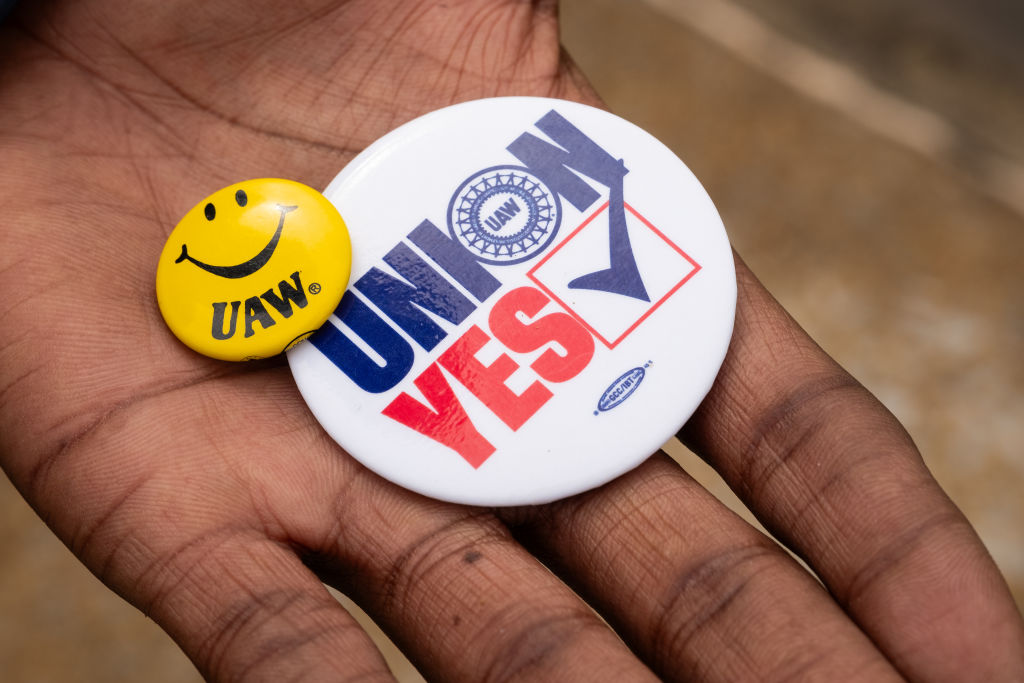
United Auto Workers buttons in Chattanooga, Tennessee, on April 10, 2024. (Kevin Wurm for the Washington Post via Getty Images)
There’s no sugarcoating it: Mercedes workers’ loss last week was a punch in the gut. Hopefully we can soon get some sober assessments from worker leaders and staff organizers about what — if anything — they’d try to do differently next time around.
But it’s also necessary to take a step back and acknowledge that any ambitious strategy for unionizing millions will entail lots of losses along the way. There’s an obvious way this is true: labor movements that don’t try to organize the unorganized — or that don’t go on risky strikes — never experience any big losses, they just steadily decline into irrelevance. If you unionize and strike more, your total number of losses will also rise, all other things being equal.
The point I want to make in this article, however, is more specific and less intuitive: ambitious labor movements that try to win widely actually lose a higher percentage of battles than do most unions today. Winning big and winning at scale require taking many more risks and relying less on staff. And this generally entails a higher loss rate.