The Dream and Nightmare of Neoliberalism
The spread of neoliberalism promised economic efficiency and freedom for the powerful while wreaking havoc for millions. In recent years, claims of a post-neoliberal era have emerged, but a new book argues that these claims may be greatly exaggerated.
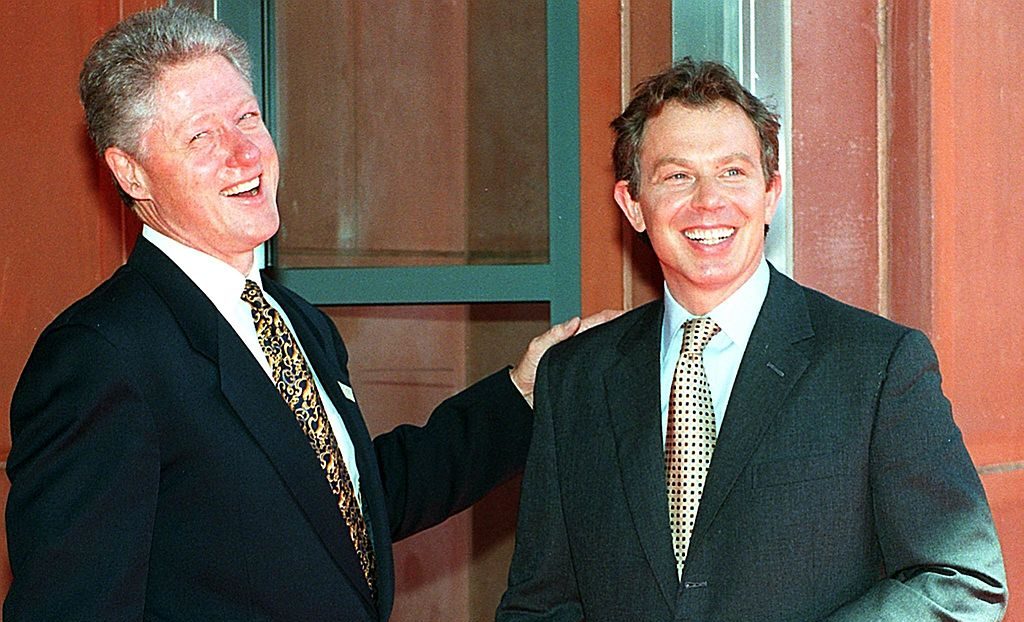
US president Bill Clinton greets British prime minister Tony Blair in Denver, Colorado, on June 22, 1997. (Doug Collier / AFP via Getty Images)
The term “neoliberalism” is frequently invoked but often lacks a clear definition. The concept requires an in-depth examination that dissects its origins as a philosophy of governance and its transformation into a political and cultural project. Over the course of the twentieth century, powerful interests adapted the concept to consolidate their influence, reshape public perception, and embed market principles into all facets of society. Unraveling the complexities and varying interpretations of neoliberalism can shed light on its profound and deleterious impact on contemporary political and social structures.
In a wide-ranging discussion, Jacobin’s David Moscrop talked with Canada’s former senior civil servant, Alex Himelfarb, author of the upcoming book Breaking Free of Neoliberalism: Canada’s Challenge. The book traces the rise of free-market orthodoxy, lays out its consequences, challenges proclamations of neoliberalism’s demise, and offers an optimistic vision for a better way forward.
How to Dress Up Greed in a Suit
David Moscrop
The word “neoliberalism” is used often, but people generally don’t fully understand its meaning or have different interpretations of it. So what exactly is neoliberalism?
Alex Himelfarb