Neoliberalism From the Left
In the 1970s and '80s, left parties turned to markets and spin doctors to adjust to economic changes. The results have been disastrous.
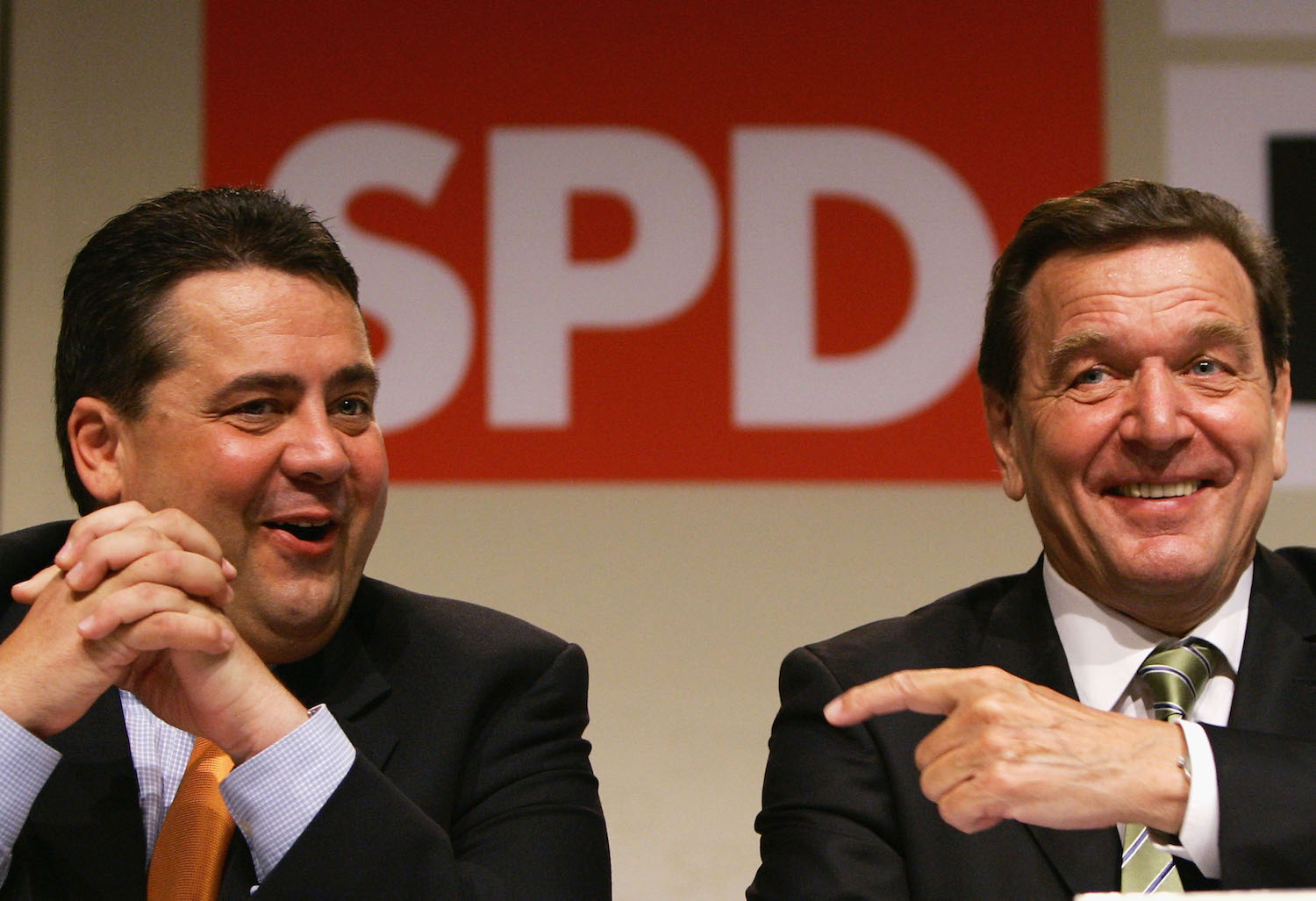
Two leaders of the German Social Democratic Party, Siegmar Gabriel and then–chancellor Gerhard Schroeder, speak during a party meeting on July 9, 2005 in Hanover, Germany. Carsten Koall / Getty
Since the late 1970s political parties all over the world have embraced a politics of free markets, privatization, and financialization. While promising freedom, this political project — typically referred to as neoliberalism — has brought record levels of economic inequality and significant democratic retrenchment, particularly in the advanced capitalist world.
Scholars often explain this shift by pointing to the victory of the New Right — personified by figures like Ronald Reagan and Margaret Thatcher. But a new book by sociologist Stephanie Mudge tells a different story.
In Leftism Reinvented: Western Parties from Socialism to Neoliberalism, Mudge looks at left parties in advanced capitalist countries over the last century and shows how the experts aligned with those parties pushed them in the direction of spin doctors and markets. In the process, left parties’ ability to represent the interests of their own working-class constituencies was eroded — and ordinary people were shut out of the halls of power.