India’s Failed Agricultural Revolution
Capitalism spread through India’s countryside without developing it.
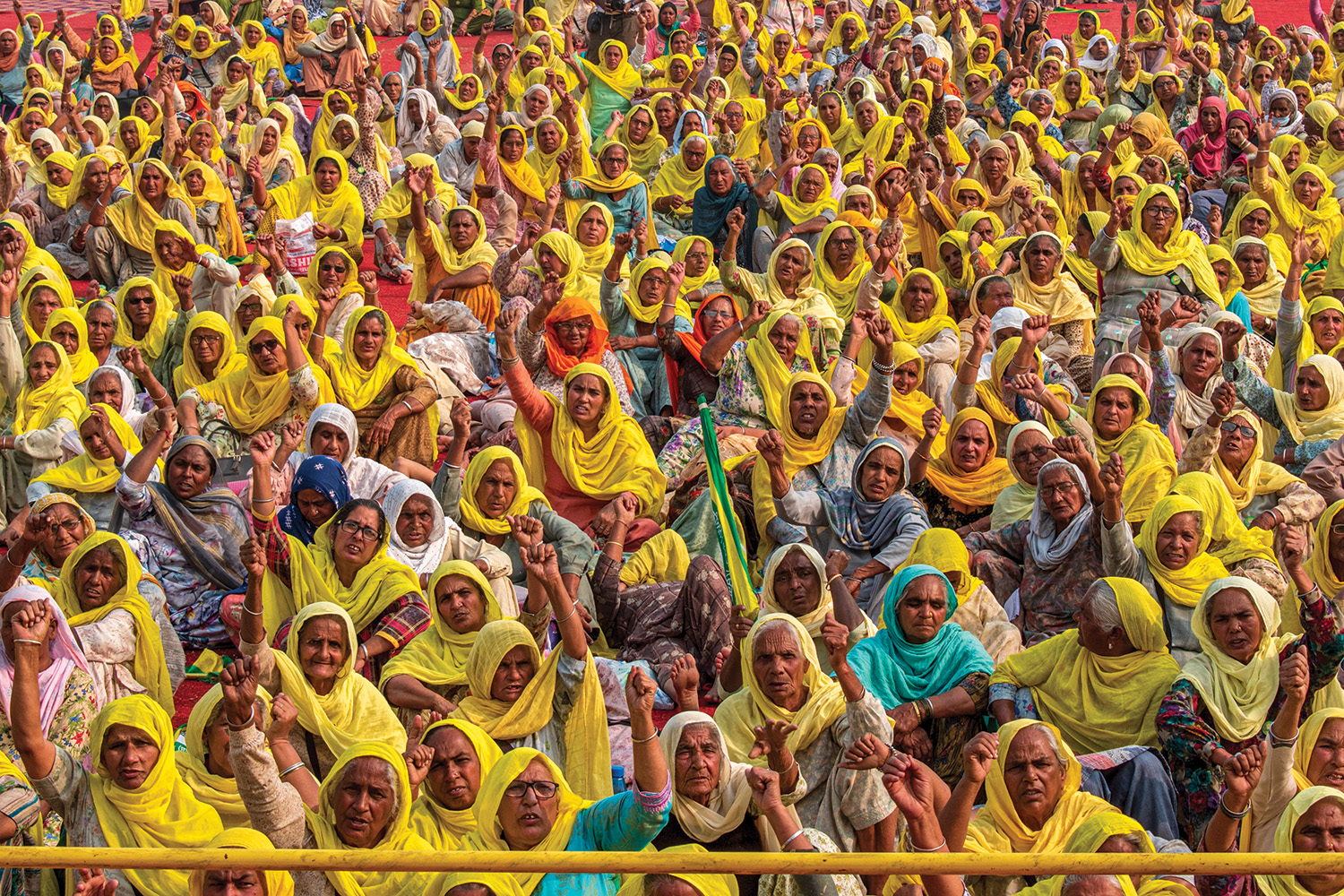
(Mohsin Javed / Pacific Press / LightRocket / Getty Images)
There are now more rural people in the world than ever before. More than a quarter of them are in India. It turns out that, contrary to the assumptions of classical Marxism, Indian capitalism has not absorbed the rural masses into an industrial workforce. Neither has the agrarian class structure polarized into two classes, even as inequality has deepened. Capitalist agriculture has proceeded slowly but made little contribution to industrial development. What India confronts today is a predatory dynamic of neoliberal capitalism that has a voracious appetite for land and an anemic demand for rural labor.
The resulting expansion of what Karl Marx called a relative surplus population manifests as downward pressure on heterogeneous agrarian classes, imbricated with caste and gender domination. These classes cobble together livelihoods from a mixture of agriculture, wage labor, petty enterprise, and social welfare. In this context, access to land is crucial to the social reproduction of hundreds of millions of rural people.
Despite the consolidation of an authoritarian regime under Narendra Modi’s Bharatiya Janata Party (BJP), rural India thus continues to generate and periodically erupt with agrarian class struggle. In recent years, this has included conflicts over corporate land grabbing, farmers’ protests over neoliberal market policies, and efforts by marginalized castes and indigenous groups to demand land and forest rights long denied to them.