Can Policies Make Rural Politics?
The rural divide is deep and, in many cases, based on real abandonment by liberal technocrats. More than just new policies, Democrats need a new approach to rural voters.
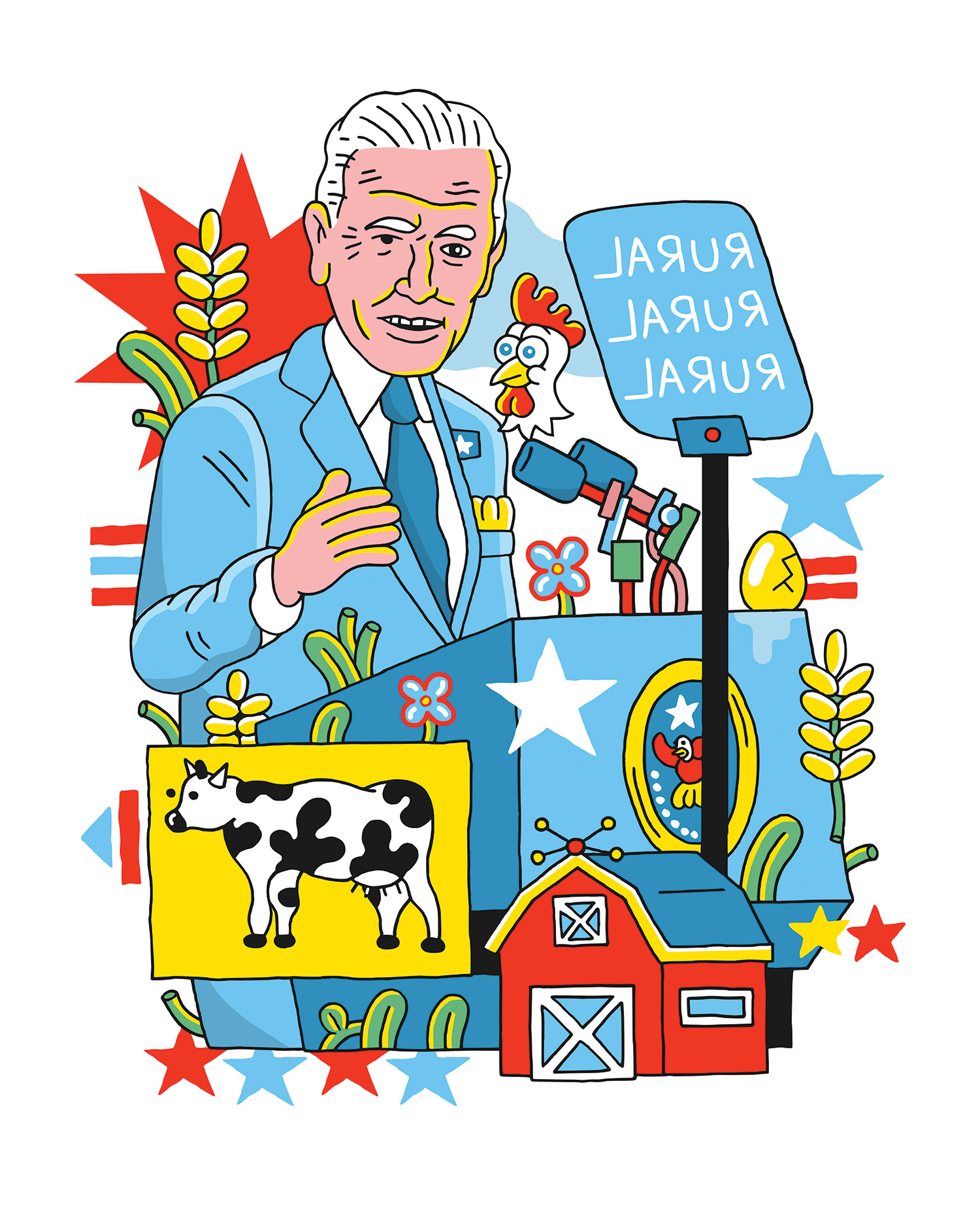
Illustration by Sam Taylor.
Since the 1980s, the Democratic Party’s share of the working-class rural vote has drastically declined. Today fewer than 40 percent of rural voters identify with the party. In many states, Democrats haven’t consistently organized or fielded candidates for local office in rural areas for several years.
Some have argued that a massive government reinvestment in rural communities, such as a “Rural New Deal,” will win voters back. While many rural communities certainly need this assistance, progressive policies alone are unlikely to turn back the rural Republican tide, nor is it clear that such policies would even be welcomed by most rural voters.
Political science research overwhelmingly agrees that large government programs can influence Americans’ attitudes and participation in politics. Beneficiaries of programs like the GI Bill and Social Security have been shown to be more active in politics and, in some cases, more supportive of Democrats. However, even these programs had only modest influence on electoral support over the long run. For instance, rural Americans in states that expanded Medicaid under the Affordable Care Act (ACA) were among those who benefited most from the law. But the insurance gains from the ACA translated into an increase in support of less than 2 percentage points for the ACA and the Democrats in the 2016 election.