How Israel Became a Nuclear Power
Israel’s nuclear program is its worst-kept secret. It was made possible through the support of Western nations like France and has thrived due to a cynical attitude toward nonproliferation that has made the world more dangerous.
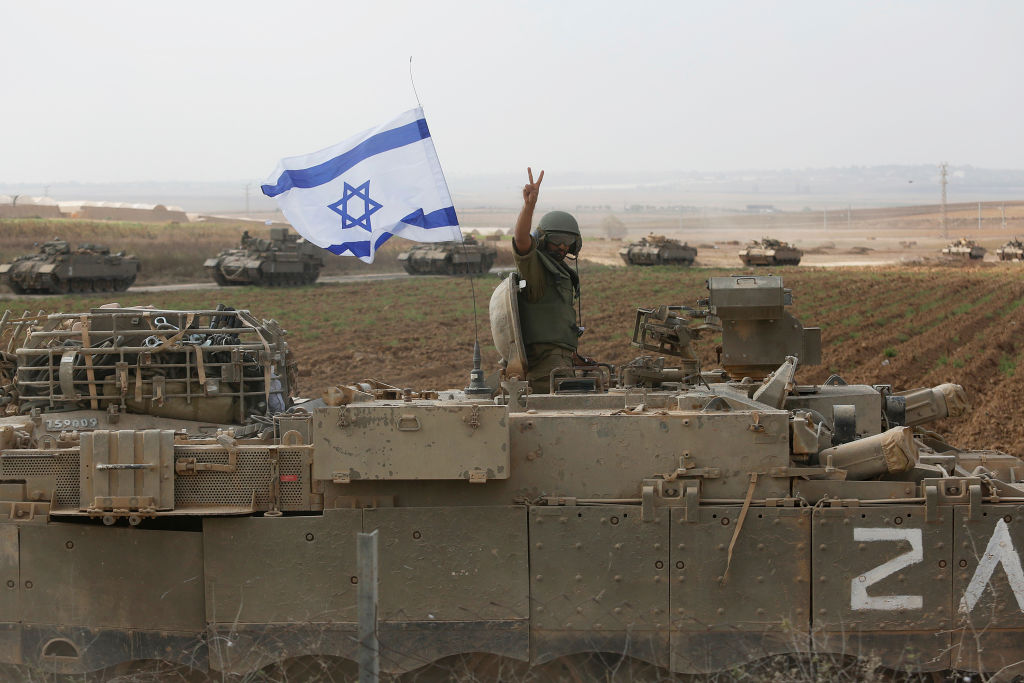
An Israeli soldier rides in a tank near the border with Gaza on October 14, 2023, near Sderot, Israel. (Amir Levy / Getty Images)
Israel’s nuclear weapons program has been an open secret for over fifty years. Declassified documents and the wider availability of satellite imagery has largely been responsible for revealing the extent of the nation’s nuclear program. So too has the courage of whistleblowers such as Mordechai Vanunu, an Israeli nuclear technician who exposed his country’s covert program and was subsequently drugged and kidnapped by Mossad agents in Italy before being secretly tried and sentenced to eighteen years in prison in 1986.
Yet the United States and other nuclear-armed states, as well as a broad range of bodies responsible for monitoring arms proliferation, continue to maintain a policy of not publicly acknowledging the existence of Israel’s nuclear weapons.
These norms of institutional secrecy are surprisingly powerful and far-reaching. US government employees have been fired for referring to Israeli nuclear weapons. Even Wikipedia’s page on the subject uses circuitous language to refer to their existence. (The page is locked to edits from almost all contributors.) This approach is effective: a 2021 poll suggested that more Americans believed that Iran has nuclear weapons than that Israel does, when the reality is the opposite.