Guitarist Charlie Hunter Versus the Music Industry
By music industry standards, Charlie Hunter is one of the most successful guitarists of his generation. But he hates the music industry. These days, he’s devoted to fostering young musical talents in a business designed to crush and exploit them.
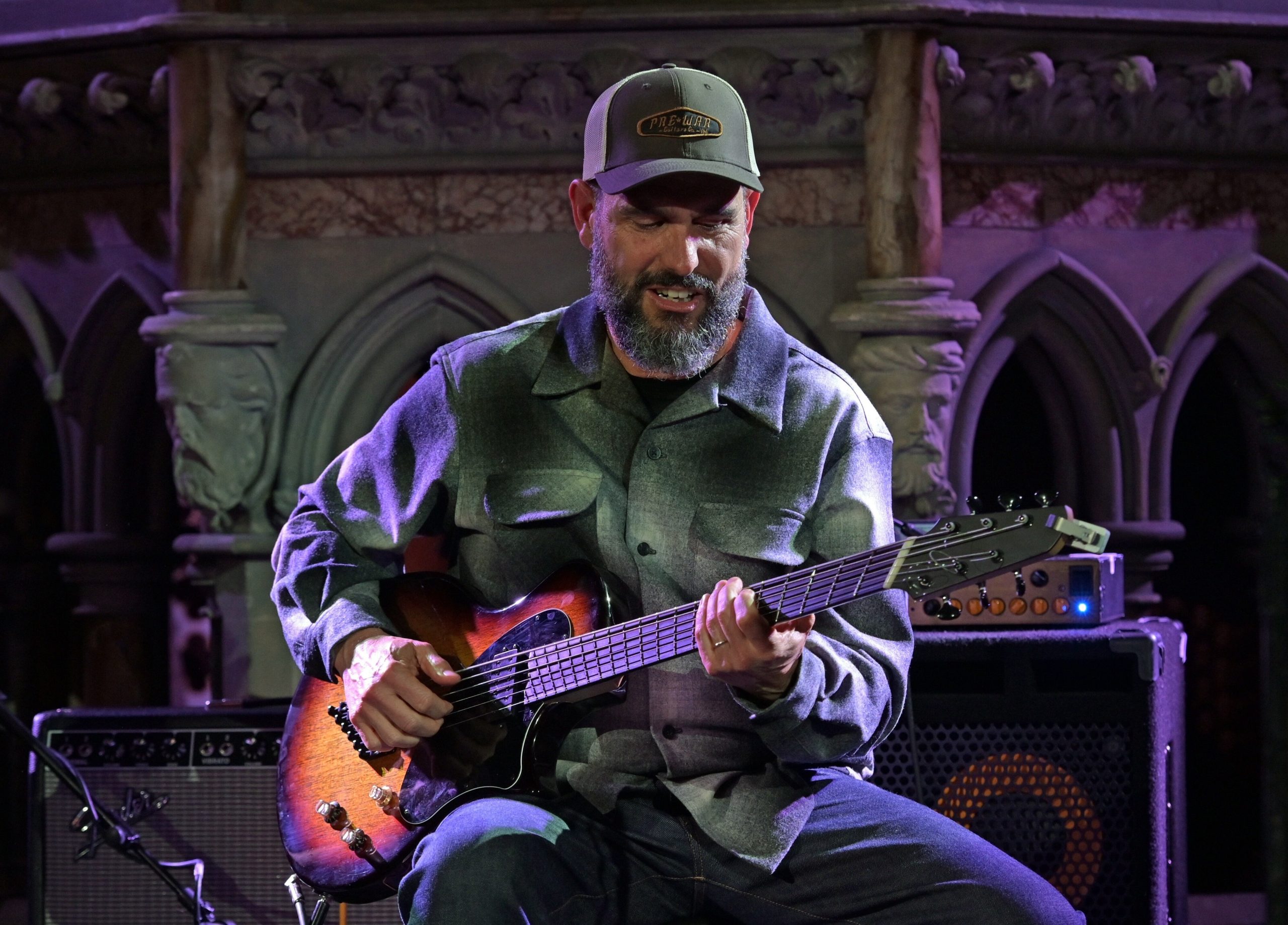
Charlie Hunter is a go-to guitarist for D’Angelo, John Mayer, and Frank Ocean. (John McGloin)
Ever since Edison invented the phonograph, capitalism has etched itself deep into the grooves of the recording industry. The advent of recorded music created new opportunities for musicians and supercharged the evolution of popular music, but also complicated the social and economic bonds between musicians and their overlords.
Early twentieth-century record executives saw a market for black music, for instance, and worked hard to target this market. But there has never been a black music recording industry without exoticization and exploitation. Paramount Records, which produced one-quarter of all blues recordings released between 1922 and 1932, took advantage of this untapped market and devoted all its energies to scouting the American South for black musicians to record, produce, and rip off. The company had abominable business practices, refusing to give artists copies of their recording contracts, constantly cheating them out of royalties, and showing preferential treatment for white musicians, making black musicians record for longer hours without additional pay.
One such black musician was Arthur “Blind” Blake, a fingerpicking ragtime blues guitarist whom Paramount scouts found in Florida. Blake’s distinctive ability to play his guitar like a piano, coupled with his euphonious voice, made him a hot commodity for Paramount. Blake had a profound influence on the evolution of blues guitar, owing both to his eponymous work and his contributions to the recordings of other Paramount artists like Ma Rainey. Nevertheless, Blake would die of tuberculosis at the age of thirty-eight, impoverished.