“Banking-as-a-Service” Firms Can Evaporate Your Life Savings
On the rise in the banking sector, "banking-as-a-service" companies operate outside purview of banking regulators. With lax oversight and heavy industry lobbying, these firms are misleading consumers about the safety of their savings.
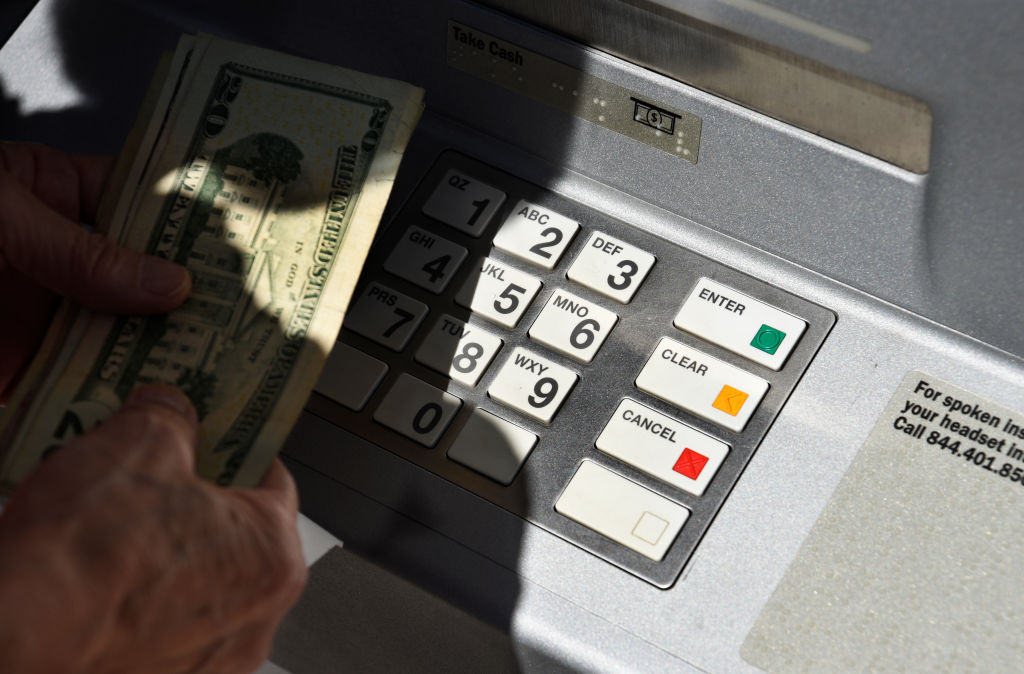
A banking customer withdraws money from a ATM machine in Santa Fe, New Mexico. (Robert Alexander / Getty Images)
When Chris Buckler opened an account with Juno — a savings app that advertises itself as a “complete bank replacement” — he thought he was being financially responsible. The app offered high returns on savings accounts, offered direct deposit for paychecks, doled out retailer gift cards as bonuses, and implied that user funds were federally insured, just like any legitimate bank account.
“I wanted to make sure I was getting the best interest for my money,” Buckler, a forty-three-year-old high school computer science teacher in Abingdon, Maryland, told the Lever. “I think I knew that [Juno] wasn’t necessarily a bank, but I saw that they were working with Evolve Bank & Trust and I did some research, and [Evolve is] a bank that’s been in business for a long time.”
Nearly eighteen months after he opened the Juno account, Buckler has lost all access to the $38,000 he has stored there — years of savings — thanks to the collapse of a different company called Synapse Financial Technologies, which provided digital transaction ledgers for financial technology (fintech) companies like Juno and their traditional bank partners. Synapse filed for bankruptcy in April and in May went completely offline, while allegedly failing to provide adequate transaction ledgers to its banking partners — leaving tens of thousands of users like Buckler unable to access their funds.