Slavery Was Crucial for the Development of Capitalism
Historian Robin Blackburn has completed a trilogy of books that provide a comprehensive Marxist account of slavery in the New World. He spoke to Jacobin about the intimate links between the slave systems in the Americas and the origins of capitalism.
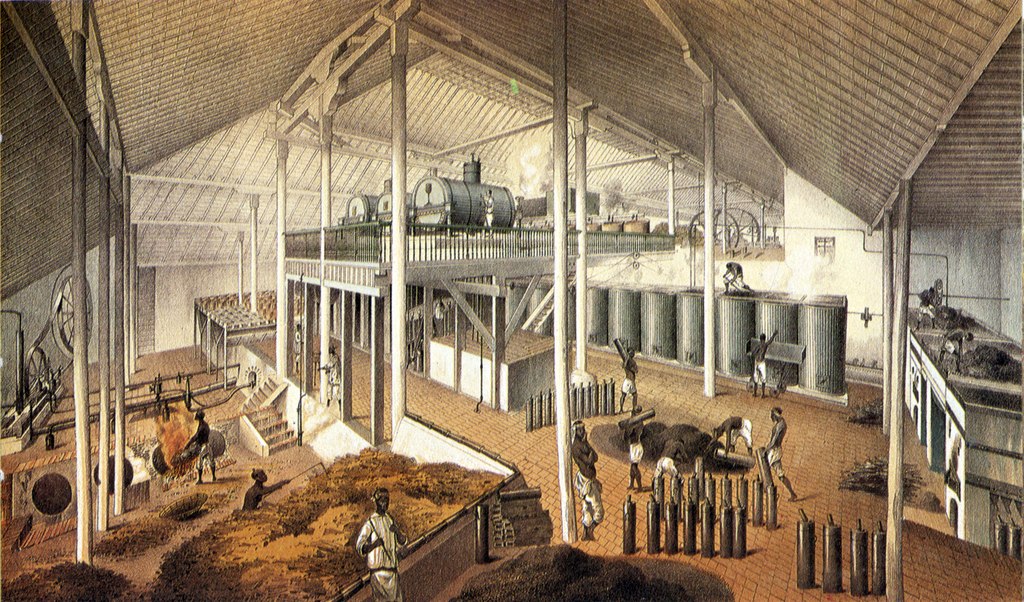
Boiling House at the Sugar Plantation Asunción, Cuba, 1857. (Justo German Cantero / Wikimedia Commons)
Robin Blackburn, longtime editor of the New Left Review, is probably the foremost Marxist historian of New World slavery working today. In The Overthrow of Colonial Slavery: 1776–1848 (1988) and The Making of New World Slavery: From the Baroque to the Modern, 1492–1800 (1997), Blackburn charts the construction and revolutionary downfall of the slave systems of the colonial Atlantic.
These two volumes — complemented more recently by An Unfinished Revolution: Karl Marx and Abraham Lincoln (2011), and The American Crucible: Slavery, Emancipation and Human Rights (2013) — together comprise a comprehensive transnational account of what Blackburn’s newest book designates “the First Slavery.”
With The Reckoning: From the Second Slavery to Abolition, 1776–1888 (2024), the historian provides the long-awaited concluding volume to his chronological trilogy on racial slavery in the New World. Owen Dowling sat down with Robin Blackburn to discuss the book, his now-completed trilogy as a coherent whole, and what a Marxist perspective brings to the study of slavery, racism, and capitalism in global history.