Jean-Paul Sartre’s Existential Marxism Shows How We Can Make Our Own History
Jean-Paul Sartre was the world’s most renowned philosopher when he set out to renew Marxist theory in the 1950s. The result was a brilliant analysis of how human beings can overcome the weight of social structures to change the world for the better.
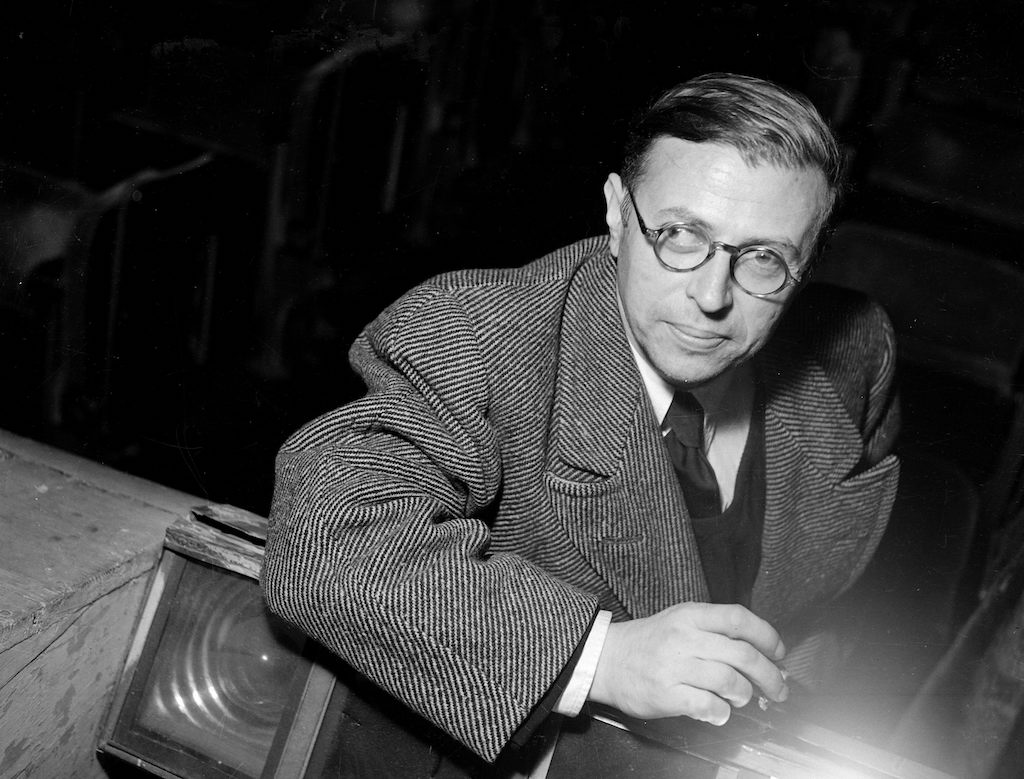
Jean-Paul Sartre in Paris, 1946. (Roger Viollet via Getty Images)
Jean-Paul Sartre is often regarded as the quintessential committed twentieth-century intellectual, a writer and philosopher whose output evolved from a preoccupation with literary writing, aesthetics, and phenomenology in the 1930s to a conception of intellectual commitment in the postwar years that owed much to Marxist political philosophy.
Indeed, Sartre’s chief intellectual preoccupation in the 1950s, building on his famous affirmations of intellectual commitment of the immediate postwar years, was to “renovate” Marxism. In other words, he wanted to bring it up to date by reformulating it in an era — that of Stalinist dialectical materialism or diamat — in which he felt that it had lost its way. Communist politics, he insisted, was not based on a sound theoretical footing.
Sartre set himself the task of addressing a perennial problem in Marxist thought, and indeed any form of social theory that tries to make sense of the historical process. What is the relationship between human agency and the field of structural constraints in which it has to operate? If we are historically and socially conditioned beings, how can we act on our social context to bring about change?