When Jamaican Slaves Rebelled on Christmas Day
On Christmas Day in 1831, 60,000 enslaved Africans carried out the largest uprising in British West Indies history. Their uprising would prove a milestone on the road to emancipation only a few years later.
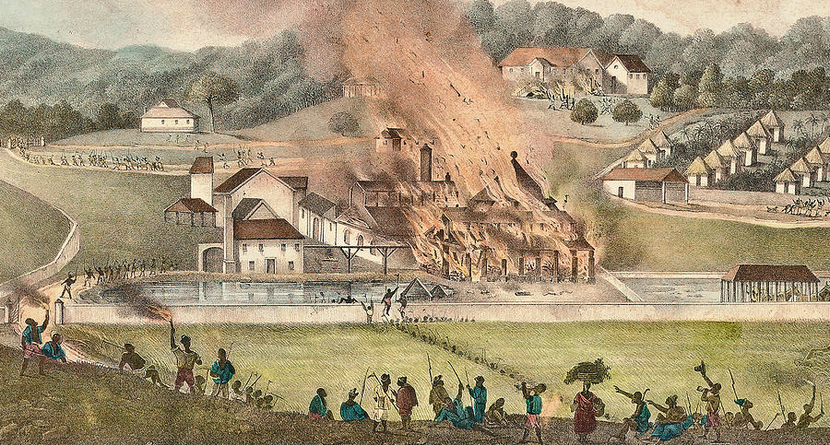
The destruction of the Roehampton Estate in January 1832. (Adolphe Duperly / Wikimedia Commons)
In late December 1831, white Jamaican planters slept restlessly in their beds. Rumors had long been circulating of disquiet among the enslaved Africans residing in plantations across the island. Before they knew it, the island would be set ablaze as tens of thousands armed themselves to fight for their freedom.
As it became known, the Christmas Rebellion (or Baptist War, named so after the faith of many of its key conspirators) was the largest uprising of enslaved Africans in the history of the British West Indies, and directly influenced the abolition of slavery in 1833 and full emancipation in 1838.
To understand the dynamics at play during the uprising, it’s vital to understand the social structure of nineteenth-century colonial Jamaica. Jamaica, like much of the West Indies, was what was known as a plantocracy. In this arrangement, a minority of white European settlers, human traffickers, and plantation owners dominated the enslaved African majority on the island.