How Raymond Aron Became a Patron Saint of Cold War Liberalism
The French writer Raymond Aron is often praised by liberals for his nuanced, nonideological thinking. In reality, he lived in the pocket of the CIA and gave an intellectual veneer to NATO’s imperialistic foreign policy.
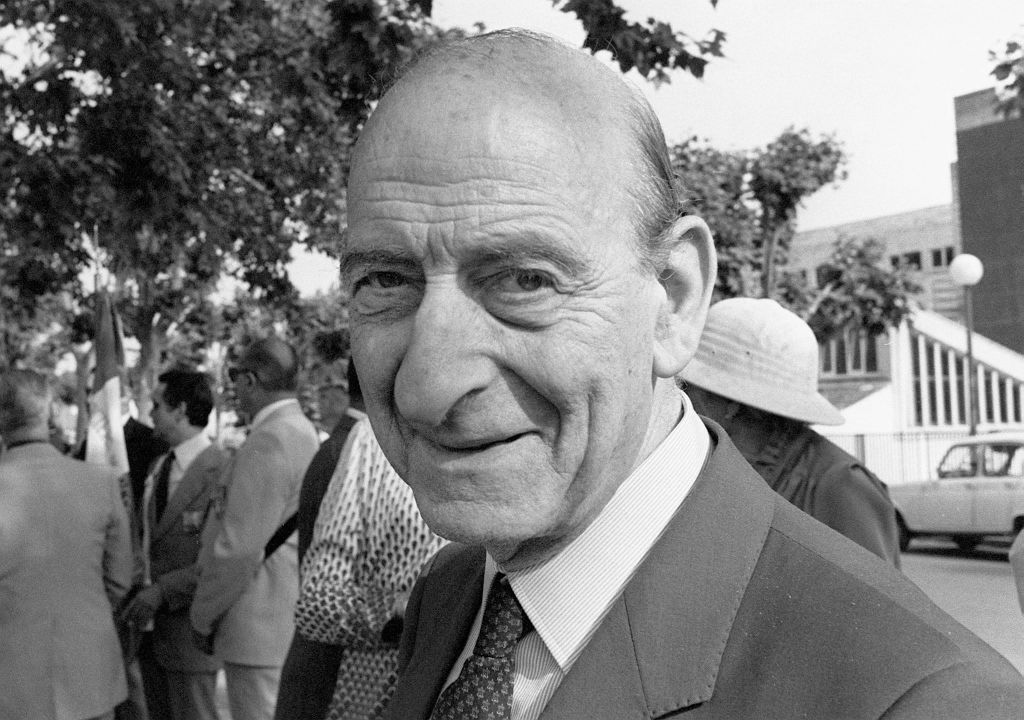
French philosopher Raymond Aron, June 17, 1983. (Raph Gatti / AFP via Getty Images)
Raymond Aron’s status as a patron saint of French liberalism stems not so much from his success as a Cold War pamphleteer as from the intellectual poverty of his epigones. Here was a man ever ready to uncork sound, no-nonsense editorials in favor of American foreign policy but who could also lecture on continental philosophers wholly obscure to his political associates. During an era in which French intellectuals had turned inward to study their favorite subject, France itself, Aron, part sociologist, part philosopher, part foreign-policy intellectual, cut an interesting figure.
Born in 1905 into a wealthy, assimilated Jewish family in Paris, Raymond Aron was one of the preeminent political thinkers of the last century. He studied philosophy with Jean-Paul Sartre, befriended pretty much everyone worth knowing in literary Paris, and stood next to Golo Mann while the Nazis burned books in Berlin; he wrote Peace and War: A Theory of International Relations (one of the seminal works on realist international relations), edited a resistance magazine in wartime London, and penned a number of learned monographs, all the while contributing weekly columns for the French press.
Liberty and Equality — Aron’s last Collège de France lecture, published now for the first time in English — is billed as the “ideal introduction” to Aron’s work. But I wonder. Throughout, there are flashes of Aron’s hauteur, what the translator calls his “Periclean” streak. But this is a very slim volume, with half of its pages given over to commentaries by the political scientists Mark Lilla and Pierre Manent. It is unclear who exactly would go for a little bit of Aron. Has he got any casual readers whatsoever? It seems to me that his readers are either cultishly loyal or nonexistent.