Gene Sharp, the Cold War Intellectual Whose Ideas Seduced the Left
Gene Sharp has been called the most important American political figure you’ve never heard of. How did a militant Cold Warrior come to wield so much influence in protest movements from Venezuela to the Middle East?
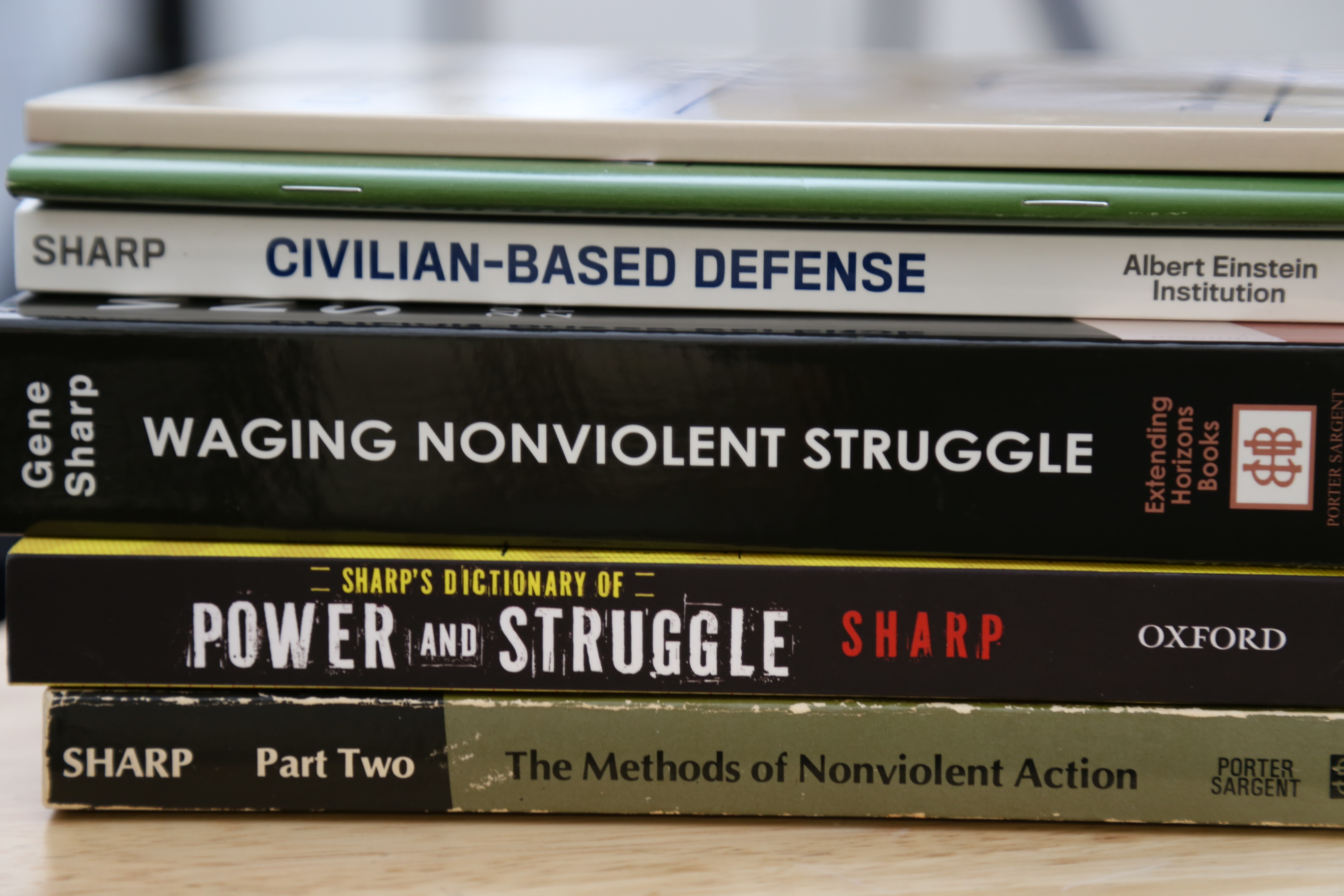
A stack of books written by Gene Sharp, one of the most important Cold War defense intellectuals in the United States. (Phil Wilmot)
Gene Sharp is hardly a household name, but the late thinker’s ideas about nonviolent action have suffused protest movements in the United States and around the world. And yet, while Sharp is often classed with dissenters like Gandhi and Martin Luther King, he himself was no anti-establishment figure. Ensconced for decades at Harvard’s Center for International Affairs, he worked closely with intellectuals at the heart of the US defense establishment. How did a militant Cold Warrior come to wield so much influence on protest movements from Venezuela to the Middle East?
In an essay for Nonsite last month, Marcie Smith of John Jay College presented some of the findings of her research into Sharp’s life and work. Sharp, she discovered, was, in her words, “one of the most important Cold War defense intellectuals that the U.S. has produced” — a fact that might surprise some of those who have been influenced by his ideas. In this interview with Jacobin’s Branko Marcetic, Smith expands on her essay, describing Sharp’s life and career and how he paradoxically helped to inject neoliberal ideas about the state into the intellectual climate of the American left.
Branko Marcetic
Let’s start with an explanation of who Gene Sharp was and why he was such a significant figure. What brought you to look into his career in the first place?
Marcie Smith