First Water, Then Wine
Spiritual needs are more likely to be satiated if the basics — food, clothing, shelter, and employment — are met first.
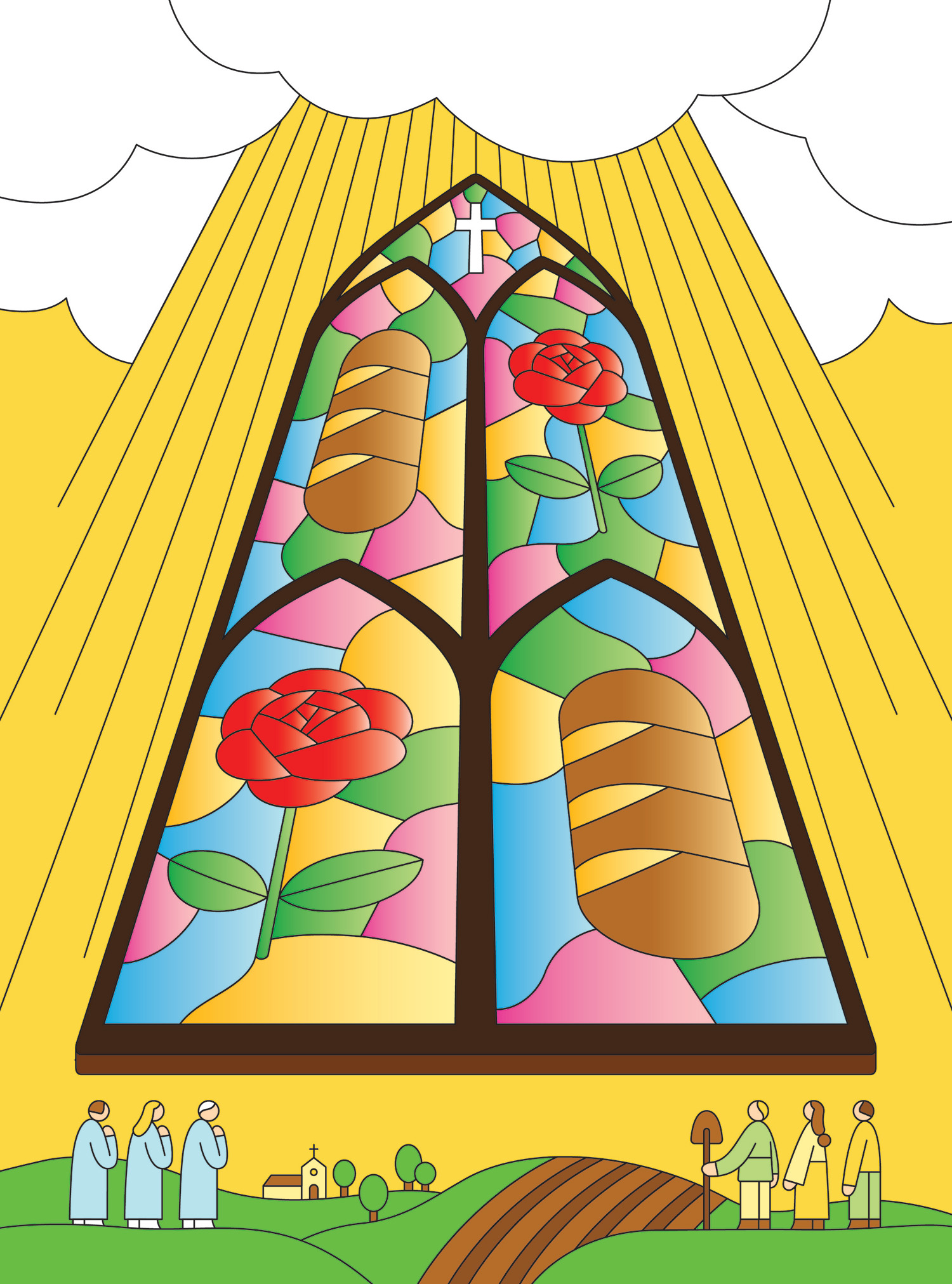
Illustration by Rose Wong
For years, the lineup for this November’s election was widely prophesized — its fulfillment is hardly a miracle. Still, for some the rematch between Joe Biden and Donald Trump looks divine. Ahead of this year’s Iowa caucus, Trump posted a video narrated by an AI-generated simulacrum of the late conservative radio host Paul Harvey. Where Harvey’s original 1978 “So God Made a Farmer” speech hailed rural Americans as stewards of the Lord’s creation, the AI on Truth Social spoke of a different caretaker. “God said, ‘I need somebody willing to get up before dawn, fix this country, work all day, fight the Marxists, eat supper, then go to the Oval Office and stay past midnight at a meeting of the heads of state.’ So God made Trump.” Through some mystical realignment in the heavens, the billionaire has apparently taken over the role previously allotted to farmers.
His God, like others, has often relied on worldly instruments and adapted to technological innovation, secular ideologies, and media trends. This is frequently in tension with the religious message itself. For part of today’s online right, there is no greater sin than presentism — the submission of all culture and all values to the fads of the current moment. To stand against this tide, to aspire for a higher, eternal guidance, is to cling on to a rock of identity, purpose, and control. It is to once again reach for God.
Using the masters’ tools to tear down the house of the world’s godless masters, “trad Caths” churn out Instagram reels in rejection of a materialistic and heathen postmodernity; even Hindu nationalists flooded TikTok with memes about marrying Kashmiri girls before Narendra Modi’s government banned the app. But the emergence of new forms of public religiosity isn’t just about new tools for proselytizing. Across both new democracies and older ones, professions of faith are key to the rise of identity politics. Even where denominations are new or rapidly rising — conservative brands of Islamism among Indonesian youth or Pentecostals opening one new church a week in São Paulo — they take up the banner of protecting an eternal past from the demons of globalization and postmodernity.