Wall Street Is Finding New Ways to Milk the Prison System
Some states have taken on the cost of prison phone calls to keep private equity–backed telecom companies from price gouging inmates and their loved ones. Yet these companies have found new ways to exploit prisoners.
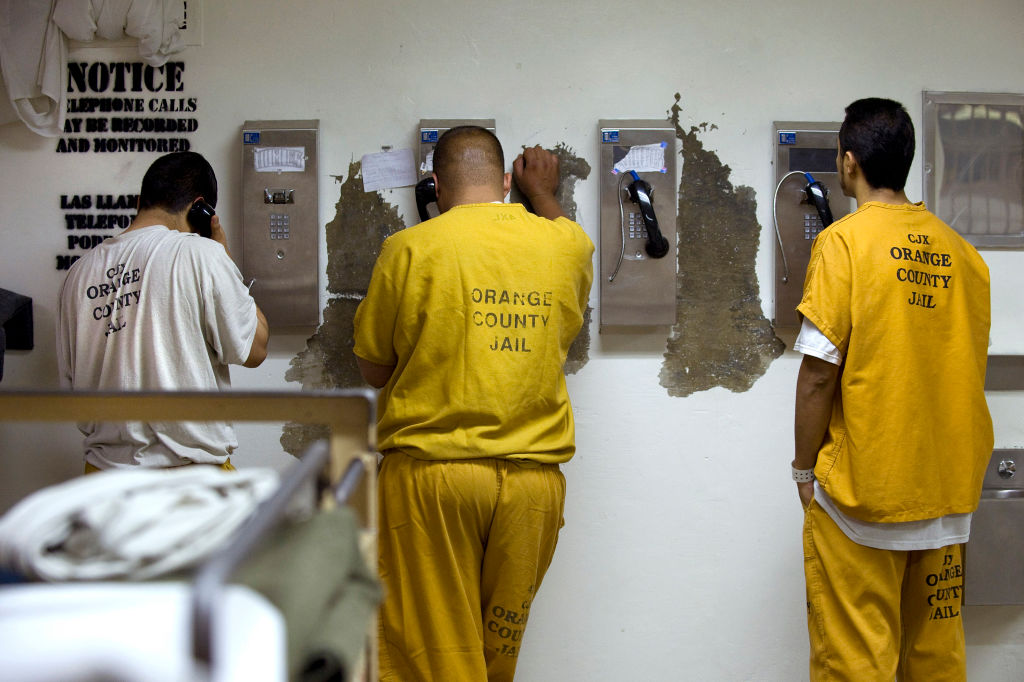
Inmates make collect phone calls at the Sheriff’s Central Men’s Jail in Santa Ana, California, May 24, 2011. (H. Lorren Au Jr / MediaNews Group / Orange County Register via Getty Images)
As part of a growing effort to stop prison telecom monopolies from charging exorbitant fees for calls between prisoners and their families, last year Minnesota became one of the first states to make all phone calls free for prisoners. And to eliminate the kickback system perpetuating the scheme, the state barred its agencies from collecting commissions on prison phone services, as well as on video calling and e-messaging.
But records obtained by us show Minnesota’s Department of Corrections still collected hundreds of thousands of dollars in kickbacks last year from commissions on other prison services private telecom companies controlled — including money transfers, music access, and other entertainment behind bars. All in all, the records suggest the telecom firms brought in nearly $3 million in revenue from an ever-increasing array of nonphone prison services in the state.
Minnesota, which was the fourth state in the country to make the government, not prisoners, pay for phone calls, is a case study in how prison communication companies and their private equity owners have managed to preserve their symbiotic relationship with state corrections agencies despite reforms — at the major expense of incarcerated people and their families.