A New People Is Born in Chile
The mass protests that have rocked Chile this month declare a new popular movement, emerging from the ruins of a broken system. The country’s new left force, the Frente Amplio, must seize on the people’s demands for radical transformation, from the ground up.
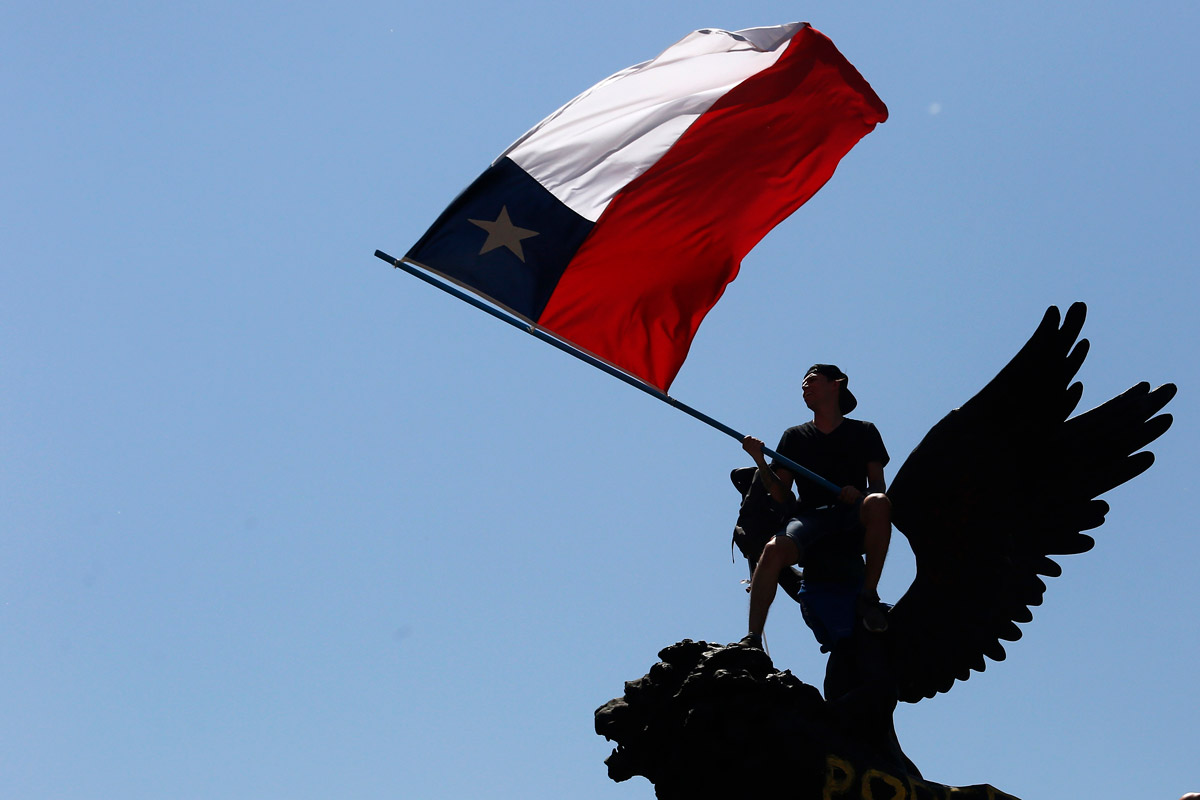
A demonstrator waves a Chilean flag on top of a monument during the seventh day of protests against President Sebastián Piñera on October 24, 2019 in Santiago, Chile. (Marcelo Hernandez / Getty Images)
Thanks to the ongoing protest movement in Chile, the legitimacy of the country’s neoliberal model is currently on trial — reason enough to feel hopeful. The huge revolts have been even larger than the impressive mobilizations seen earlier this decade in Chile, capturing the imagination of radical resistance movements around the globe. With the staggering popular turnout on the streets, covering almost all sectors of Chilean society, there is plenty of reason for optimism, but this opening also poses a number of serious challenges for the Chilean left.
A Crisis of Legitimacy
Neoliberalism sealed its grip in the 1980s under the Pinochet regime, once the Left had been radically weakened. Contrary to the widely accepted theory of neoliberalism, the Chilean model is based on a regulated and state-dependent form of capital accumulation; its highly concentrated economy rests principally on extractive industries, along with lower value-added sectors like services.
This system has promoted an obscene concentration of wealth (today, the richest 1 percent Chileans take roughly 33 percent of income, according to the World Bank). Inequality is soaring, and middle-class Chileans have been hit hard, pushing them to join in on the protests; they can be seen banging on pots and pans alongside the residents of Chile’s informal slums. In fact, except for the most elite quarters, virtually all of Chilean society is out protesting.