Why the Arab Spring Failed
As inspiring as the Arab Spring uprisings of the early 2010s were, they failed to democratize the Middle East. The primary cause had little to do with the region’s cultural or religious characteristics and everything to do with the profound weakening of the Middle East’s working-class power under neoliberalism.
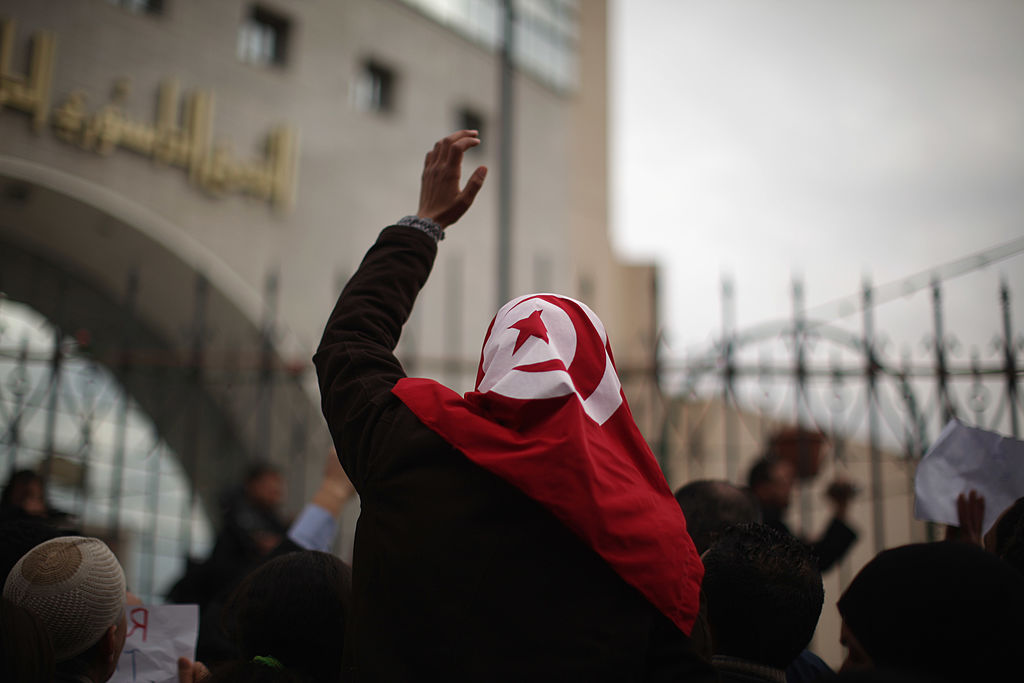
Tunisians protest outside the Constitutional Democratic Rally (RCD) party headquarters in Tunis, Tunisia in January, 2011. (Christopher Furlong / Getty Images)
It’s been almost a decade since the Arab Spring began, and there is still a dearth of satisfying explanations for the uprisings’ overall failure to achieve enduring democratic progress or a better quality of life for the people of the region. In his article “The Arab Thermidor” published in Catalyst, Anand Gopal attempts to fill in some of the blanks.
Why did the rebellions militarize so quickly? Why didn’t they rely on strikes and other exertions of collective working-class power? Why were their liberal elements discredited and discarded in favor of their fundamentalist elements, and how did groups like ISIS exploit the divisions among their ranks?
In this conversation, which originally appeared on the Jacobin podcast The Vast Majority, Gopal answers these questions for Meagan Day and Micah Uetricht. Gopal takes a materialist approach to the development of the Arab Spring, focusing on changing class dynamics in Middle East society and emphasizing that “there’s no substitute for independent working-class power.”