Sahra Wagenknecht Can’t Unite Germany’s Working Class
- Adam Baltner
Long a leader of Germany’s left party Die Linke, Sahra Wagenknecht looks set on creating her own rival party. She accuses the Left of abandoning its historic base — but her appeal to conservative values divides the working class rather than uniting it.
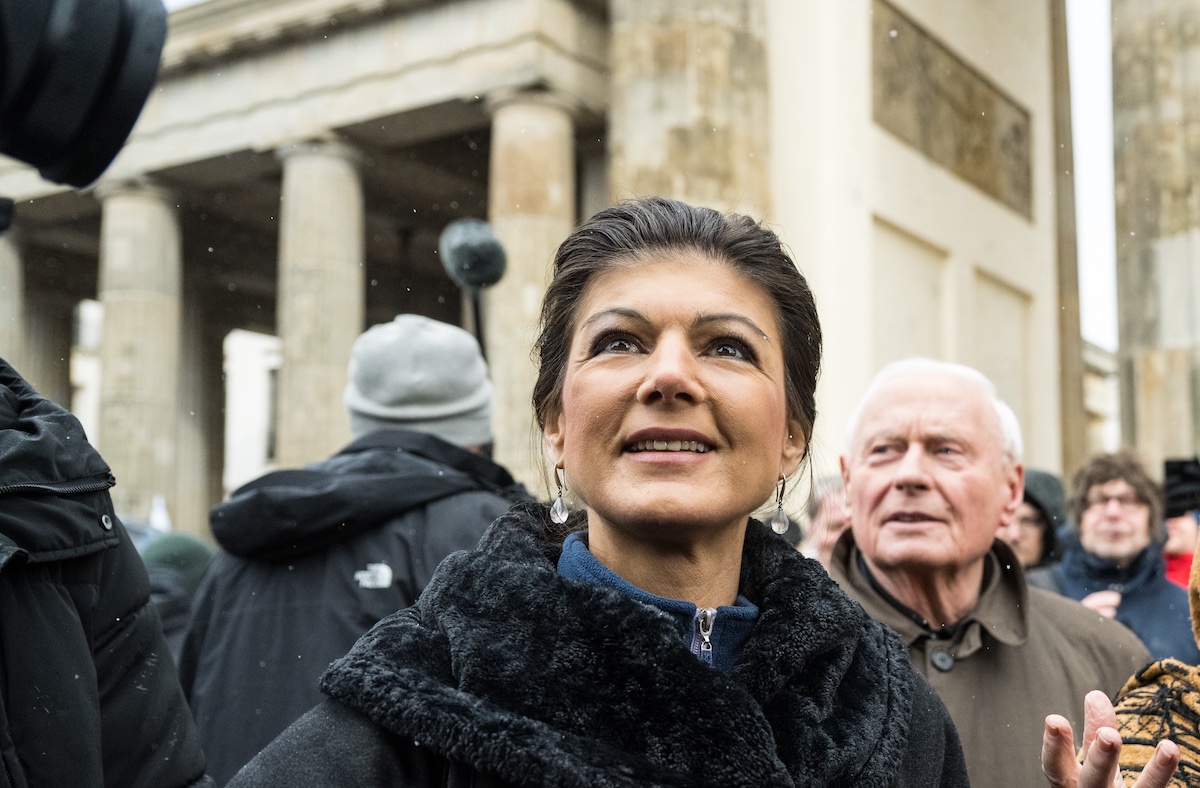
Sahra Wagenknecht’s project of conforming and adapting to the New Right in the hopes of stopping Germany’s rightward shift will not end well. (Steffi Loos / Getty Images)
“Soon she’ll be limping too.” Legend has it that Lothar Bisky, chair of the 1990s-era German Party of Democratic Socialism (PDS), uttered this sardonic remark about Sahra Wagenknecht back in the days when she was making waves both inside and outside the party as an open communist. Bisky’s comment was a reference to Rosa Luxemburg, who famously walked with a limp due to a disability. At the time, Wagenknecht’s haircut and clothing style, characterized by a penchant for lace blouses, bore a striking resemblance to textbook images of the most famous woman in the history of German socialism.
Like Luxemburg, Wagenknecht was eloquent and sharp — and ever at odds with her party’s leadership. Yet Bisky’s allusion took aim not only at Wagenknecht’s political position but also her sense for showmanship and the aesthetic side of politics. From the very beginning, Wagenknecht has been a brand, and a profitable one at that: as far back as 2002, she demanded a fee from the PDS for her appearances at campaign events in the run-up to that year’s federal election.
Sahra Wagenknecht is a contrarian by nature. Born in East Germany in 1969, she joined the ruling Socialist Unity Party of Germany (SED) — the PDS’s predecessor — in 1989, just as a democratic revolution was breaking out in her country. Against the prevailing mood, Wagenknecht saw little to celebrate in the antiauthoritarian uprising, describing it as a “counterrevolution.” In the following years, she criticized capitalist West Germany’s destruction of East German industry, careers, and living conditions more incisively than just about anyone else. At the same time, as the most high-profile member of the PDS’s Communist Platform, she also relished playing the role of the unapologetic Stalinist, marveling at Stalin’s “impressive modernization policy” and referring to East Germany as the “most humane commonwealth” in German history. In 2002, when the PDS issued a declaration that there had been “no justification” for the killings of East German citizens who tried to cross to the other side of the Berlin Wall, Wagenknecht was the sole dissenting vote on the party executive.