The Premier League’s Liverpool FC Is at Risk of Abandoning Its Working-Class Roots
The impact of Saudi money on the Premier League, whose first match is today, is tremendous. Liverpool FC's experience highlights the delicate balance between football’s loyalty to its working-class heritage and the changes wrought by the influx of oil dollars.
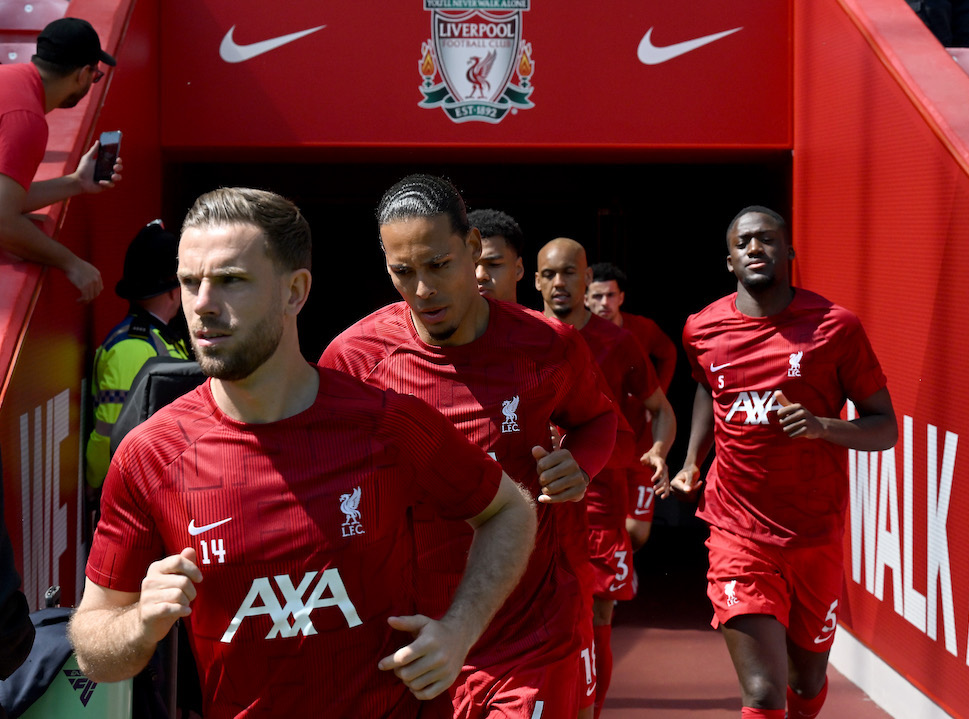
Jordan Henderson, former captain of Liverpool, before a Premier League match on May 20, 2023 in Liverpool, England. (Andrew Powell / Liverpool FC via Getty Images)
As another football season kicks off, it’s worth asking: Why does the Premier League exist? A cynic could answer, “To make money,” and they wouldn’t be wrong. Over the course of 2021–2022, the Premier League pocketed $6.2 billion, more than twice as much as any other football league in Europe. When speaking for itself on its own website, the Premier League says, “In the early 1990s, English First Division clubs believed that a radical restructuring of football was needed if they and the game in general were to develop and flourish.”
What issues afflicted the sport, causing the First Division to become what is now the Premier League? The short answer is: a lack of financial surplus. It turns out that the “radical restructuring of football” the sport so badly needed was a prerequisite to funneling boatloads of money into the pockets of owners. This is where the happily received overtures of the Saudi Arabian Professional Football League come into play and, in Liverpool’s case, cause acute anxiety.
Perhaps more than any other team, the Liverpool Football Club’s journey and role in these recent shifts exemplify the complex relationship between soccer’s traditional roots and the demands of the modern game. The history around the game in Liverpool marks it as having the most left-leaning history and culture within the Premier League.