How Capitalism Changed Football for the Worse
Across England, the most successful businesses in world football grow ever richer — while long-established community clubs from Bury to Bolton and Wigan slowly die in their shadows. Big capitalists are transforming the sport we love for the worse.
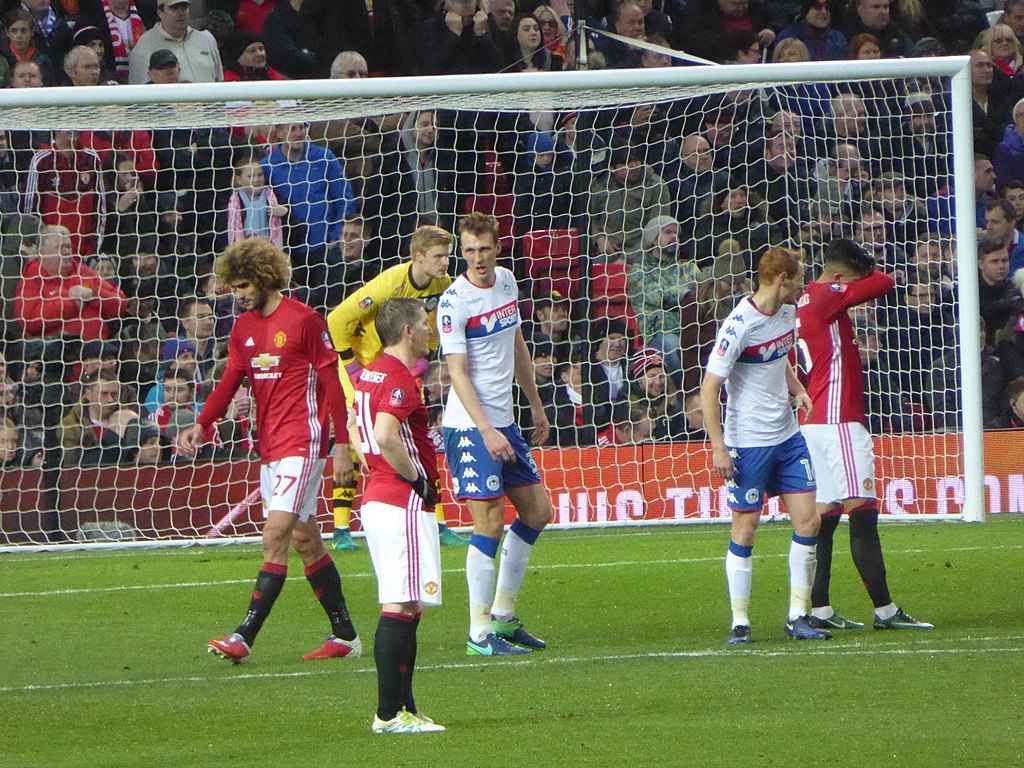
Manchester United vs. Wigan Athletic (4-0) in the FA Cup, on January 29, 2017 in Manchester, England. (Wikimedia Commons)
Seven years ago, two teams from England’s North West went down to Wembley Stadium to play out one of football’s great David-and-Goliath stories. In the final moments of the FA Cup Final, Ben Watson’s bullet header won the game for plucky Wigan Athletic against cash-rich Manchester City, whose two strikers cost four times more than Wigan’s entire team. It was a moment that proved football could still throw up the odd fairy tale. Yet three days later, Wigan were relegated from the Premier League, and they haven’t been back since.
Last month, the prospect of them returning became more distant than ever: the club announced it had entered financial administration — the first professional club in England to do so during the COVID-19 crisis. In the year leading up to their insolvency, the club reported a net loss of £9.2 million; on the day Wigan made their insolvency public, Manchester City announced the sale of an unwanted midfielder for £45 million.
The North West of England is, to use the sport’s parlance, a footballing hotbed. It is home to about twenty-five professional clubs, with Greater Manchester alone accounting for seven. The region has won as many league titles as the rest of the country put together. The first-ever Football League in 1888 was half comprised of six Lancashire teams. A gang of Lancastrian millers even found the time to set up Dynamo Moscow in the 1880s.