Margarete Schütte-Lihotzky Built Red Vienna, Then Fought Nazis
- Virgilio Urbina Lazardi
Viennese architect Margarete Schütte-Lihotzky is best known as the designer of the Frankfurt Kitchen, forerunner of modern fitted kitchens. Her work was informed by her communist politics — a cause in whose name she joined the resistance against Nazism.
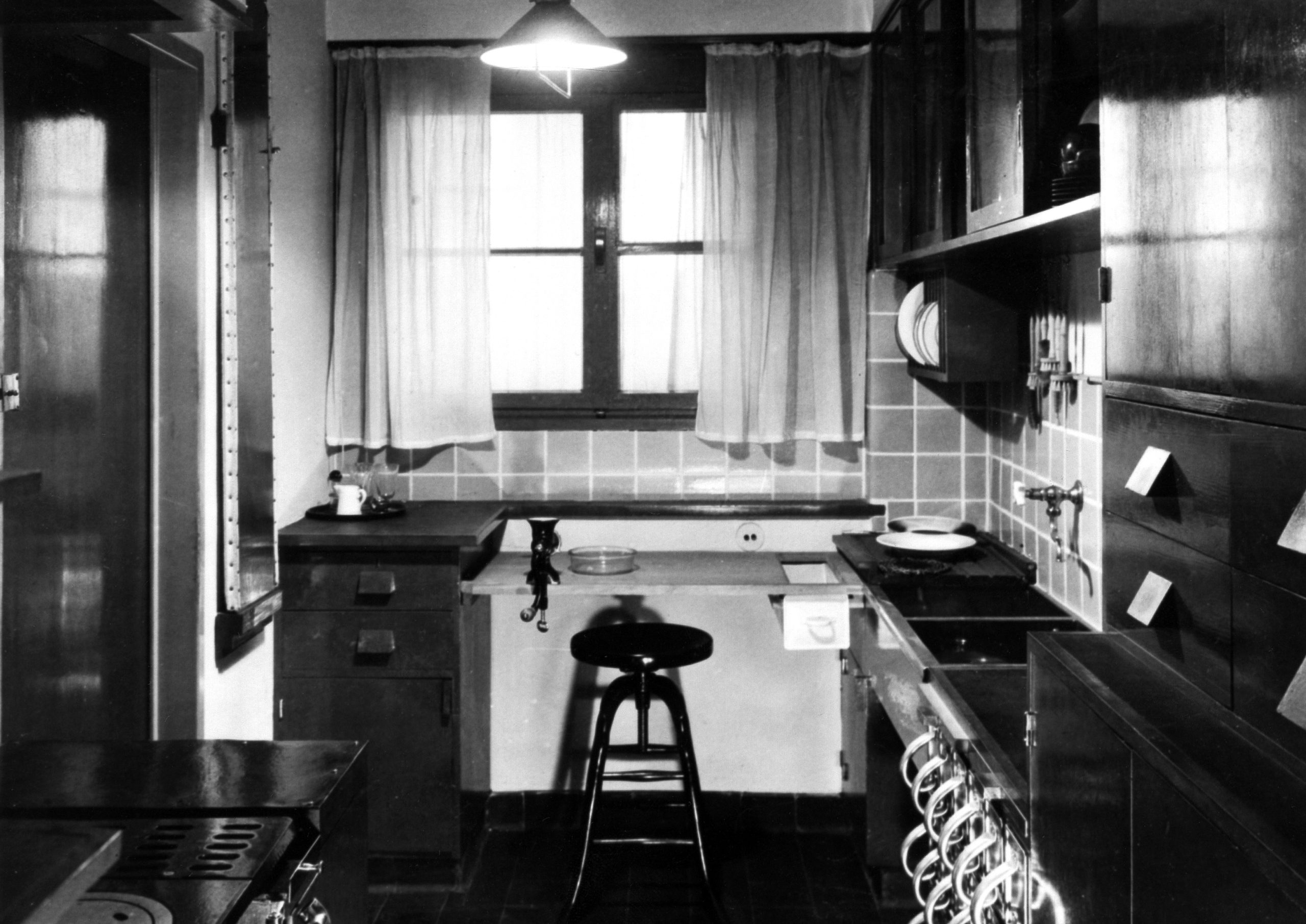
Kitchen designed by Margarete Schütte-Lihotzky, 1926. (Ullstein bild via Getty Images)
Margarete Schütte-Lihotzky (1897–2000) is best known to the public for her work in the 1920s designing the “Frankfurt Kitchen,” widely regarded as the forerunner of modern fitted kitchens. Yet, the Viennese architect’s long life and storied career consisted of much more than this: she designed everything from Vienna’s iconic suburban settlements to kindergartens and even the headquarters of a large publishing company. She worked on the social democratic housing projects of Red Vienna and New Frankfurt in the 1920s, followed by seven years in the Soviet Union and a number of stays in the German Democratic Republic (GDR) in the second half of the twentieth century.
Throughout her life, she maintained a deep commitment to peace and women’s rights. She was a member of the Communist Party of Austria (KPÖ) for more than six decades and spent the years between 1941 and 1945 in Nazi prisons as a result of her involvement in the anti-fascist resistance.
Yet, relatively little about Schütte-Lihotzky’s remarkable legacy had appeared in English until now. That changed with the recent publication of the volume Margarete Schütte-Lihotzky. Architecture. Politics. Gender: New Perspectives on Her Life and Work. To find out more about her life and work, the Rosa Luxemburg Foundation’s Uwe Sonnenberg spoke with the volume’s editors, Bernadette Reinhold and Marcel Bois, as well as contributors Thomas Flierl and Christine Zwingl.