Austria’s Communists Are Showing How Class Politics Is Done
In Sunday’s state elections in Salzburg, Austria, the Communist Party scored 12% of the vote. Their success mobilizing around housing issues shows that a focus on working people’s material needs can rally support even in long-conservative areas.
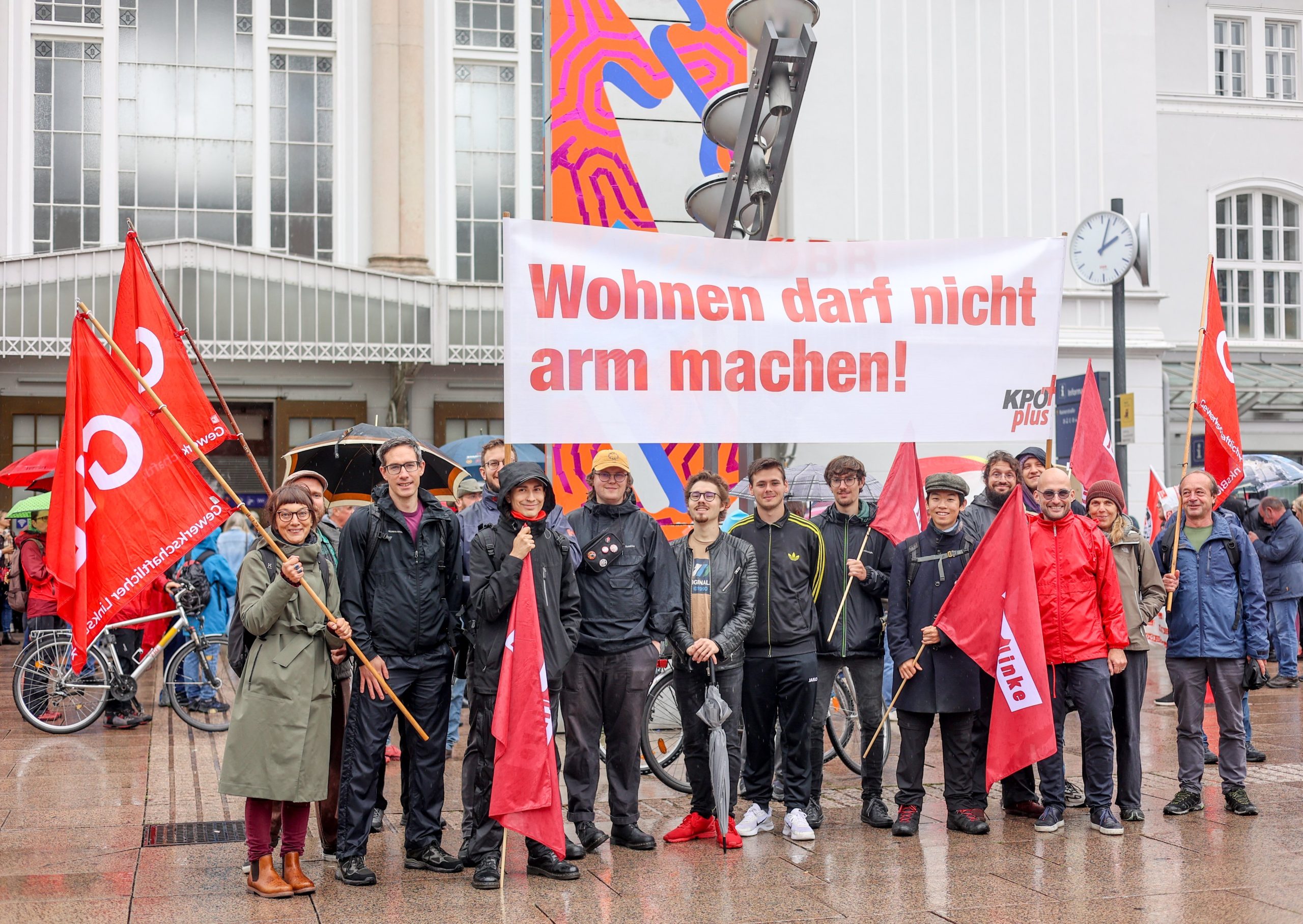
Communist Party of Austria leader Kay-Michael Dankl at a demonstration with fellow party members and supporters in September, 2022. (@kay_dankl / Twitter)
On Sunday, April 23, Austria’s political landscape was rocked by a true earthquake. In legislative elections in the state of Salzburg, where conservative and far-right parties combined currently control over 60 percent of the seats, the Communist Party of Austria (KPÖ) won 11.7 percent and thirty-one thousand of the votes cast. This result put the party in fourth place, behind the conservative Austrian People’s Party (ÖVP, 30.4 percent), the far-right Freedom Party of Austria (FPÖ, 25.7 percent), and the Social Democratic Party of Austria (SPÖ, 17.9 percent) — yet ahead of the Greens, as well as NEOS, a libertarian party which missed the threshold to return to the state parliament.
This result is striking in many respects. The last and only time that the KPÖ had earned a mandate in a Salzburg state election was in 1945, off the back of the Allied victory in World War II, when it managed a modest 3.8 percent of the vote. In most Salzburg state elections since then, the Communists have not even cracked the 1 percent mark — when they have bothered to run at all. In the last election in 2018, they received a mere 0.4 percent and one thousand votes.
Yet the KPÖ’s success is not just unprecedented for Salzburg state. Before Sunday, the party had never managed a double-digit result in any Austrian state election. Even in Styria — for decades the only Austrian state with Communist representatives in its legislature — the party won 6 percent of the vote and two mandates in 2019, the most recent election year. Now it will likely control four of the thirty-six seats in the next Salzburg state legislature.