Tyre Nichols’s Death Is What Happens When You Get “Tough on Crime”
As soon as it became electorally inconvenient, the Democrats largely dropped their support for police reform and adopted a crime-fighting approach straight out of the ’90s. The result: shocking police murders like Tyre Nichols’s have become more common.
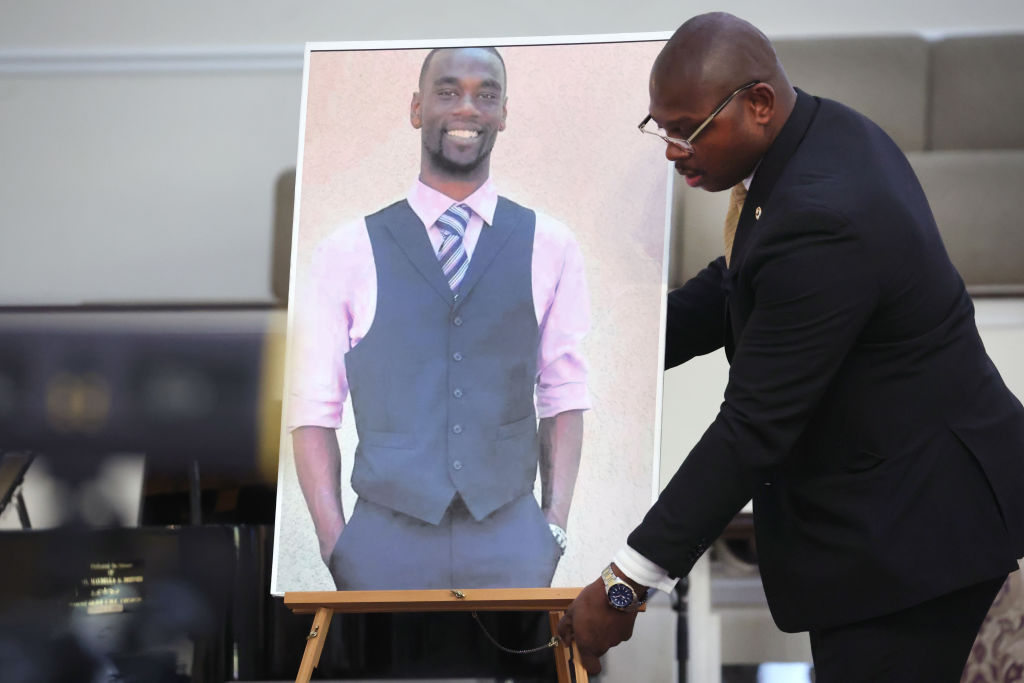
A photo of Tyre Nichols, killed by Memphis police, is positioned for a press conference, January 27, 2023. (Scott Olson / Getty Images)
If the fact that police killings have reached record highs the past two years didn’t make it clear, the brutal murder of Tyre Nichols should: tragically little has changed since the unprecedented George Floyd protests of 2020.
Nichols’s murder — in which he was viciously beaten by a group of Memphis police officers during a traffic stop — has prompted more calls for the unfinished business of police reform. But what exactly is the way forward?
As commentators have pointed out, many of the liberal reform efforts put forward as a solution were already in place when Nichols was killed: Memphis had banned choke holds and no-knock raids, its police department had put in place mandates for de-escalation and intervention by fellow officers in cases of brutality, it’s had training for implicit bias and cultural awareness in place for some time, and the cops that beat him to death were all wearing body cameras. Those officers also all happened to be black, as is the city’s police chief. Most depressingly, this comes after several high-profile, successful prosecutions of killer cops, including in Memphis, which anti-brutality campaigners hoped would have a deterrent effect.