Nicola Sturgeon Left Scotland’s Independence Movement Weaker
Scotland’s first minister, Nicola Sturgeon, is resigning. Throughout her rule, she has been famed as a savvy political operator — yet her strategy has consistently weakened the Scottish independence movement that first brought her to power.
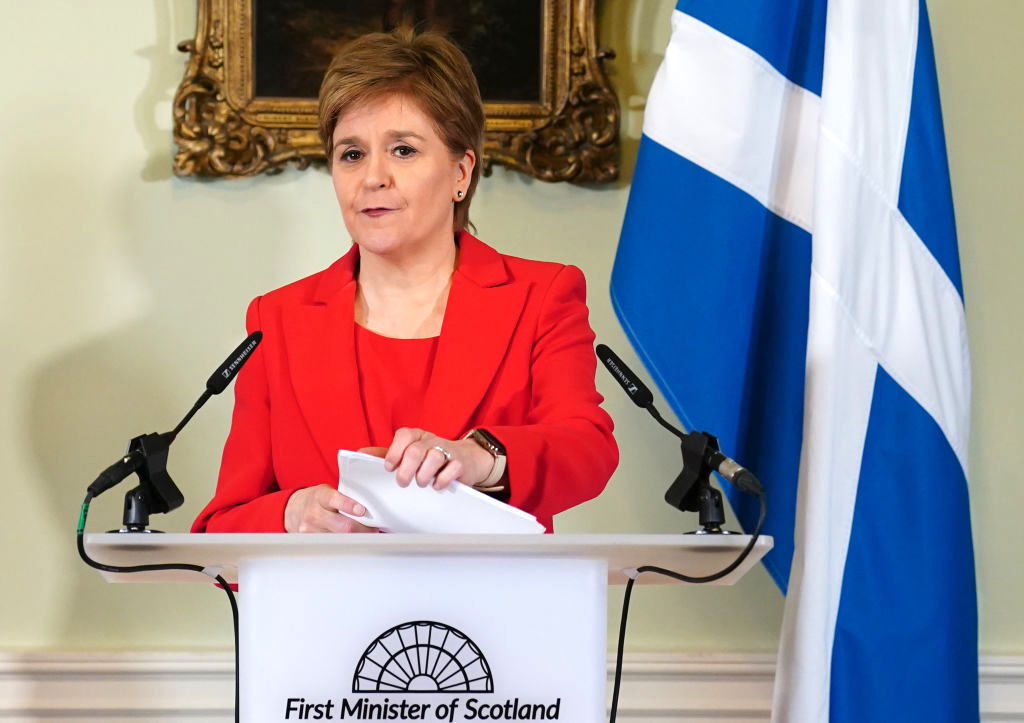
Nicola Sturgeon speaking at a press conference on February 15, 2023, during which she announced she will stand down as first minister of Scotland. (Jane Barlow / PA Wire via Getty Images)
Nicola Sturgeon, the first minister of Scotland and leader of the Scottish National Party (SNP), has announced her resignation. Her move is an immense shock to the national political scene — and will have ramifications for years to come.
Sturgeon’s ascent to the peak of Scottish politics in 2014 was driven by that year’s independence movement. The referendum ended in a narrow 55-45 vote to remain in the United Kingdom, but the energies of the independence campaign swept aside Scottish Labour hegemony and blandished her government with antiestablishment credentials. These would carry her SNP to five successive victories, in both elections to the Scottish Parliament and Scotland’s part of British general elections. For eight years, Sturgeon has been the Caesar of Scottish politics, peerless within her own party and facing little meaningful opposition from parliamentary benches.
Already, admirers and hangers-on in Scotland’s stuffy public scene are making eulogies to a modernizing, compassionate, and progressive leader. But Sturgeon represents, above all, the stifling of the democratic energies that brought her to power. Her exit, after months of mounting difficulties, threatens the complacency of Scottish institutions at a time of hardship for millions, as the economy shrinks and working-class incomes tumble.