The Nicola Sturgeon Era in Scottish Politics Already Feels Fleeting and Ephemeral
Nicola Sturgeon tried to channel the desire for change in Scotland with a political style that was resolutely anti-populist and technocratic. The contradictions of this approach caught up with Sturgeon, and she leaves office without a transformative legacy.
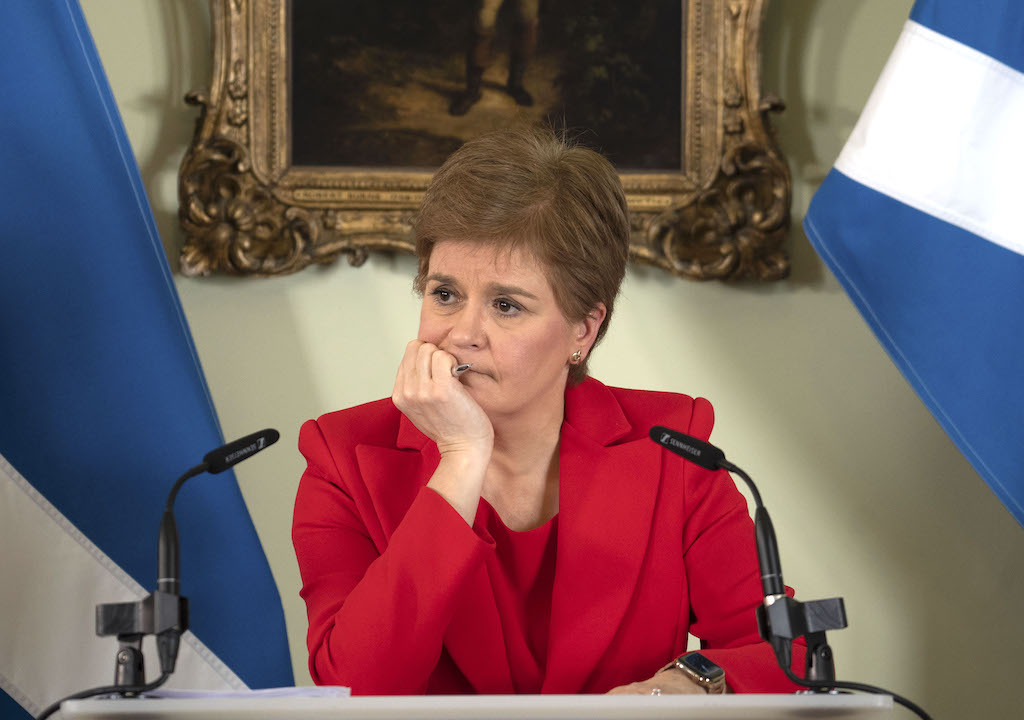
First Minister Nicola Sturgeon holding a press conference at Bute House, Edinburgh, on October 17, 2022. (David Cheskin / Getty Images)
How long was the strange political hegemony of the Scottish National Party (SNP) meant to last? On February 15, Nicola Sturgeon announced that she would resign as SNP leader and first minister of Scotland.
In a press conference at Bute House, the first minister’s official residence in Edinburgh, Sturgeon said that the proximate cause of her departure was the growing “brutality” of modern politics and the sense that she was no longer capable of advancing the SNP’s central cause of independence.
In other words, she is personally and politically exhausted. Who could blame her? Sturgeon was thirty-six when she became Scotland’s deputy first minister in 2007. She is now fifty-two and has served in Bute House for more than eight years. What legacy will she leave for her party and for Scottish politics in general?