Gandhi’s Assassin Helped Build the Forces Ruling India Today
Mahatma Gandhi’s assassination in 1948 shocked the newly independent India. Seventy-five years later, the assassin’s associates are now in power and dismantling secular democracy.
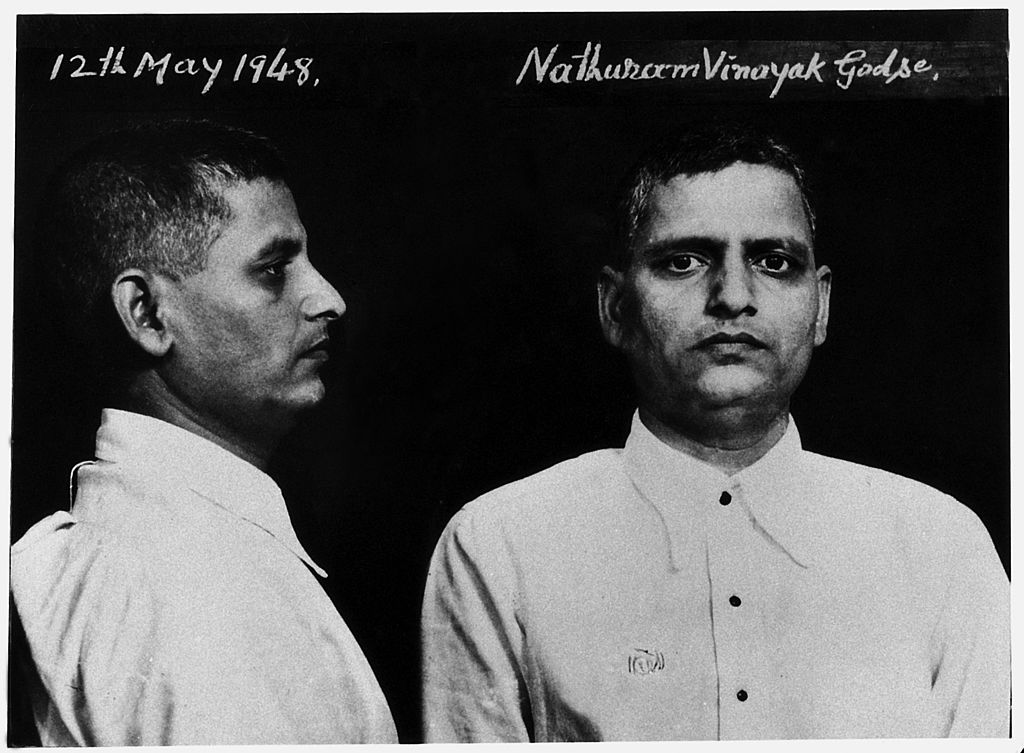
Mug shot of the Indian political activist Nathuram Vinayak Godse, the assassin of Mahatma Gandhi. (Mondadori via Getty Images)
Mahatma Gandhi led the movement that forced the British to relinquish sovereignty over India in 1947. Less than five months later, he was assassinated. His killer, Nathuram Godse, was a Hindu nationalist captivated by a vision of Hindu supremacy. On trial and at the gallows Godse denied being a member of the prominent paramilitary organization Rashtriya Swayamsevak Sangh (RSS). In the assassination’s immediate aftermath, the RSS distanced itself from his actions and claimed Godse had quit years earlier.
Journalist Dhirendra Jha helped expose these claims as outright lies in 2020. His new book charts the political awakening of the young Brahmin supremacist Godse and the early rise of the RSS and its ideologues. The organization’s political wing, the Bharatiya Janata Party (BJP), won power in India in 2014 and has been in government at a federal level ever since. Since then, Godse’s reputation has undergone a frenzied rebranding, and he is now hailed in many quarters as a martyr and hero.
Gandhi’s Assassin: The Making of Nathuram Godse and His Idea of India is a frightening dive into the violent subculture of the RSS. To mark the book’s publication, Jacobin spoke with Jha about the origins and changing fortunes of Gandhi’s assassin and the paramilitary movement he helped build.