How Hindu Nationalism Came to Rule
The story of how India came to embrace a virulent form of Hindu nationalism isn’t just one of bigotry and state violence — it’s also about the failures of neoliberal development.
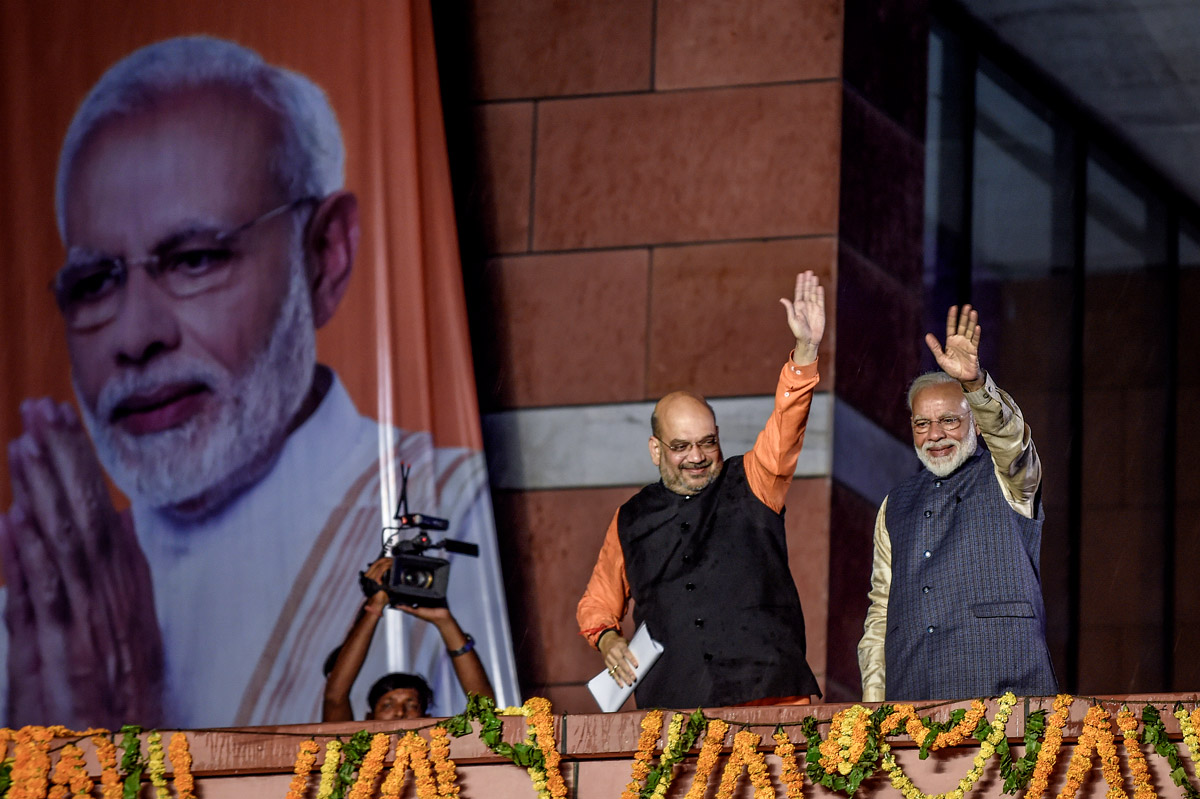
Narendra Modi (right) at the BJP headquarters following the Indian general election, on May 23, 2019 in New Delhi, India. (Atul Loke / Getty Images)
Journalist Rana Ayyub was recently threatened on Twitter by a police department in India with “legal action” for making a “political comment” and was ordered to delete her tweet. She had posted an innocuous statement on the impact on Muslims of the destruction of the Babri Masjid (mosque) in Ayodhya in 1992 by Hindu fundamentalists, and on her hope that the Supreme Court of India would provide a modicum of justice the following day in a widely anticipated, politically charged verdict.
While the Amethi police department eventually deleted the tweet after an outcry, a cavalcade of Hindu right-wing commenters did not go away. They claimed she was inciting religious violence, tagged multiple Indian police departments claiming she was violating communal (religious) harmony, and amplified genocidal thought against Muslims.
Ayyub is a frequent target, receiving death and rape threats for years, to the point where UN officials felt the need to intervene by calling on the Indian government to protect her. But she was far from the only one on Friday. The swarming behavior of the online Hindu right and their appeals to police Twitter accounts to harass Muslims and dissenters were widespread.