Why Joan Robinson Blamed Unions for Inflation While Milton Friedman Did Not
During the ’50s-to-’70s debate on inflation, left Keynesians like Joan Robinson, who strongly supported trade unionism, saw it as a key cause of high inflation, while Milton Friedman and the monetarists, who hated unions, insisted they weren’t to blame for it.
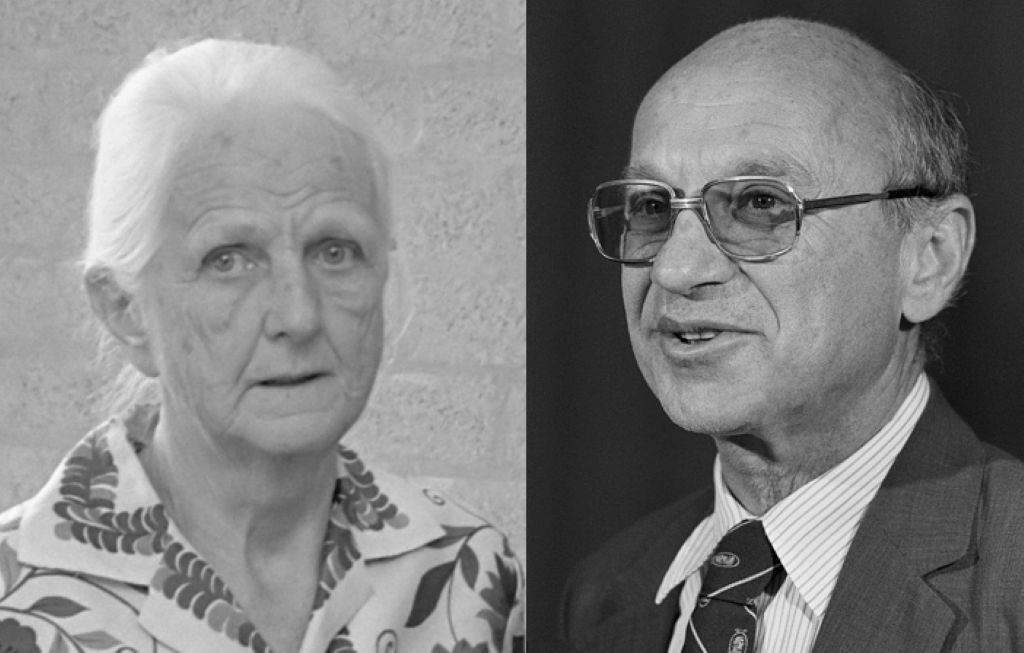
Economists Joan Robinson and Milton Friedman. (Wikimedia Commons)
In the late 1950s it dawned on the world that inflation — for the first time in history — had become a chronic, permanent peacetime condition. The puzzle that was on the minds of economists and policy makers worldwide was why. In an August 1957 article headlined “Basic Inquiry Into a Baffling Inflation,” New York Times economics correspondent Edwin Dale anatomized the ongoing debate among experts as a clash between two camps: what Dale termed the “Classicists” and the “New Inflationists.”
The Classicists believed that “the present inflation is not really peculiar, that it is caused by the same thing that has always caused inflation — too much money chasing the available supply of goods and services — and that the cure for it is tight money.” The New Inflationists, in contrast, contended that “this is something relatively new under the sun,” and that it stemmed from certain basic changes in the workings of capitalism: as Dale put it, changes in “the powers and practices of business (particularly big business) and labor (particularly organized labor).”
The New Inflationists were, of course, those who embraced the new view of inflation advanced by John Maynard Keynes and his Cambridge disciples. (Though some New Inflationists were pur jus believers in Keynes’s theory, most were not, so I’ll refer to the broader, heteroclite camp as “neo-Keynesian.”)