How Inflation Became a Fact of Life
We tend to associate the inflation problem with the 1970s. But it was years earlier, in the era of Sputnik and Elvis, that the world first woke up to the reality of chronically rising prices. We’re still coping with that episode’s wrongheaded “lessons” today.
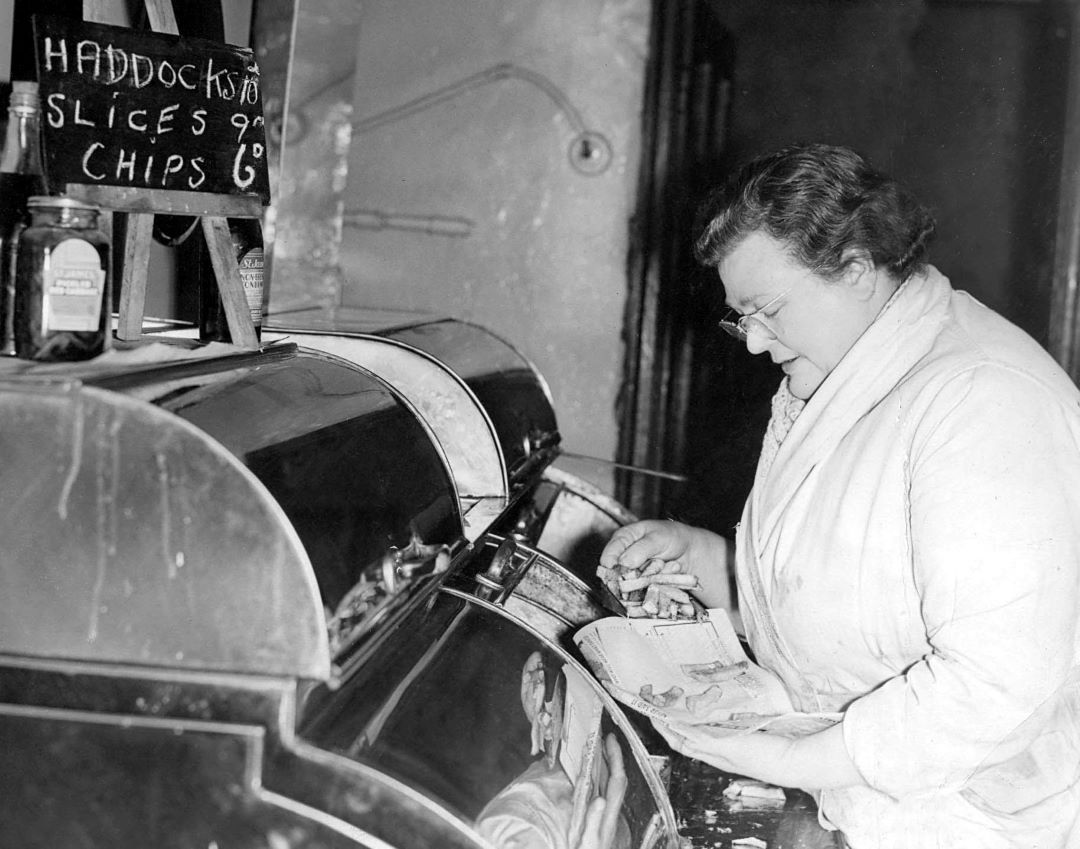
A fish and chip shop in Newcastle, England, where customers were coming to terms with a price increase, 1956. (NCJ / NCJ Archive / Mirrorpix via Getty Images)
Inflation might seem to be one of those afflictions, like death or taxes, that has always been with us, but until the middle of the twentieth century, the kind of inflation we’ve experienced all our lives — a steady, long-term upward slope in the price level — had never been seen.
Before World War II, the tendency of prices was to rise during economic booms but then fall in the subsequent busts. They would rise especially fast during wars, but then fall almost as quickly during postwar readjustments. The net result, in the main capitalist economies, was an inflation rate that fluctuated erratically from year to year, but that averaged out, in the long run, at around zero.
The contrast with our own era makes for some striking numbers. In the last, say, six months, there’s been more inflation in the UK than occurred, on net, over the whole sixty-three year reign of Queen Victoria. (When she died in 1901, the level of British consumer prices was 7% lower than when she acceded to the throne in 1837.)