The Foreman
Mark E. Smith of the Fall was one of the late 20th century’s great working-class musicians, but his music suffered from his overwhelming resentment of his middle-class audience.
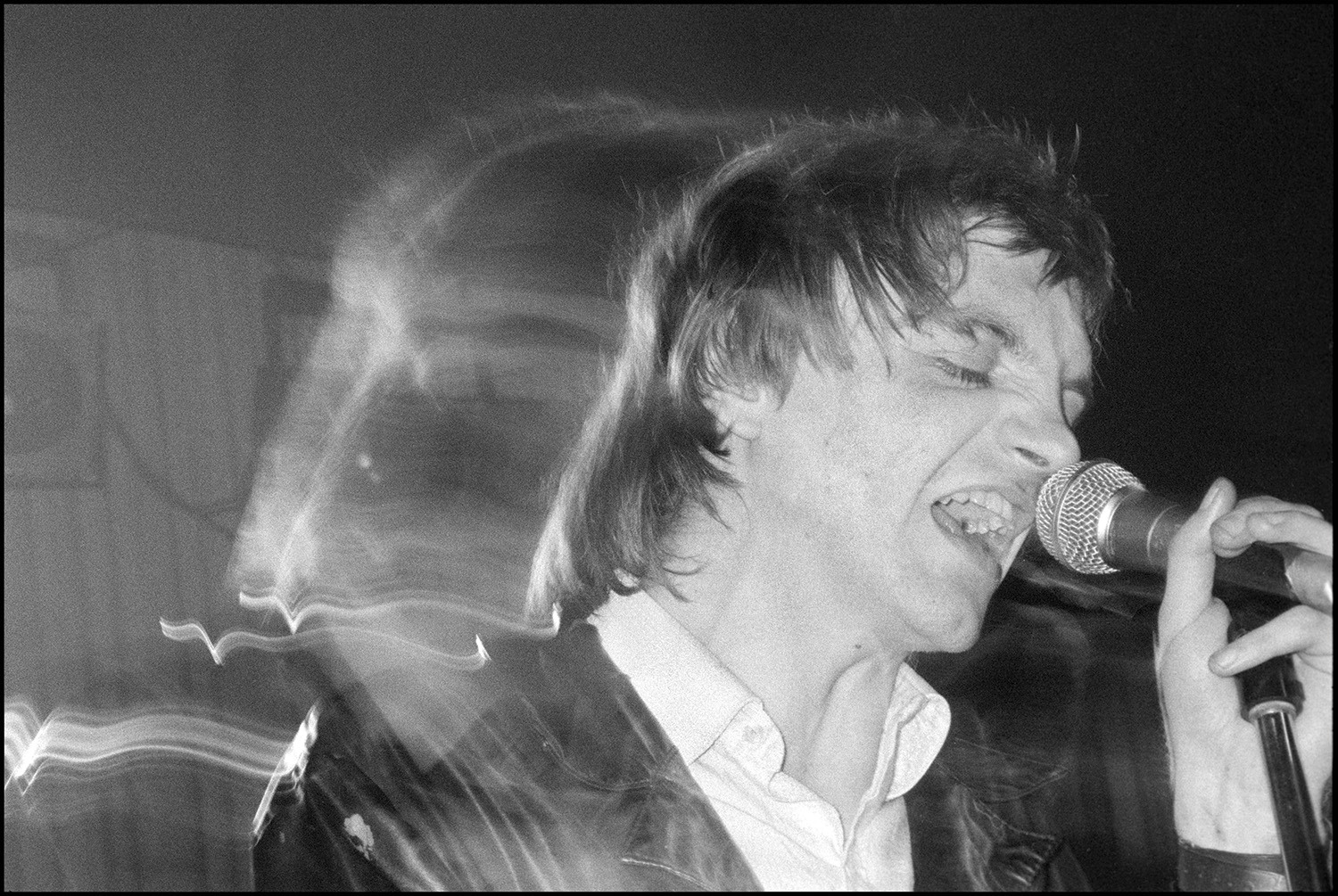
Mark E. Smith of the Fall performs at the Lyceum Theatre in London, December 12, 1982. Smith was notorious for being hard to please, making and remaking his band multiple times over the course of his career. (David Corio / Redferns)
Mark E. Smith, the late front man for the long-running, staggeringly prolific post-punk group the Fall, was typical of people who cross from the working class into the bourgeois intelligentsia in that he never stopped talking about his roots.
Born into a proletarian family in what Robert Roberts called “the Classic Slum” of Salford, England, Smith had a brief spell on the docks at the Manchester Ship Canal, but he spent nearly all his life as the singer, lyricist, and despot of an experimental rock group. As a self-described “Prole Art Threat,” his interviews alternated between reeling off lists of his favorite writers — Wyndham Lewis, H. P. Lovecraft, Philip K. Dick — and spouting ostentatiously offensive right-wing opinions on matters ranging from Margaret Thatcher’s Falklands War (firmly in favor) to immigration (firmly against). But in this, his legions of fans on the Left inevitably gave him a free pass — one not granted to other aging reactionaries like Morrissey or John “Johnny Rotten” Lydon, perhaps because it was assumed Smith’s cantankerousness was just a pose, or perhaps because his music, unlike that of his contemporaries, mostly remained strange and original.
What was most notable about Smith, though, was his relentless output — an astonishing rate of productivity, with at least one album a year from 1978 until his death in 2018. Factory metaphors abound with the Fall, but Smith was not so much a worker as a hard-driving manager.