In Massachusetts, Unions Beat Billionaires to Pass a Tax on the Rich
Voters in Massachusetts just ratified the Fair Share Amendment, which taxes income above $1 million to fund public services. A broad coalition of labor and community groups took on billionaire money and won.
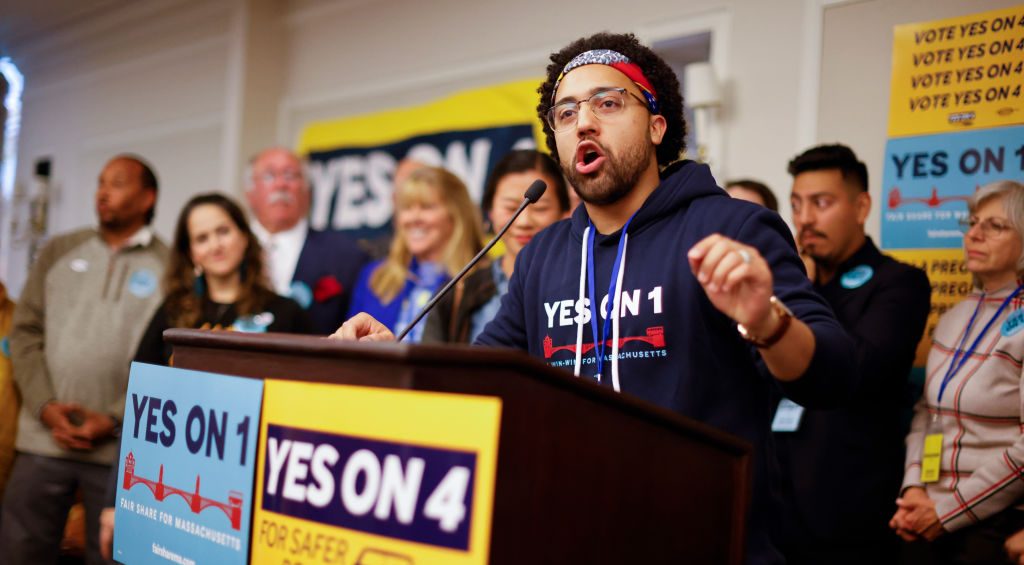
Jeron Mariani, the campaign manager for Yes on 1 (the campaign for the Fair Share Amendment) speaks to attendees at the Yes on 1 and Yes on 4 event for the 2022 midterm elections in Boston, Massachusetts, November 9, 2022. (Carlin Stiehl for the Boston Globe via Getty Images)
While the Democrats’ worst fears of a “red wave” did not materialize, the midterms also didn’t feature many clear affirmative wins for the Left. But in Massachusetts, working people scored a major victory with a ballot measure to tax the rich and fund public investment. Supported by a broad labor-community coalition, the passage of the Fair Share Amendment can serve as a model for ballot initiative campaigns nationwide.
The Fair Share Amendment will create a 4 percent tax on annual income above $1 million. The funds raised from this measure are mandated to be spent on public education, transportation, and infrastructure repair. According to the Institute on Taxation and Economic Policy, the amendment will generate over $2 billion every year for the state. The opposition campaign, funded by billionaires including New Balance’s Jim Davis and Patriots owner Robert Kraft, was aggressive, and the contest was close: 52 percent of Massachusetts voters ratified the amendment.
The campaign was spearheaded by Raise up Massachusetts, which has a successful track record of winning important ballot initiatives in Massachusetts. Across the country, ballot initiatives are proving critical to progressive strategy. Massachusetts is no exception, having recently passed measures for minimum wage increases, earned sick time, and paid family leave.