Mass Surveillance Is Bad News for Privacy — and Democracy
Canada is reviewing its privacy legislation, and its facial recognition technologies are under scrutiny. It’s well past time to strictly regulate their usage by both public and private actors.
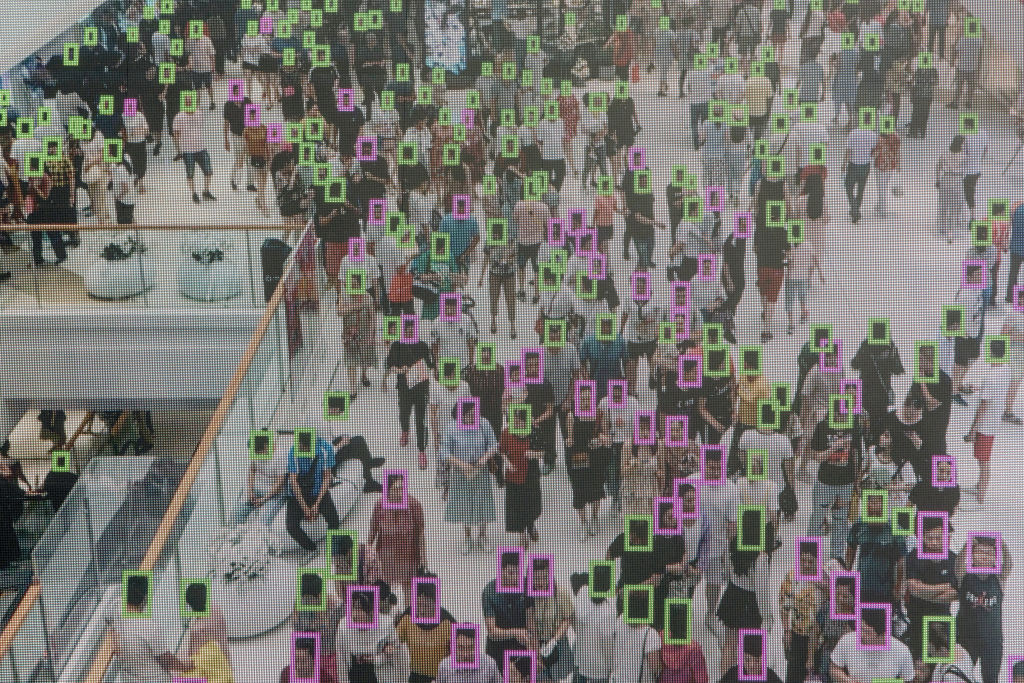
A screen demonstrates facial recognition technology at the 2019 World Artificial Intelligence Conference. (Qilai Shen / Bloomberg via Getty Images)
It’s not paranoia if they’re really out to get you — or so goes the old line. In a recent report on the panoptic eye in the sky, Canada’s Standing Committee on Access to Information, Privacy and Ethics hasn’t gone quite as far as to drop that old chestnut. But they have recommended a handful of measures to prepare a framework for the use of surveillance technology in Canada, particularly as it pertains to its use by law enforcement.
The Royal Canadian Mounted Police (RCMP) paused its use of artificial intelligence and facial recognition software in 2020 after technology from Clearview AI (one of the RCMP’s contractors) was deemed illegal as mass surveillance by the Office of the Privacy Commissioner of Canada. As Maura Forrest reports for Politico, the RCMP is keen to resume using the technology. They’re also cagey about the technologies they rely upon and the extent to which they plan to use these surveillance systems in the future. That’s bad news for privacy — and democracy.
AI and facial recognition technology are important tools for policing crimes such as human trafficking and child sexual exploitation. However, Canada lacks sufficient legislation for controlling these technologies and holding those who use them to account for potential overreach and abuses. And they are indeed ripe for abuse. As the Canadian Press notes, members of Parliament expressed concern about privacy protection issues “including accuracy, retention of data and transparency in facial recognition initiatives, as well as a comprehensive strategy around informed consent by Canadians for the use of their private information.” Those concerns extend to both state use of surveillance technologies and the private sector’s collection of individuals’ images online and in public. So far, Canada is flying blind on facial recognition surveillance, and that’s unacceptable.